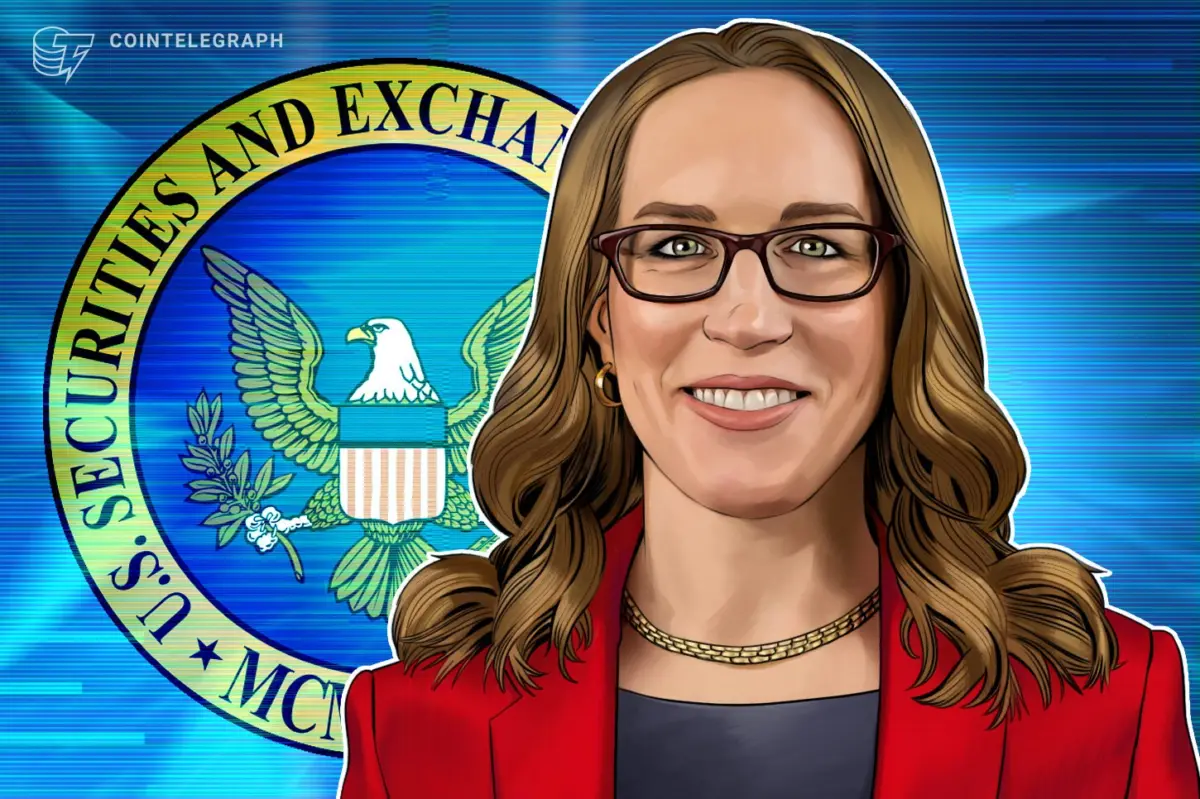
Hester Peirce, a prominent figure at the United States Securities and Exchange Commission (SEC) widely recognized by her moniker "Crypto Mom" for her staunch advocacy of clear, rules-based regulations for the digital asset industry, has submitted her formal resignation from the agency. According to her official announcement, her departure will be effective on October 2, bringing to a close an influential tenure that lasted approximately eight years.
Peirce published a copy of her resignation letter on her account on the social media platform X on a Friday, making her departure official to the public and the financial sector. In the letter, she expressed her deep gratitude to the president for granting her the "honor of her professional lifetime" to serve the country as an SEC commissioner. Furthermore, she noted that she was stepping down while the agency is under the leadership of Chairman Paul Atkins and Commissioner Mark Uyeda. With her departure, the remaining members of the commission consist solely of Atkins and Uyeda, both of whom are Republicans.
Beyond her general duties as a commissioner, Peirce took on a specialized leadership role earlier in the year. On February 4, 2025, she was designated as the director of the agency’s newly established Crypto Task Force. Her official term as an SEC commissioner had actually expired in June 2025; however, agency guidelines dictate that commissioners are permitted to continue serving for up to approximately 18 months after their formal terms expire, provided they are not replaced by a newly confirmed nominee before that window closes.
Peirce Will Join Law School as Associate Professor
As she transitions away from public service and federal regulation, Peirce is preparing to enter academia. Reports in May revealed that she plans to join the faculty of Regent University’s law school in Virginia, where she will take on the role of an associate professor beginning in November. According to statements from the university, Peirce is expected to leverage her extensive regulatory experience to help the law school bolster its academic focus and curriculum across several specialized areas, most notably federal litigation, securities regulation, and the evolving landscape of digital assets.
Meanwhile, the timing of a permanent replacement for Peirce remains uncertain, and her vacant seat may not be filled immediately. The regulatory body has faced prolonged vacancies in the past; notably, Caroline Crenshaw, the agency’s previous Democratic commissioner, departed in January, exactly 18 months after her own term had officially concluded. As of yet, no nominations to fill Crenshaw’s seat—or to fill the vacancy that Peirce’s upcoming departure will create—have been put forward by President Donald Trump.
The shifting composition of the SEC coincides with a dramatic transformation in the agency’s operational philosophy. Since President Trump assumed office in January 2025, the SEC has radically altered its overall approach to cryptocurrency regulation and enforcement. The regulatory body has moved away from aggressive litigation tactics, opting instead to drop several ongoing enforcement actions and active investigations into various crypto companies and projects, including some entities that have been tied to Trump and his own family members.
Since its inception, the SEC’s Crypto Task Force has operated as a vital internal mechanism for examining how decades-old securities laws should appropriately apply to modern digital assets, blockchain networks, and decentralized systems. Peirce’s leadership within the task force reflected her long-standing philosophy that market participants require predictable, tailored regulatory frameworks rather than retroactive punishment.
In June, Peirce weighed in on one of the most contentious debates within the decentralized finance (DeFi) sector, arguing that the mere act of publishing open-source code should not subject software developers and contributors to federal securities regulations. Her public remarks on the matter struck a chord with blockchain developers who had long expressed fears of criminal and civil liability for creating decentralized tools.
These positions consistently aligned with the SEC’s broader strategic pivot away from what Chairman Paul Atkins has frequently characterized as "regulation by enforcement." By prioritizing transparent guidance over sudden legal actions, Peirce’s tenure ultimately helped lay the groundwork for a more accommodating regulatory environment for digital innovation in the United States, leaving a lasting legacy on how federal authorities interact with the crypto economy.