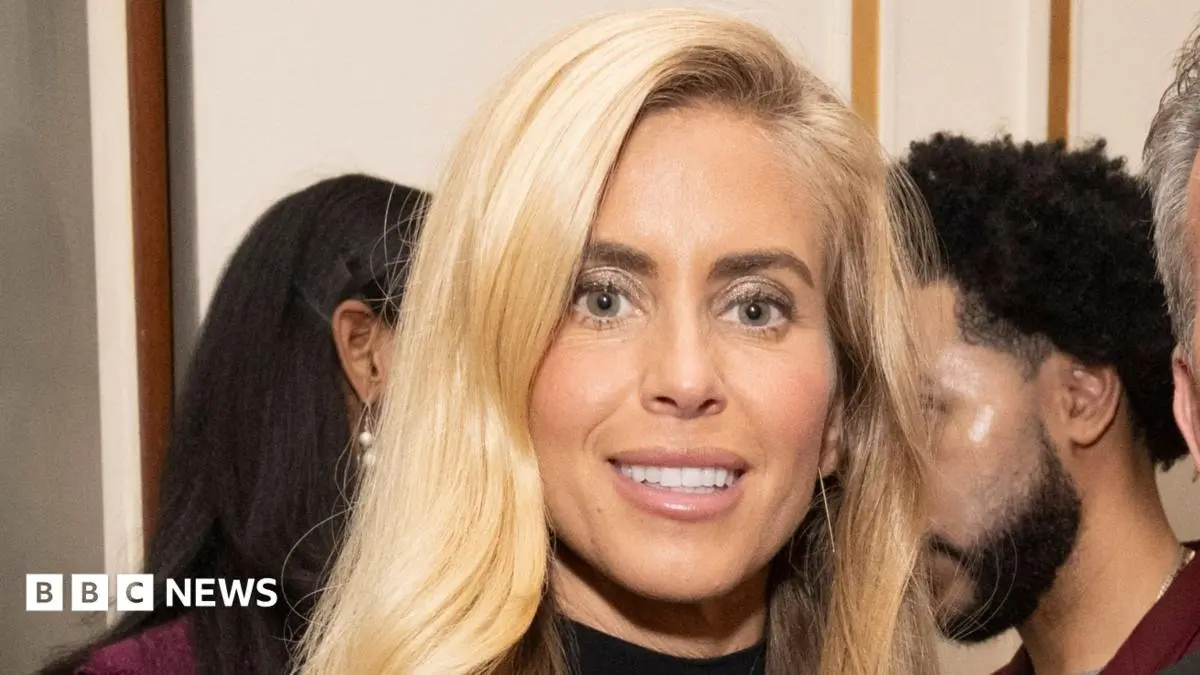
President Donald Trump has announced the appointment of conservative commentator and communications strategist Katie Zacharia as the next White House press secretary. The selection marks a significant shift in the administration’s media strategy, elevating a vocal and long-time supporter of the Make America Great Again (MAGA) movement to one of the most visible and demanding roles in the executive branch.
Zacharia, who has spent recent months serving as a senior communications adviser for the Trump Media & Technology Group and the Truth Social platform, is set to become the sixth individual to hold the title of chief spokesperson across the president’s two administrations. Her appointment comes at a pivotal time, as the White House looks to solidify its messaging infrastructure heading into the middle of the president’s current term.
In a statement released on Truth Social this past Friday, President Trump praised his choice, characterizing Zacharia as a "loyal" and "devoted fan and member of MAGA." Emphasizing her history with his political operations, the president noted that she possesses an "unblemished record of support." Trump also highlighted her contributions to his electoral success, writing, "She was previously involved in my Campaigns, assisting in key Swing States, where we won 7 out of 7."
The president expressed strong confidence in her ability to navigate the complex demands of the briefing room, stating, "I am confident that Katie will deliver strong results for our Country as the next White House Press Secretary, as she has the respect of, and will work fantastically with, the Media, the American People, and my Administration."
A Deeply Rooted Conservative Background
Katie Zacharia brings to the podium a resume that blends legal training with extensive experience in the trenches of conservative media and grassroots Republican politics. A 42-year-old attorney and political strategist, she is a familiar face to audiences of Newsmax and Fox News, where she has frequently appeared as a commentator. Her professional trajectory, however, traces back to the early 2000s, suggesting a candidate with deep institutional knowledge of the party’s inner workings.
Her early career included an internship with the Republican National Committee and a stint at the White House Office of Political Affairs during the George W. Bush administration in 2006. This formative period provided her with a foundational understanding of how the executive branch interacts with both the legislative arm of government and the broader public.
A graduate of Pepperdine University’s law school in California, Zacharia has also demonstrated a commitment to legal and advocacy work within the conservative sphere. Beyond her work with the Trump Media & Technology Group, she served as general counsel for "Fix California," a conservative non-profit organization founded by Ric Grenell, a prominent Trump ally who currently serves as the Special Presidential Envoy for Special Missions. Her legal background, combined with her experience in the private sector, positions her as a spokesperson comfortable with both the policy nuances of administration goals and the combative nature of modern political discourse.
Balancing Professional Ambition and Personal Values
Zacharia’s path to the White House has not been without brief detours. Earlier this year, she held a position at the Department of Homeland Security (DHS), serving from February to March. Her tenure there was short-lived, a fact she later attributed to the logistical and emotional strain caused by the demanding travel requirements between her home in California and Washington, D.C., which affected her family life. As a mother of four, Zacharia has often navigated the friction between high-profile professional obligations and family responsibilities, a theme that has occasionally emerged in the narrative surrounding her career.
Despite the brevity of her time at DHS, her public persona remains defined by her unwavering defense of the president. She has frequently used her platform to push back against the "mainstream" press, often framing her advocacy as a defense of core American principles.
In a June interview with the BBC, for instance, Zacharia offered a defense of President Trump’s decision to host a televised Ultimate Fighting Championship (UFC) event within the White House complex—a move that had drawn criticism from some corners of the media. She argued that the combat sport’s values were inherently aligned with the nation’s founding. "The principles of the UFC are the kind of principles that founded our Constitutional Republic," she told the BBC. "It’s about not giving up the fight until the bitter end. I think there’s no better summation of the American ethos than a good UFC fight."
This combative, unapologetic style was also on display earlier this year when she penned an op-ed for the New York Post. In the piece, she detailed an incident at a local gym where she was asked to remove her "Make America Great Again" hat. Zacharia’s response, as she recounted it, was defiant: "I responded that I would never take my Trump hat off to appease the left. This is raw, unfiltered intolerance. Freedom of speech doesn’t evaporate at the gym door."
Transitioning to the Podium
Zacharia will step into a role that has historically been one of the most challenging in Washington. The press secretary is tasked with more than just conducting the daily briefing; the position requires the delicate management of relationships with a skeptical White House press corps, the coordination of messaging across various executive agencies, and the provision of high-level media counsel to the president. It is a role that demands constant availability and the ability to synthesize complex policy developments into the president’s preferred narrative on the fly.
She succeeds Karoline Leavitt, who left the White House in August. At the time of Leavitt’s departure, President Trump described her as one of his "most trusted aides," noting that her exit was motivated by a desire to spend more time with her family. Leavitt has since reportedly transitioned into a role with Fox News.
Following the announcement of her appointment, Zacharia took to X (formerly Twitter) to express her gratitude. "Serving President Trump and the American people at this critical 250-year mark is the honor of a lifetime," she wrote. She went on to reiterate her commitment to the president’s agenda, adding that Trump had "shown America that we can be great again, and he works to effectuate that greatness every single day."
Looking ahead to her interactions with the media, Zacharia signaled that she intends to maintain a proactive stance. "I look forward to working with the White House press corps, and with reporters across the country, to get that record out," she stated.
Her appointment signals a continuation of the administration’s trend of selecting communicators who are deeply aligned with the president’s ideological base and comfortable in the high-stakes, polarized environment of modern political journalism. As she prepares to step behind the lectern, Zacharia carries with her a reputation as a fierce defender of the administration, one who views her role not merely as a conduit for information, but as a participant in the broader cultural and political fight that she believes defines the current era of American politics. With her diverse experience—ranging from international legal work in Beijing to grassroots organizing in California—Zacharia will bring a distinct set of experiences to the White House communications team as she begins the task of representing the president to a nation and a media landscape that remain deeply divided.