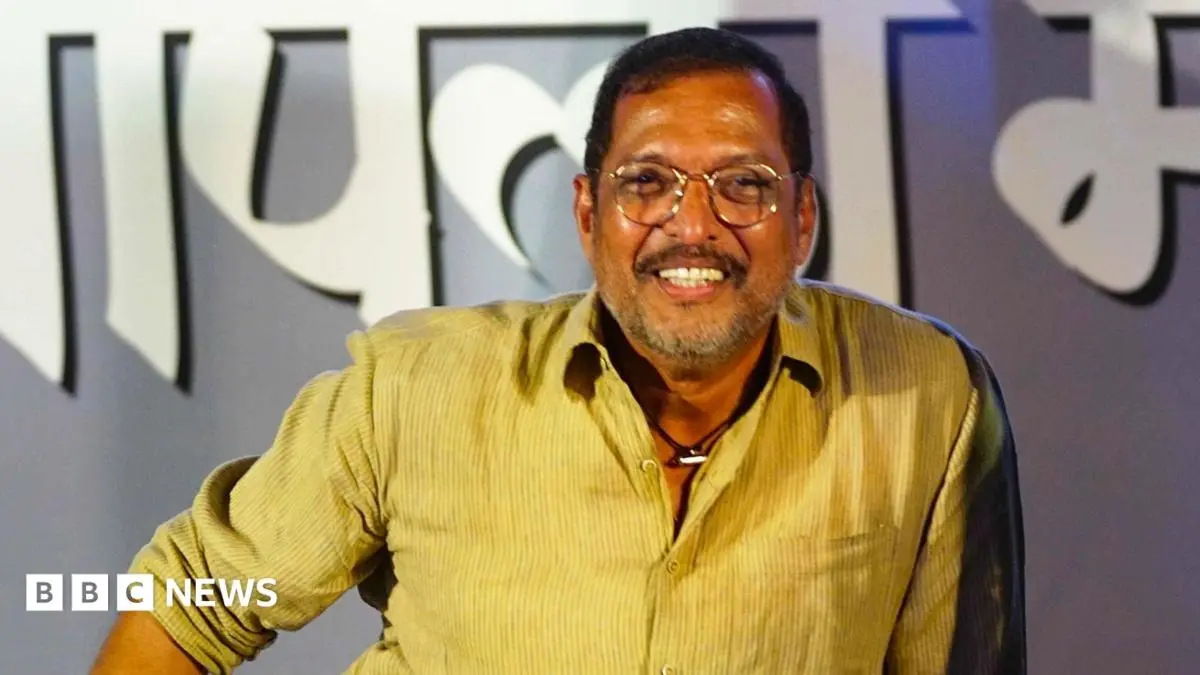
The Indian film industry is in mourning following the passing of Nana Patekar, one of the nation’s most revered and versatile actors, who died at the age of 75 in Goa. Known for his intense, volatile, and deeply compelling performances that defined an era of both Marathi and Hindi cinema, Patekar leaves behind a legacy of cinematic brilliance and a reputation for uncompromising artistic integrity.
Patekar was discovered unconscious at his residence in Goa during the early hours of Thursday. Despite the desperate efforts of medical professionals, he could not be revived. Dr. Shekhar Salkar of Manipal Hospital in Goa, who attended to the actor, confirmed the timeline of the medical emergency. "The team found him unconscious and almost unresponsive," Dr. Salkar told the PTI news agency. Emergency medical personnel initiated cardiopulmonary resuscitation (CPR) at his home and continued the life-saving measures throughout the 10-minute transit to the hospital. "Despite 45 minutes of continuous CPR, he could not be revived," Dr. Salkar stated. While the primary cause of death has been identified as a cardiac arrest, the specific medical triggers remain under investigation.
Following the announcement of his passing, an outpouring of tributes emerged from the highest levels of Indian politics and the entertainment fraternity. Prime Minister Narendra Modi led the national mourning, taking to the social media platform X to honor the late actor. Modi praised Patekar’s remarkable versatility and his outspoken nature, noting that his performances in films like Krantiveer and Parinda were etched in the memories of generations. "His death has left a vast void in the artistic world," the Prime Minister wrote.
Friends and long-time collaborators expressed their personal grief. Veteran actor Anupam Kher remembered Patekar as one of the finest actors and human beings in Indian cinema, highlighting the warmth he brought to his friendships. Bollywood superstar Shah Rukh Khan, who shared a deep personal connection with the actor, described Patekar as "a mentor, a teacher, a critic and a friend," adding that his passing created an irreparable void in the hearts of Indians and cinema lovers globally. Akshay Kumar, who worked alongside Patekar in the hit comedy Welcome, paid tribute to the late actor’s unique command over his craft, noting that his distinct voice, intensity, and unwavering honesty could hold an audience spellbound.
The final rites were conducted with full state honours. After family, friends, and fans paid their last respects at the Goa Medical College, his remains were transported by air ambulance to Pune, Maharashtra. Maharashtra’s Chief Minister, Devendra Fadnavis, was present to offer his respects before the final journey to Patekar’s farmhouse in Donje village, where he was cremated. Speaking to reporters after the ceremony, his son, Malhar, offered a poignant reflection on his father’s legacy, stating that while the physical presence was gone, his father’s spirit and his enduring commitment to social welfare would continue to live on.
Nana Patekar’s career was a masterclass in range and conviction. Making his debut in the 1978 film Gaman, he spent his early years navigating smaller roles before his breakout performance in Vidhu Vinod Chopra’s 1989 crime drama Parinda. His portrayal of the gangster Anna in that film brought a new kind of menace to the screen, earning him his first National Film Award and a Filmfare Award. It was a role that established him as a household name and set the template for the gritty, high-octane performances that would become his trademark.
Throughout the 1990s, Patekar’s career trajectory was defined by his ability to inhabit characters that were as complex as they were intense. His signature raspy voice and inimitable dialogue delivery became cultural touchstones, frequently imitated by comedians and quoted in everyday conversations across India. Film trade analyst Komal Nahta noted that Patekar possessed a distinctive approach to character development. "As a person, he was outspoken and difficult to get along with, but directors would still want to work with him because he was simply a fantastic actor," Nahta told the BBC.
His portfolio was remarkably diverse. While he excelled at playing volatile, loud characters—such as the patriotic, firebrand hero of Tirangaa and the righteous Pratap Narayan Tilak in Krantiveer—he also possessed the restraint to deliver subtle, understated performances. A prime example was his role in the 1996 film Khamoshi, where he portrayed a man unable to hear or speak, delivering a mesmerizing performance that defied the expectations of critics who had labeled him a "loud" actor. He also directed and starred in Prahaar, a film that garnered critical acclaim for his portrayal of Major Chauhan, showcasing his prowess both in front of and behind the camera.
His versatility extended well into the 21st century. In 2010, his performance as a shrewd, calculated politician in Prakash Jha’s Rajneeti added a new dimension to his acting repertoire, proving that his mastery of the craft remained as sharp as ever. Over the course of his career, Patekar secured three National Film Awards, a testament to his sustained excellence in films like Parinda, Krantiveer, and Agni Sakshi.
Before his cinematic success, Patekar was a seasoned presence in Marathi and Hindi theatre. His early years on the stage were instrumental in developing his gritty, authoritative style of dialogue delivery and his ability to maintain high levels of intensity for the duration of a performance. Even as his film career flourished, he remained deeply rooted in the theatre world, with iconic plays such as Purush and Hamidabai Chi Kothi serving as reminders of his foundational training.
Beyond his artistic contributions, Patekar was a man of firm convictions and public activism. He was known for being brazen, direct, and entirely unapologetic when criticizing government policies or ministerial actions. However, his advocacy was rarely limited to words. Issues concerning farmers in India were particularly close to his heart. In 2015, he co-founded the Naam Foundation with actor Makarand Anaspure, an organization that has since become a significant force in promoting farmer welfare and implementing critical water conservation projects across Maharashtra.
Patekar’s life, however, was not without controversy. In 2018, his public image faced a significant challenge when actor Tanushree Dutta leveled allegations of sexual harassment against him, claiming an incident had occurred on a film set a decade earlier. The accusation served as a catalyst for the #MeToo movement in India. Patekar vehemently denied the allegations throughout the ensuing investigation. In 2019, the case was closed after police stated they could not find sufficient evidence to proceed with the charges.
As the nation reflects on his life, the consensus remains that Nana Patekar was a singular talent. He was an actor who commanded the screen with an intensity that few could replicate, a theatre veteran who never lost his connection to the stage, and an activist who used his platform to address the struggles of the marginalized. His colleagues, his family, and his millions of fans are left to mourn a figure who, as Shah Rukh Khan noted, left an indelible void in the heart of Indian culture—a void that will be felt for years to come.