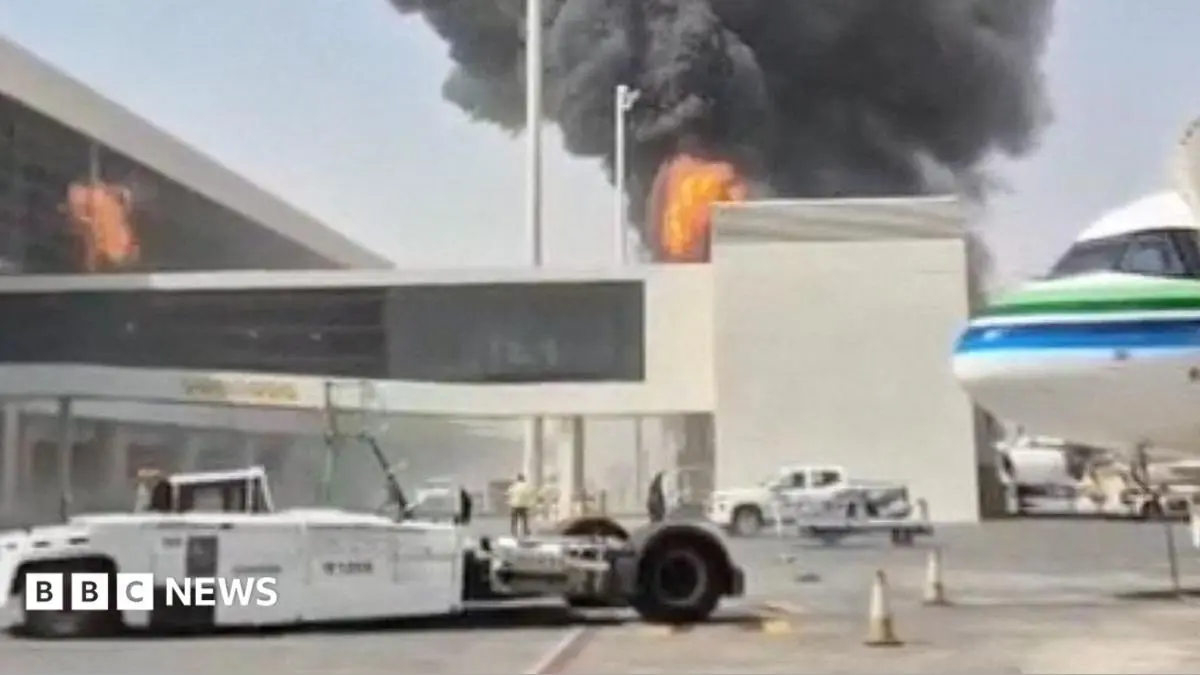
Saudi Arabia’s energy minister, Prince Abdul Aziz bin Salman, has vowed a "serious" and resolute response following a wave of deadly attacks by Yemen’s Iran-backed Houthi movement. The strikes, which have targeted civilian airports and critical oil and gas infrastructure within the kingdom, represent a dangerous escalation in the long-standing conflict. Speaking at the WPC Energy Congress in Riyadh, the Prince emphasized that the kingdom would not allow its security to be compromised by these hostile actions.
"The events of recent weeks are serious. Our response must be equally serious," Prince Abdul Aziz told industry leaders and policymakers gathered for the congress. The event, which serves as a major platform for the global energy sector, opened on Sunday at a convention center located just 10 kilometers from Riyadh’s King Khalid International Airport. The airport has become a focal point of the recent hostilities, having been targeted four times over the past week.
The human toll of these attacks has been devastating. Saudi authorities confirmed that on Sunday, a Pakistani national was killed during a strike on a terminal at King Khalid International Airport. This tragedy followed an even deadlier incident just 24 hours earlier, when a missile hit another terminal, resulting in 13 deaths and forcing a temporary closure of the facility. The casualties from Saturday’s strike were multinational, reflecting the global nature of the hub; among the dead were four Saudis, two Bangladeshis, one American, one Egyptian, one Jordanian, one Syrian, one Palestinian, one Sudanese, and one Indian.
The violence began earlier in the week, specifically last Thursday, when two strikes hit an airport facility and a parked aircraft, claiming the lives of three Saudis, including a pilot for the national airline, Saudia. Furthermore, the reach of these attacks extended beyond the capital; the General Authority of Civil Aviation (GACA) reported that King Fahd International Airport in the north-eastern city of Dammam was also struck on Sunday evening, though, fortunately, no casualties were reported in that instance. The Saudi-led coalition later stated that its air defense forces had intercepted a drone in the Eastern Province and a missile launched by the Houthis toward the south-western city of Khamis Mushait.
The Houthi movement, which has been engaged in a brutal civil war against the internationally recognized Yemeni government since 2014, claimed responsibility for the attacks. In a video statement released Sunday evening, Houthi military spokesman Yahya Sarea declared that the strikes were retaliation for what he termed "brutal Saudi aggression." He specifically cited 124 Saudi air strikes conducted across Yemen within the previous 24-hour period. The Houthi-run health ministry in Sanaa reported that a child was killed and six others were wounded during a Saudi air strike on a home in the Yemeni capital on Sunday.
The ongoing conflict has been characterized by a cycle of violence that shows few signs of abating. The Houthi spokesman issued a stern warning to international airlines and passengers, advising them to avoid using Saudi airports and airspace, with the exception of travel to and from the holy cities of Mecca and Medina. Sarea vowed that Houthi forces would continue their "escalating operations deep inside Saudi," warning that they would enforce a policy of "a blockade for a blockade" and "an escalation for an escalation" until the Saudi-led coalition ceases its operations and lifts the perceived siege on areas under Houthi control.
Despite the proximity of the violence to the WPC Energy Congress, Prince Abdul Aziz bin Salman maintained a tone of defiance and national pride. In his inaugural address, he thanked the delegates for their attendance, stating, "You know this country is safe and that we hold your protection at whole heart." While he acknowledged that "energy security cannot be taken for granted" and that the recent developments had "tested our infrastructure, our institutions, our people, and our resilience," he remained optimistic about the kingdom’s ability to recover. "We, as Saudis, are fearless, combatant and determined people," he asserted. "We shall prove it to the world that whatever we are going through, we will overcome it."
The international community has reacted with alarm to the escalating violence. Saturday’s attack on Riyadh’s airport drew widespread condemnation, with UN Secretary-General António Guterres expressing that he was "deeply shocked" by the assault. He reminded all parties that attacks on civilians and civilian infrastructure are a clear violation of international law. Meanwhile, the political ripples of the conflict have reached Washington. President Donald Trump indicated that he would soon "make a decision" regarding whether the United States would join Saudi Arabia in direct strikes against the Houthi movement. The U.S. military is already providing significant intelligence and targeting support to the Saudi-led coalition, deepening the involvement of global powers in the regional struggle.
Iran, often accused by Saudi Arabia and its allies of providing the training and weaponry necessary for the Houthis to conduct such sophisticated attacks, has denied any direct involvement. Tehran expressed its own concern regarding the escalation, calling for "dialogue and engagement" to resolve the crisis.
The origins of the current devastation trace back to 2014, when Houthi rebels ousted the Yemeni government from the capital, Sanaa. The conflict shifted dramatically in 2015 when a Saudi-led coalition intervened, aiming to restore the government’s authority. After four years of a tenuous, informal ceasefire, the situation began to deteriorate rapidly in July. The Houthis announced a "maritime embargo" against Saudi Arabia, initiating a series of missile and drone strikes on airports, oil facilities, and tankers in the Red Sea.
The Houthis justify their actions by pointing to what they describe as a Saudi blockade of ports and airports in their territory. They also cited an air strike on Sanaa airport, which they attributed to the kingdom. In response, the Yemeni government claimed it was behind that specific strike, arguing it was a necessary measure to prevent an unauthorized Iranian aircraft from landing in the capital.
The strategic stakes were raised last month when the Houthis launched a surprise offensive along Yemen’s south-western Red Sea coast, successfully ousting pro-government forces from positions overlooking the Bab al-Mandab Strait. While the Houthis have claimed they pose no threat to the international shipping lanes passing through the vital waterway, they have maintained their resolve to target Saudi vessels. The seizure of the area surrounding the strait has contributed to a notable surge in global oil prices, particularly because Saudi Arabia has relied heavily on the Red Sea for its oil exports since the combined impact of U.S. and Israeli pressure effectively closed the Strait of Hormuz in the Persian Gulf.
In a bid to regain the initiative, the Yemeni government announced a new offensive last week aimed at reclaiming all territory currently held by the Houthis. Pro-government forces reported early successes in retaking areas around Bab al-Mandab, supported by intense Saudi air strikes. However, the Houthi leadership has denied these claims, asserting that their positions remain secure. As the conflict continues to oscillate between military offensives and retaliatory strikes, the civilian population remains caught in the crossfire, and the stability of one of the world’s most critical energy regions remains under threat.