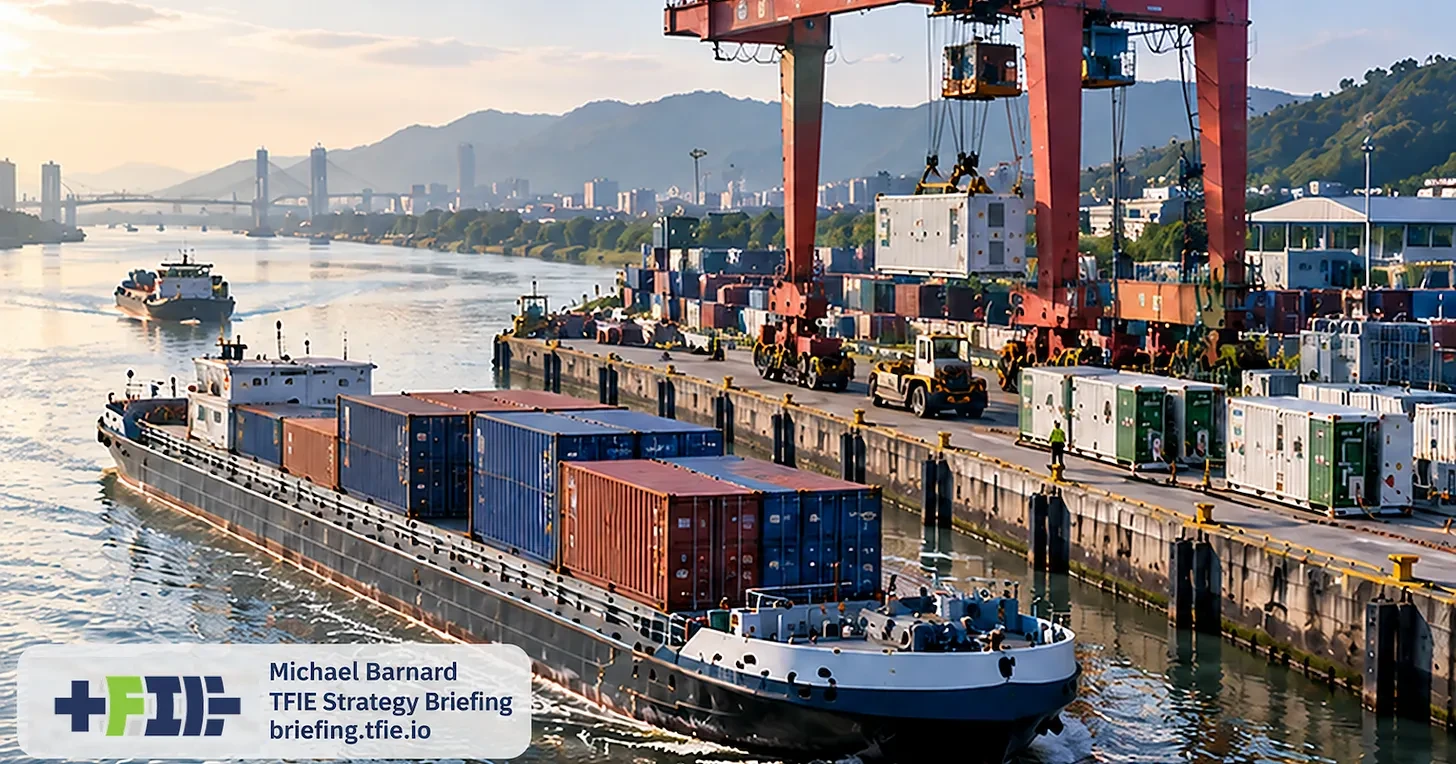
When people think of electric shipping, their attention is almost invariably drawn to the vessel itself. Place a massive battery pack into an inland cargo ship, swap out a traditional diesel engine for electric motors, and the decarbonization narrative appears straightforward and compelling. Inland waterways look especially promising for this type of transition because many vessels travel short, repeatable routes between known terminals. Along these fixed paths, large batteries can be charged or swapped much more predictably than they ever could on a massive ocean-crossing container ship.
However, looking at the transition through a strictly vessel-level lens misses a much larger and more critical picture. China is currently demonstrating why that narrow view is incomplete. Its emerging electric-shipping industry increasingly brings together ports, battery suppliers, electric utilities, logistics companies, and financial institutions alongside traditional shipbuilders. The most compelling development is not simply that a growing number of electric vessels are appearing on Chinese waterways, but rather that entire organizations are beginning to assemble the infrastructure and commercial relationships those vessels need to operate as viable, everyday freight businesses.
This broader systems transition highlights a crucial competitive advantage. China’s strength is becoming less about any individual electric ship and more about its ability to coordinate vessels, heavy-duty batteries, port facilities, electrical grids, and financing models into a cohesive whole.
Understanding the scale of this shift requires looking closely at the numbers, which can easily be misinterpreted because widely cited figures often describe entirely different things. For instance, data from the International Council on Clean Transportation identified 42 dedicated electric cargo ships operating in China by the end of 2025, a significant jump from just four in 2022. On the other hand, battery giant CATL reported nearly 900 battery-equipped electric vessels in service by the end of 2025. However, that larger figure encompasses a wide variety of craft, including passenger vessels, urban ferries, harbor tugs, and various workboats, rather than hundreds of long-distance electric freight carriers. Meanwhile, regional administrative goals, such as a target set by Hubei province to introduce 1,000 green and intelligent inland vessels by 2030, represent broader programmatic ambitions that extend well beyond battery-electric cargo ships.
While forty-two dedicated freight vessels might sound like a modest beginning in a country with a massive inland fleet, China is simultaneously building out the surrounding ecosystem. Hubei’s regional initiatives bring together ports, shipbuilders, energy companies, and financial institutions to establish demonstration routes alongside robust energy infrastructure. On the recently opened Pinglu Canal, CATL has moved far beyond the role of a traditional component supplier. Instead of merely selling battery packs to individual shipowners, CATL has agreed to collaborate on the entire operational matrix, including electric vessels, battery leasing, charging and swapping networks, renewable energy generation, energy storage, and localized microgrids.
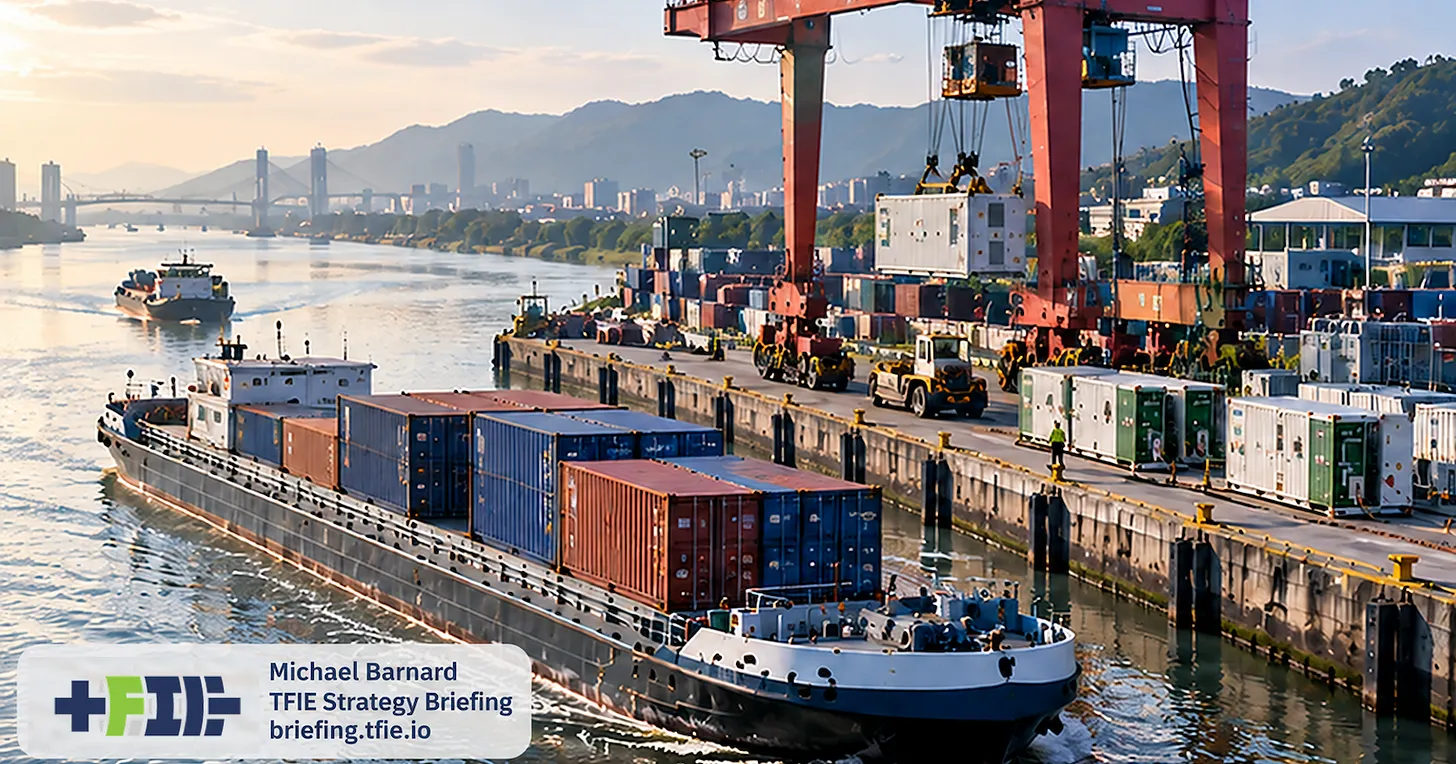
The integration of battery swapping illustrates precisely why this broader coordination is essential. An inland cargo vessel can exchange a depleted containerized battery for a fully charged one in a matter of minutes, bypassing the long hours required to recharge a massive onboard battery bank. This approach keeps the vessel moving and generating revenue while the depleted battery is recharged slowly and safely ashore at a less demanding electrical rate. While this strategy can dramatically improve vessel utilization, it only works if several complex conditions are met. The terminal must have enough charged batteries available at all times, port cranes and staging spaces must be able to handle heavy battery containers without disrupting normal cargo operations, the local electrical grid must be capable of supplying power when needed, and a sufficient number of vessels must share the infrastructure to use it productively.
European maritime logistics and green technology sectors are already familiar with many of these operational hurdles. In the Netherlands, Zero Emission Services has operated interchangeable battery containers on inland vessels since 2021, providing the industry with genuine, real-world experience regarding the concept. At the same time, project partners have noted that operating costs for these pioneering routes have remained stubbornly higher than conventional fossil-fuel shipping. This economic reality shifts the fundamental question away from whether battery swapping works from a technical standpoint, focusing instead on whether enough commercial vessels will use the network frequently enough to recover its substantial capital costs.
This is precisely where European electric-shipping policies and corporate strategies can easily misfire. A port authority can install a high-powered charger without ever establishing a commercially viable electric route, and an independent shipowner can purchase an electric vessel without having dependable, reasonably priced energy available on a predictable timetable. A technically successful demonstration project can still fail commercially if underlying cargo volumes are weak, terminal turnaround time is scarce, grid connection fees are prohibitively expensive, or expensive battery assets spend too much of their operational lives sitting idle while waiting for customers.
A much better starting point is to focus heavily on the underlying freight itself. A forward-thinking port authority can identify specific cargo flows that are likely to remain steady and essential throughout the ongoing energy transition, particularly regular, high-volume movements of construction materials, agricultural products, chemical inputs, industrial raw materials, scrap metals, and standardized containerized goods. Once routes with persistent, reliable demand and high vessel utilization are identified, they can be screened for direct charging, battery swapping, or a combination of both based on their exact operating schedules.
This careful sequencing is especially critical because tomorrow’s freight system will not simply be today’s traditional fleet retrofitted with batteries. Traditional bulk cargoes like coal, petroleum products, and refinery-linked commodities will inevitably decline as global energy systems transform, reducing much of the heavy bulk freight that currently fills the holds of inland vessels. Port authorities that mechanically electrify every existing route without analyzing long-term commodity trends risk investing significant capital into vessels and shore-side infrastructure for freight tasks that are actively shrinking.
Once a promising route is successfully identified, the commercial boundary of the project must expand to encompass the entire service ecosystem. Cargo customers need to commit sufficient freight volumes over a long enough timeframe to support heavy capital investments. Shipowners need modern vessels with credible operational lifespans or clear replacement strategies. Terminal operators require adequate physical space and predictable operating windows. Electric utilities need a workable, long-term grid integration plan, and specialized financial entities must step in to fund and maintain the heavy battery assets. Furthermore, insurers, maritime classification societies, and government regulators must all be completely comfortable with the evolving safety arrangements.

For financial investors, this dynamic may shift market opportunities away from the one-time sale of heavy equipment and toward providing energy as a recurring service. Battery leasing arrangements, shared battery pools, managed charging services, regular maintenance, and guaranteed uptime availability can effectively shift massive capital costs away from individual shipowners while providing specialized energy service providers with stable, recurring revenue streams. However, these innovative business models only function effectively when asset utilization is high enough to support the large battery inventories, reserve capacity, terminal handling equipment, and replacement obligations that the service provider assumes.
China currently possesses structural advantages in assembling this complex system. The country successfully combines massive domestic battery manufacturing capacity with advanced shipbuilding, enormous inland-waterway freight demand, and public institutions capable of coordinating long-term capital investments across multiple industrial sectors. While Europe cannot simply copy these specific financial and governance assumptions, it can learn a great deal from the way Chinese stakeholders treat disparate components as a single, unified freight system rather than a fragmented collection of isolated demonstration projects.
Europe’s most effective strategic response would be to develop a focused selection of high-quality electric freight corridors where cargo customers, vessel operators, port terminals, electrical utilities, and financial institutions are all fully aligned and identified long before major capital is committed. Public funding and policy support can play a vital role in solving the initial coordination problem where multiple interdependent parties must invest simultaneously, but financial support should always follow credible freight services rather than simple equipment counts.
This approach also provides a much more accurate benchmark for measuring true success. Simply counting the number of newly commissioned electric vessels tells observers very little about actual technology adoption, just as counting installed chargers only measures physical infrastructure. Neither metric proves whether freight is moving reliably at a cost that paying customers will continue to support once initial government demonstration subsidies eventually come to an end.
Ultimately, China’s electric-vessel story is rapidly transforming into a comprehensive infrastructure story. For Europe, the central competitive question is increasingly whether it can successfully translate green marine technologies it already understands into repeatable, highly financeable freight services capable of competing on a global scale.