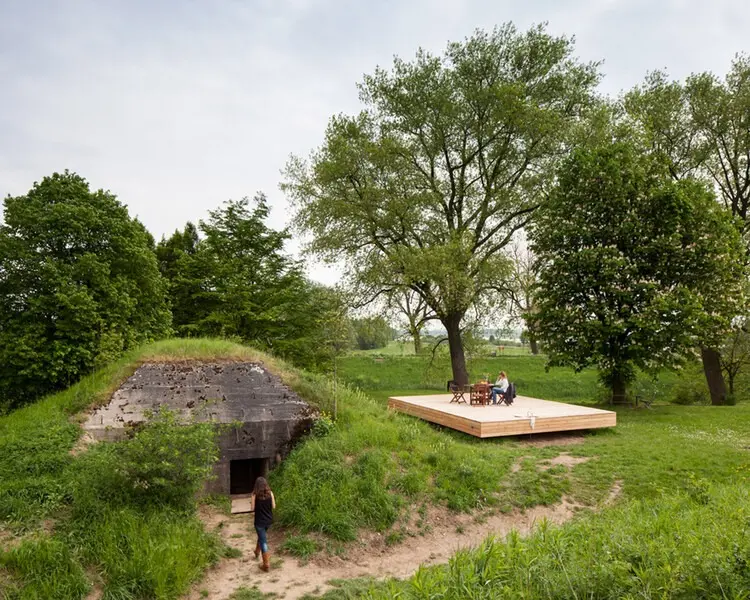
Inverting the conventional narrative of global destruction, this story begins on the day after the world’s collapse. While the vast majority of the population struggles against raging fires and catastrophic solar storms, a tiny fraction of humanity is greeted by heavily armed guards at the reinforced entrance of the Survival Condo Project. This subterranean luxury complex, built inside a former nuclear missile silo in Kansas, was converted a few years ago into high-end apartments designed exclusively for the ultra-wealthy.
Forget the traditional stereotype of the isolated hermit stockpiling canned goods in a damp basement or the fringe end-times prophet waiting on a street corner. In recent years, doomsday survivalism has expanded dramatically into affluent circles, taking deep root in Silicon Valley among technology executives, venture capitalists, and hedge fund managers. What was once dismissed as eccentric paranoia has transformed into a sophisticated philosophy about the future and, for many, a lucrative real estate investment.
The apocalypse has become an idea that modern society has grown accustomed to living with—functioning simultaneously as a religious prophecy, a popular literary genre, and a booming business opportunity. This concept is far from static; rather, it is a cultural and architectural construct that evolves alongside contemporary anxieties, flourishing especially during moments of acute political instability, economic insecurity, or rapid technological disruption. This underlying dread helps explain the millions of dollars currently poured into hyper-secure structures designed to guarantee human survival for a chosen few.
The Catalysts of Collapse: Paranoia Meets Reality
Distinguishing between genuine paranoia and realistic foresight has become increasingly difficult in the modern era. In their collaborative work The Rise of End Times Fascism, authors Naomi Klein and Astra Taylor identify three primary factors accelerating the post-apocalyptic appeal among the global elite.
The first major driver is the escalating climate crisis. Although climate change denial persists in certain political spheres, global elites who own multi-million-dollar beachfront properties are acutely vulnerable to rising sea levels, extreme weather events, and ecological degradation. They are intimately aware of the systemic dangers posed by global warming. The second factor is the COVID-19 pandemic. The sudden onset of a global health crisis starkly validated epidemiological warnings that a pathogen could rapidly destabilize modern civilization. The third and final factor is the breakneck advancement and widespread adoption of artificial intelligence, a technology increasingly hurtling toward a trajectory beyond human control.
According to Klein and Taylor, none of these concerns should be casually dismissed as mere paranoia. After all, a significant portion of the general public also senses the imminence of societal collapse, albeit from the comfort of domestic living rooms, entertained by fictional depictions of life in post-apocalyptic underground fortresses, such as the hit Apple TV+ series Silo. This fascination is fueled in part by the reality that most ordinary citizens could never afford to purchase a private bunker. Yet, it raises a lingering question: how many would succumb to the temptation of escaping global collapse into a private subterranean sanctuary if given the opportunity?

In his book Notes from an Apocalypse, author Mark O’Connell embarks on a personal journey visiting luxury bunkers in South Dakota, isolated rural refuges in New Zealand, and prospective Mars colonization projects. He attempts to decode why survivalist fantasies have flourished precisely within Silicon Valley—a region otherwise defined by an unwavering, utopian confidence in its own ability to engineer a better world. O’Connell suggests that digital-media billionaires seem uniquely fascinated by impending doom and extravagant escape strategies. This obsession may stem from exorbitant fortunes that breed dreams of personal immortality, or perhaps from an underlying awareness of the darker, destabilizing implications of the technological monsters they have unleashed. Modern technology inherently carries the capacity to imagine radically different futures where utopian ambitions and dystopian nightmares inextricably coexist.
The Ideology of Selective Survival
These escapist architectural endeavors, while often marketed as pragmatic self-preservation, are fundamentally underpinned by exclusionary assumptions regarding which segments of humanity deserve to be saved. Furthermore, they share a striking disinterest in addressing the systemic, root causes of global collapse.
Media theorist Douglas Rushkoff explored this phenomenon in his 2022 book, Survival of the Richest: Escape Fantasies of the Tech Billionaires. Rushkoff was invited to deliver a lecture to a group of ultra-wealthy executives, only to find that the subsequent discussion focused almost entirely on logistical evasion tactics—specifically, how they could maintain authority and control over their private security guards after "the Event," a hypothetical future moment when traditional currency would completely lose its value. Rushkoff describes the proliferation of luxury bunkers and private arks as a profoundly naive and deeply antisocial response from elites who prefer to optimize their underground redoubts rather than contribute resources toward preventing global catastrophe.
Even so, observers note that generalizations can be misleading. A considerable portion of wealthy individuals acknowledge that the only viable long-term solution is to confront global challenges directly. Consequently, many tech executives and financiers donate substantial sums of money to philanthropic and environmental causes while simultaneously investing heavily in their own personal escape architecture—a sector rapidly gaining traction within the high-end luxury real estate market.
Engineering the Subterranean Escape
The Survival Condo Project in Kansas, referenced at the outset, might easily be mistaken for a set piece from a science-fiction thriller, yet it is entirely real. Journalist Evan Osnos detailed the facility in his seminal New Yorker article, Doomsday Prep for the Super-Rich. Originally constructed by the U.S. Army Corps of Engineers between 1961 and 1965 to house a nuclear warhead during the height of the Cold War, the decommissioned underground silo was engineered to withstand a direct nuclear attack.
The subterranean complex descends fifteen stories into the earth, stocked with enough food, water, and fuel to sustain residents off-grid for five years. According to developer and CEO Larry Hall, the facility could theoretically operate indefinitely through renewable energy sources, hydroponic vegetable farming, and aquaculture tanks raising tilapia.

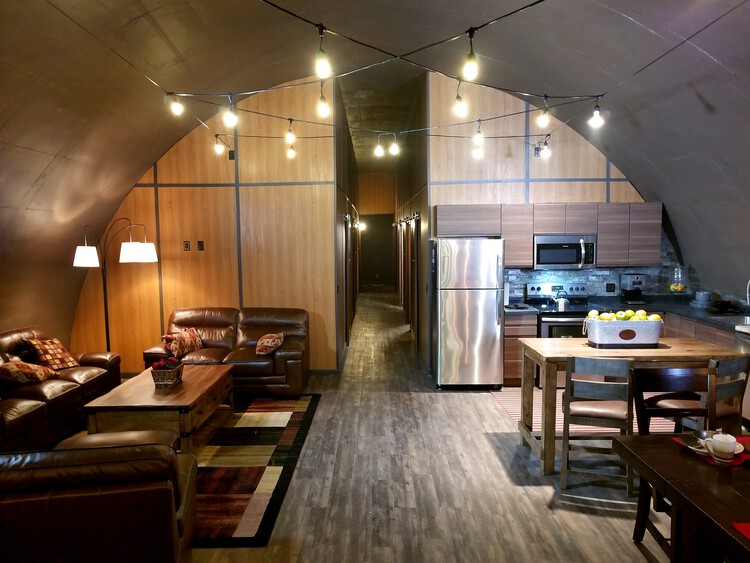
Inside, the private residential units resemble windowless ski chalets, complete with stainless-steel kitchen appliances and comfortable leather sofas. Hall notes that the greatest psychological challenge of underground living is combating severe depression and claustrophobia. To counteract this, the apartments are outfitted with massive LED "virtual windows" that stream live high-definition video of the Kansas prairie above. Osnos reported that prospective residents frequently request custom views; one prospective buyer from New York City insisted on a continuous, day-and-night video feed of Central Park, complete with the ambient recorded sound of honking taxicabs and city traffic.
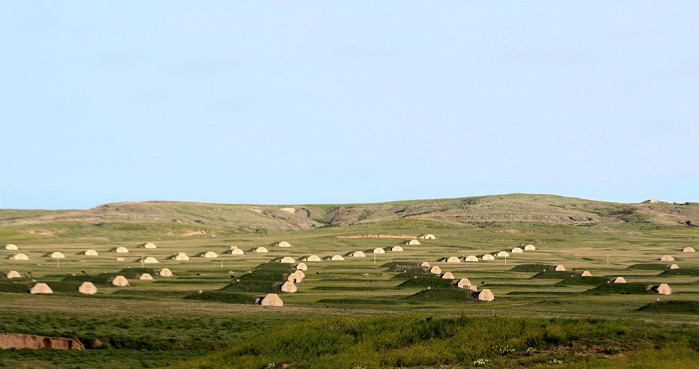
A similar project blurring the line between speculative fiction and reality is Vivos xPoint, located in the remote plains of South Dakota. Part of an expanding global network of underground shelters spanning the United States and Europe, the South Dakota compound occupies a former military base constructed during World War II to store ammunition. The sprawling site features 575 reinforced-concrete bunkers, each measuring approximately 205 square meters, with a total capacity to shelter more than 5,000 people. It proudly promotes itself as the largest private survival community on Earth.
For individuals averse to subterranean confinement, alternative escape strategies focus on geographic isolation. Remote regions such as New Zealand and Hawaii have increasingly dominated the radar of the global elite. New Zealanders once frequently referred to the geographic disadvantage of the "tyranny of distance," but that very isolation has transformed into the nation’s most valuable asset for prospective refugees. Immigration and citizenship inquiries from wealthy Americans have surged over the past decade, with high-profile figures like PayPal co-founder Peter Thiel serving as prominent advocates for the region.
Other technology magnates look even further outward, viewing the cosmos as the ultimate escape route. Billionaire Elon Musk has consistently championed space colonization as an essential insurance policy for the continuation of the human species. By framing Mars as a secular ark capable of preserving civilization, this narrative fosters the dangerous illusion that humanity can afford to exhaust and destroy planet Earth without permanent consequences.
The Normalization of War Architecture
From a critical architectural perspective, the vast majority of these survivalist structures leverage the adaptive reuse of former military infrastructure. In her influential 2007 book Domesticity at War, architectural theorist Beatriz Colomina observed that war does not simply end; rather, it evolves, and architectural practices evolve alongside it. Analyzing the Cold War period in the United States, Colomina detailed how military technologies and survival concepts were gradually integrated into ordinary domestic environments. This process normalized geopolitical anxieties by domesticating social conditions that would otherwise appear terrifying. Today, society faces a similar question: are we witnessing the broader normalization of living inside bunkers and fortifications originally engineered for warfare?
Viewed through a wider geopolitical lens, the architectural typology of the bunker extends far beyond private elite refuges, manifesting as a broader state-level strategy. The conceptual "bunker nation" increasingly closes its borders to international migration while aggressively securing the land, water, and mineral resources it deems necessary to weather future systemic collapses.
Faced with a cultural climate that prioritizes hyper-individualism and class supremacy, attempting to determine how humanity should collectively respond to the imminence of global crises can feel discouragingly utopian. Yet, such a response remains fundamentally necessary. Between passively accepting global destruction as an inevitable destiny and striving to postpone it, indigenous thinker Ailton Krenak advocates for the latter, drawing inspiration from Indigenous communities worldwide who have actively resisted the end of their respective worlds for more than 500 years.
Bunkers, private arks, and extraterrestrial space colonies are ultimately products of the exact mindset that generated our current global vulnerabilities. Postponing the end of the world requires an opposite approach: addressing the systemic drivers of ecological collapse, fundamentally altering humanity’s relationship with the Earth, abandoning the dogma of unlimited economic growth, and recognizing that collective survival is inextricably linked to shared existence. The ultimate challenge lies not in locating a secure architectural vessel to escape the future, but in fundamentally transforming the future we are currently building.