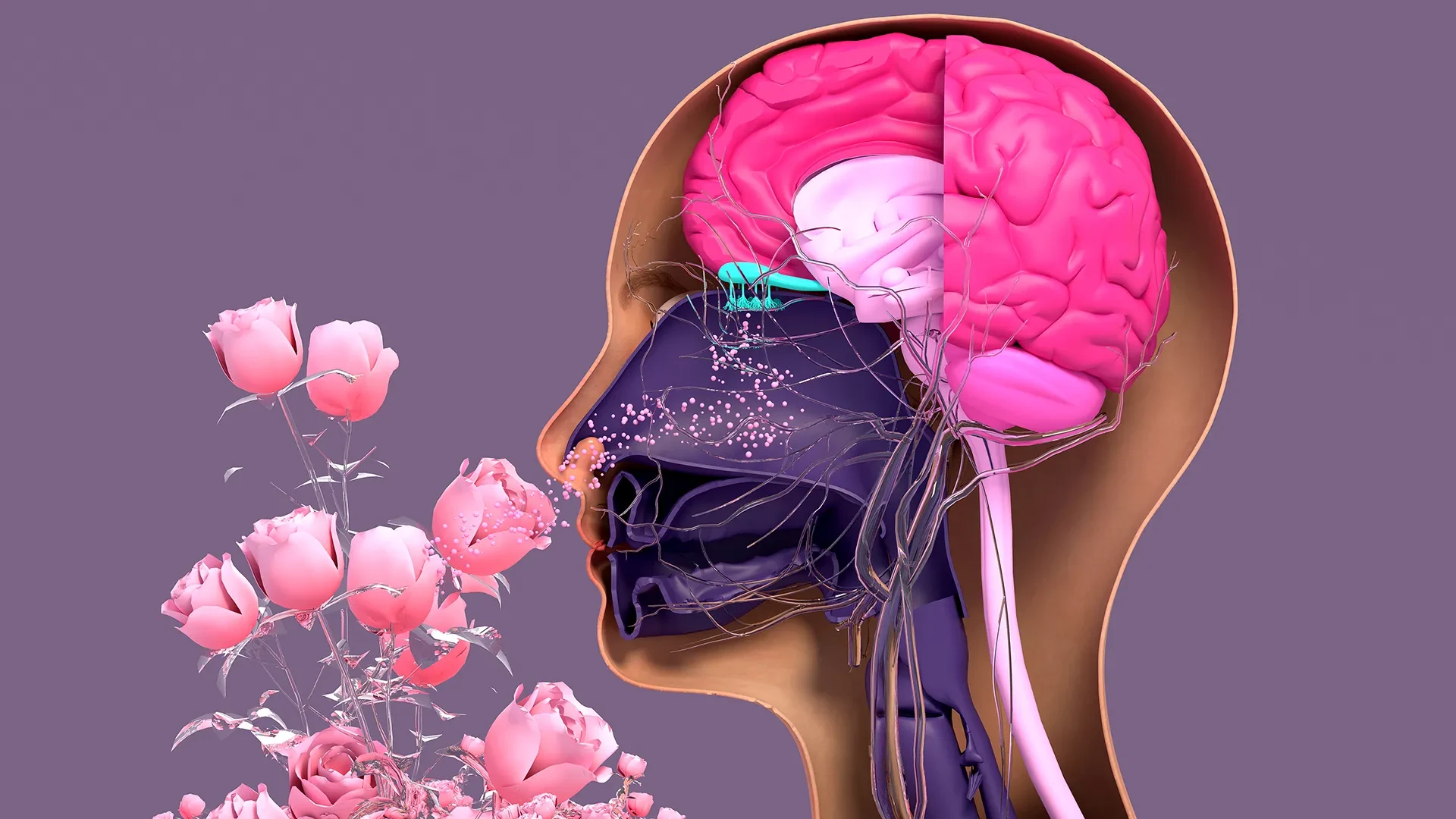
In a significant breakthrough for sensory biology, researchers at the Tufts University School of Medicine and the Graduate School of Biomedical Sciences (GSBS) have developed a sophisticated, three-dimensional model to investigate the regenerative capacity of nerve tissue in the human nose. This study, recently published in the journal Cell Reports Methods, has overturned long-held assumptions regarding stem cell activity in the nasal cavity, revealing that a specific type of stem cell once dismissed as dormant is actually a vital engine for the preservation of the sense of smell.
Unlike the neurons within the central nervous system, which are notoriously difficult to repair once damaged, the sensory neurons responsible for our sense of smell possess a remarkable and rare ability: they regenerate throughout an individual’s entire lifetime. This persistent renewal is essential, as the nasal cavity is in constant contact with the external environment, leaving it uniquely vulnerable to a barrage of inhaled pathogens, pollutants, and environmental toxins.
However, this biological resilience is not infinite. Viral infections—most notably SARS-CoV-2, the virus responsible for COVID-19—as well as long-term exposure to toxic substances and the inevitable processes of biological aging can severely impede this regenerative capacity. When the replication of these sensory neurons falters, individuals often suffer from anosmia, or the partial to complete loss of smell, a condition that profoundly impacts quality of life, nutritional intake, and safety.
To better understand the cellular mechanisms governing this decline, the Tufts research team, led by Brian Lin, a research assistant professor in the Department of Developmental, Molecular and Chemical Biology, developed an easy-to-create, three-dimensional olfactory organoid. By modeling the complex environment of the nose in a laboratory setting, the researchers have been able to observe the intricate dance of cellular communication that allows for the constant birth of new smell-sensing nerve tissue.
Unmasking the Role of Basal Cells
At the heart of the team’s research is the interaction between two distinct types of stem cells residing in the nasal epithelium: horizontal basal cells (HBCs) and globose basal cells (GBCs). Traditionally, the scientific community viewed GBCs as the primary workhorses of neurogenesis, while HBCs were largely categorized as a dormant "reserve" population, activated only during instances of catastrophic injury to the tissue.
The new study challenges this binary understanding. "Our research suggests that these two stem cells may be interdependent," explains Lin. "One type that we thought was largely dormant—HBCs—may actually play a crucial role in supporting the production of new neurons and the repair of damaged tissue."
Through the use of their 3D organoid model, the team identified a specific subpopulation of HBCs, distinguished by the expression of the protein KRT5. These KRT5-positive cells were observed to be far more active than previously anticipated, acting as essential facilitators in the formation of new olfactory neurons. When the researchers selectively depleted this specific subpopulation from their organoid cultures, the regenerative process was significantly impaired, confirming that these cells are not merely passive bystanders waiting for a crisis, but are instead integral players in the day-to-day maintenance of olfactory health.
The implications of this discovery extend to the study of aging. By comparing the regenerative success of cells harvested from mice of different ages, the team observed a clear decline in neurogenesis in older tissue samples. While the study suggests this decline may be linked to a reduction in the GBC population over time, the researchers remain cautious, noting that further investigation is required to fully understand the aging process in these cells and, eventually, to identify potential therapeutic avenues for rejuvenation.
An Accessible Approach to Scientific Inquiry
The development of the organoid model itself is a testament to the team’s commitment to scientific accessibility. Juliana Gutschow Gameiro, the study’s lead author and a former visiting Ph.D. student at GSBS who arrived at Tufts from the State University of Londrina in Brazil, played a pivotal role in designing a system that is both effective and low-barrier.
"Because loss of smell is associated with COVID-19, as well as with Parkinson’s disease and other conditions, a much larger number of researchers from a variety of different fields have begun researching olfactory epithelial cells in the last few years," Lin notes. "We wanted to develop an easy-to-use model so that non-stem cell biologists and those working in labs with limited resources could use it to better understand how olfactory neurons regenerate and what happens that causes that process to diminish or fail completely."
By prioritizing a methodology that does not require prohibitively expensive equipment or highly specialized, ultra-rare resources, the team hopes to catalyze a broader, more collaborative research effort into olfactory dysfunction. As the global scientific community continues to grapple with the long-term sensory impacts of the COVID-19 pandemic, tools like this organoid model provide a critical pathway for labs worldwide to contribute to the growing body of knowledge surrounding sensory loss.
The Path Toward Human Organoids
The ultimate ambition of the Tufts team is to translate these findings into a human-specific organoid model. Such a model would serve as a powerful platform for pre-clinical drug screening, potentially allowing scientists to identify pharmacological treatments to restore or preserve the sense of smell in patients suffering from chronic anosmia.
Organoids, which are miniature, simplified versions of organs grown in vitro, offer a significant advantage over traditional animal models or two-dimensional cell cultures. They provide a more accurate representation of human tissue architecture and function, making research faster, less expensive, and more predictive of how a treatment might perform in a living human subject. While researchers have already successfully engineered organoids for major organs such as the lungs and kidneys, the creation of human olfactory organoids remains a formidable challenge.
The primary obstacle lies in the collection and purification of the starting material. "It’s challenging to get pure olfactory tissue from humans," Lin explains. In a clinical setting, obtaining a sample typically involves a procedure where a brush is inserted deep into the nasal cavity to collect cells—a process similar to the swabbing method used for COVID-19 testing. However, unlike the clear-cut separation possible in the mouse model, the resulting human sample is a complex mixture of respiratory stem cells and olfactory stem cells, which are notoriously difficult to isolate from one another.
The team’s next major challenge, therefore, is to refine a technique that is both simple and cost-effective for separating these human stem cells, ensuring they can be coaxed into healthy, functional growth in a laboratory environment. If successful, this research could open the door to a new era of regenerative medicine for the senses, transforming the way clinicians treat patients who have lost the ability to perceive the world through scent.
As the study concludes, the researchers remain optimistic that their current findings serve as a foundational step. By moving from the mouse model to a human-equivalent, they aim to bridge the gap between basic developmental biology and clinical application, ensuring that the mysteries of the nose—and the cells that allow us to smell—are finally within reach of therapeutic intervention.