In the intricate and often volatile landscape of Magic: The Gathering, board wipes—colloquially known as "sweepers"—serve as the ultimate reset button. Whether a player finds themselves staring down an overwhelming opposing army with an empty board, or simply looking to slow the pace of a match by ridding everyone of accumulated resources, these spells are engineered to clear multiple cards from the battlefield in a single sweeping motion.
Mass destruction has remained a foundational pillar of Magic strategy since the game’s official debut in 1993. The release of the Alpha set famously introduced Wrath of God, setting a gold standard for mass creature removal that would influence card design for decades. Over the years, control and midrange archetypes have relied heavily on these strategic assets to erase an opponent’s early momentum, utilizing a single card from hand to level an entire battlefield of threats and pivot the game in their favor.
While early iterations of sweepers simply destroyed everything in sight without discrimination, decades of iterative card design have led to a fascinating variety of specialized board wipe functionalities. Modern alternatives often bypass troublesome keywords like "indestructible" or avoid triggering detrimental death effects by utilizing non-targeting exile effects or mass toughness penalties such as -X/-X. Other mechanical variations leverage cost-reduction frameworks, instant-speed mass bouncing, or modular options, allowing clever players to transform a seemingly symmetrical effect into a devastating, one-sided advantage.
Whether the objective is to survive a high-stakes one-on-one format or turn the tides in a chaotic, four-player Commander pod, having access to the right sweeper can mean the difference between victory and defeat. Drawing from decades of magical warfare, a comprehensive look at twenty of the most notable and devastating board wipes in the history of the trading card game reveals the diverse ways Wizards of the Coast has approached mass destruction.

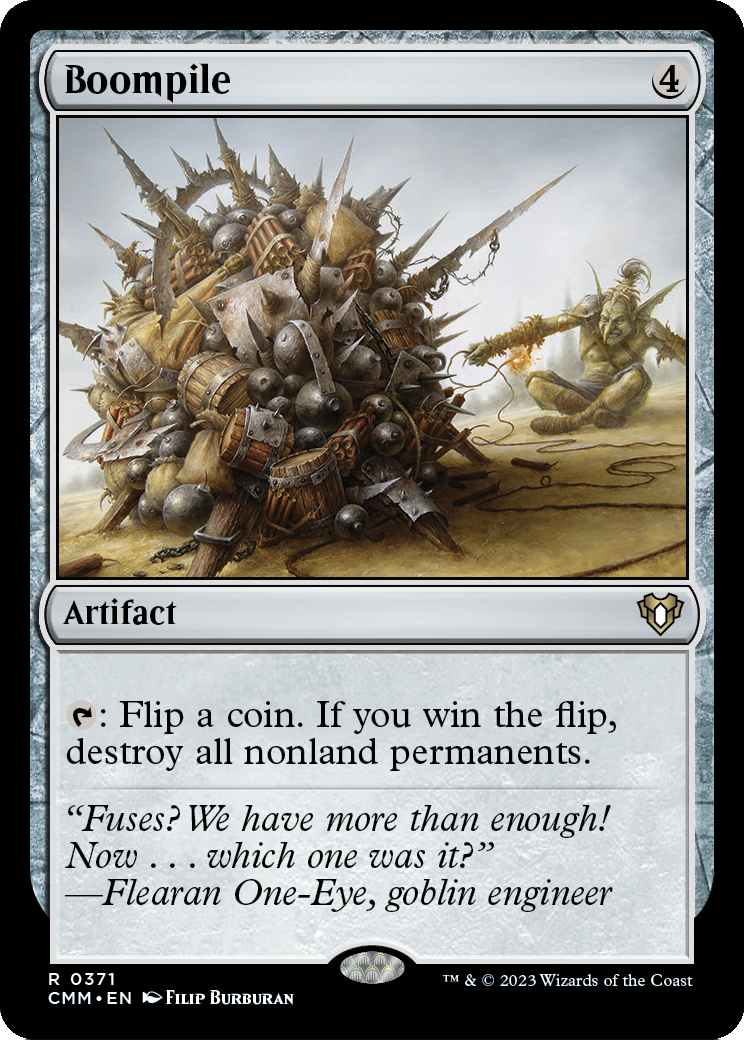
Boompile
Introducing an element of nerve-wracking chance to traditional mass removal, Boompile functions as a wildly unpredictable alternative to standard board wipes. The four-mana artifact requires its controller to tap it and flip a coin; if they win the coin toss, it immediately destroys all nonland permanents, completely wiping the slate clean. The primary tactical advantage of this artifact is that its ability can be activated on the exact same turn it enters the battlefield, giving opposing players zero time to prepare if luck is on the caster’s side.
For artifact-focused players looking for a more controlled, albeit slower, asymmetrical variant, Scourglass offers a similar delayed detonation that specifically spares artifacts and lands. Together, these artifacts provide decks lacking traditional removal colors with the explosive power needed to reset chaotic board states.
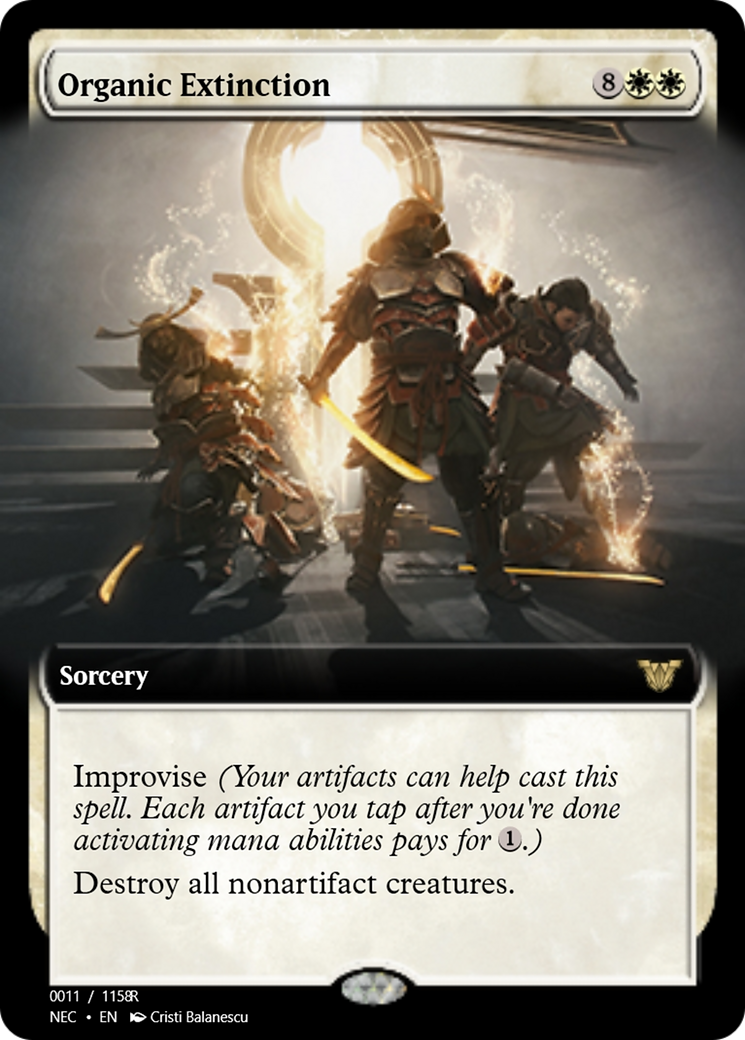
Organic Extinction
Artifact-focused strategies gained one of their most devastating asymmetrical tools with the introduction of Organic Extinction. At a staggering baseline cost of 10 mana, its sticker price initially appears extremely prohibitive, but the Improvise keyword allows players to tap their artifacts—including non-creature mana rocks, Equipment, and Treasure tokens—to pay for generic mana requirements.
Once resolved, the spell destroys all non-artifact creatures on the battlefield, leaving a mechanized army completely untouched. This selective destruction turns what is usually a defensive reset button into a game-ending offensive push, enabling artifact-heavy decks to wipe out enemy blockers and swing for lethal damage on the exact same turn.
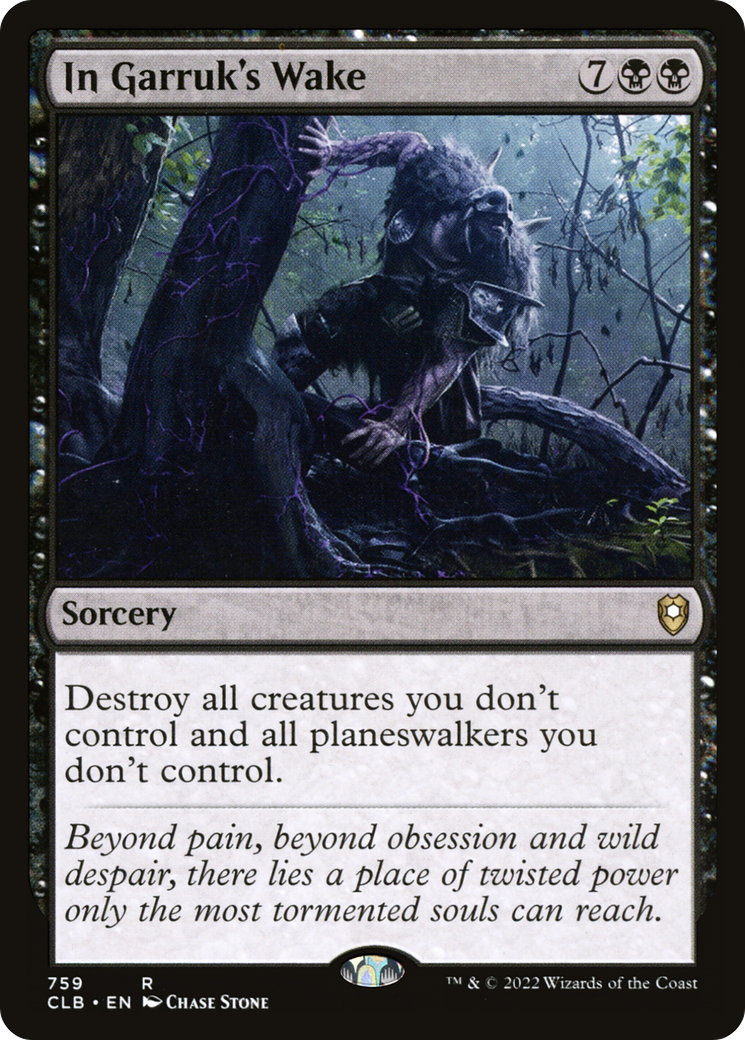
In Garruk’s Wake
Sometimes utter annihilation is worth paying a premium price, and In Garruk’s Wake delivers a remarkably one-sided slaughter. First printed in Magic 2015, this massive nine-mana sorcery destroys not just opposing creatures, but planeswalkers as well. Unlike symmetrical wipes that force a player to rebuild their own defenses alongside their enemies, this spell leaves the caster’s entire battlefield untouched, paving the way for an immediate, game-winning alpha strike.
While nine mana is far too slow for fast-paced one-on-one formats, mono-black Commander decks can easily ramp into the casting cost using tools like Cabal Coffers combined with Urborg, Tomb of Yawgmoth, or cheat the card out using specialized graveyard recursion combos, instantly transforming a stalled late-game board state into a decisive victory.
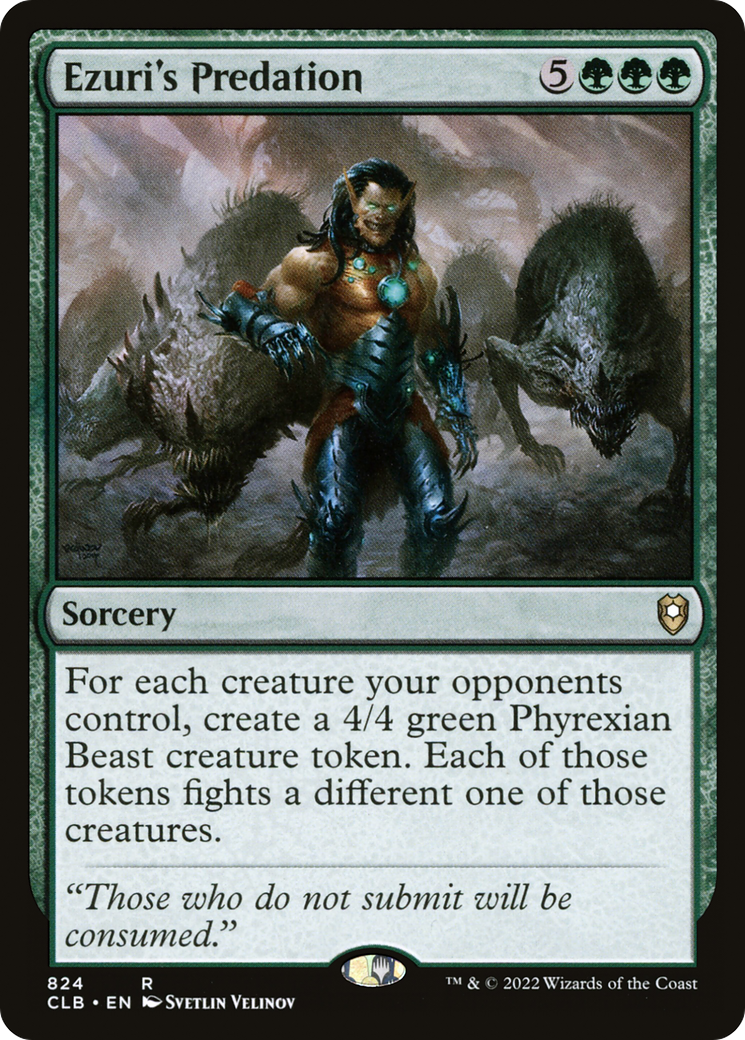
Ezuri’s Predation
Green is historically light on traditional mass creature destruction, making Ezuri’s Predation an unusually valuable asset for the color. Functioning as an unconventional board wipe, the eight-mana sorcery spawns a 3/3 Phyrexian Beast token for every creature controlled by opponents, which immediately fight those targeted enemy creatures. It acts as a brutal board wipe against swarms of smaller utility creatures and tokens while leaving behind an enormous army of surviving beasts.
While green often relies on alternative targeted removal or total resets like The Great Aurora, Ezuri’s Predation stands alone as the color’s premier creature sweeper, turning an opponent’s overwhelming numerical advantage into the very engine of their defeat.
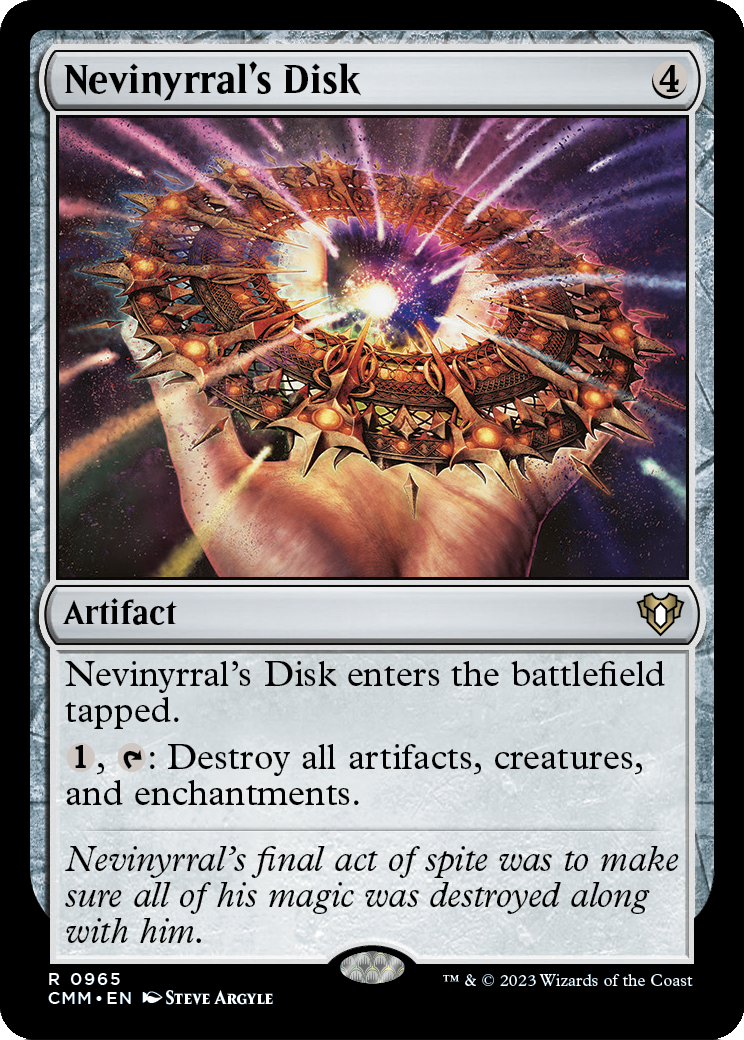
Nevinyrral’s Disk
As Magic‘s original colorless emergency button, Nevinyrral’s Disk—an homage to science fiction author Larry Niven, spelled backward—has been clearing problematic boards since the game’s earliest days. Because it costs just four generic mana, any deck regardless of color identity can run it to destroy all artifacts, creatures, and enchantments simultaneously.
Hiting the battlefield tapped gives opponents a full turn to prepare or respond, creating a tense psychological dynamic where players hesitate to commit more threats to the board. However, the artifact can be accelerated or refreshed with cards like Unwinding Clock and Clock of Omens for swifter removal. Despite being thoroughly telegraphed, its ability to sit on the field as an open threat and activate on demand ensures its status as an enduring classic.
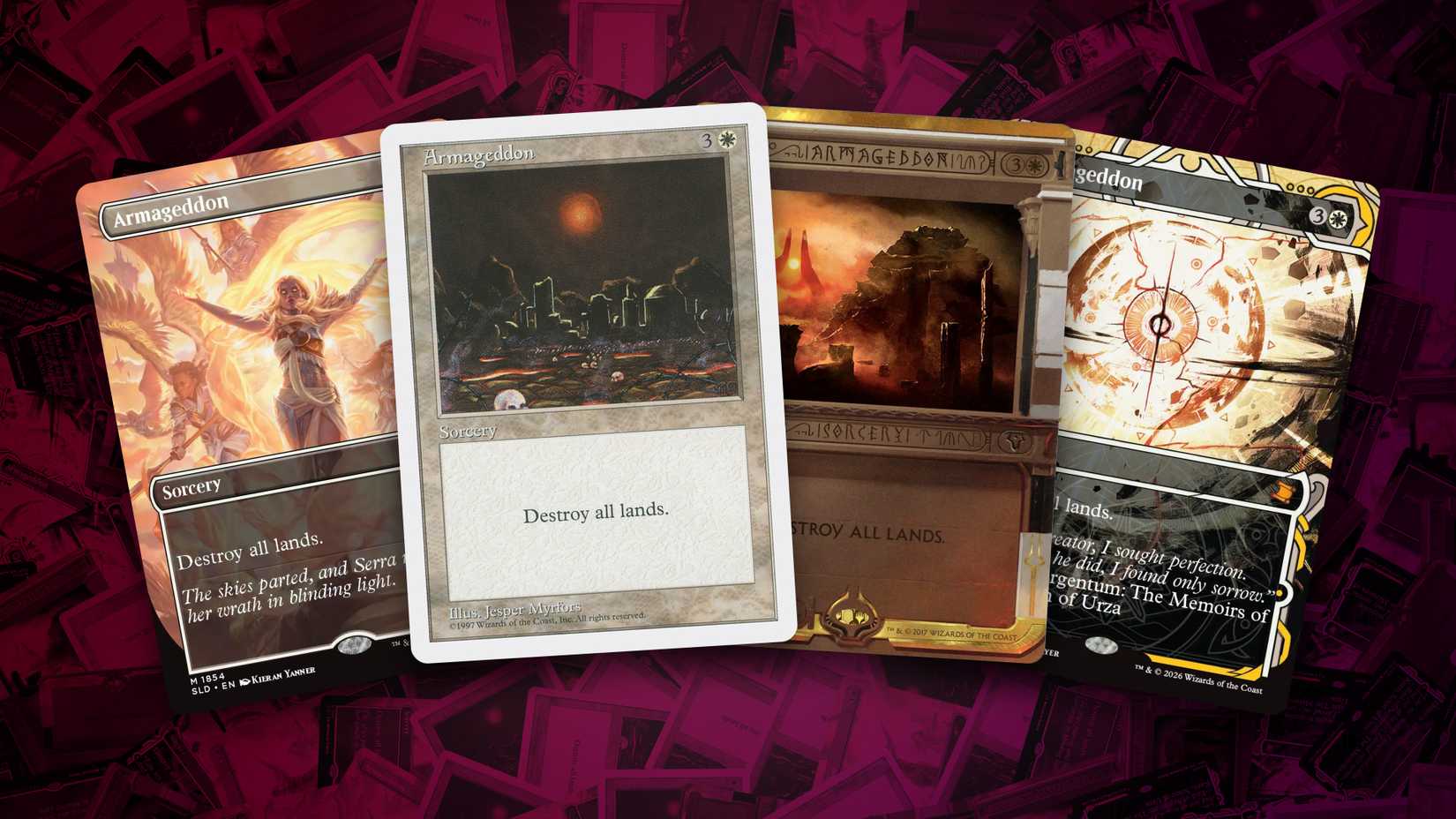
Armageddon
Where most sweepers tend to focus on creatures or artifacts, Armageddon takes a far more aggressive approach to resource denial. For four mana, the white sorcery destroys all lands on the battlefield, effectively erasing the fundamental mana resources of the game.
While mass land destruction carries a heavy social stigma in casual Commander environments, it remains a ruthlessly effective win condition in competitive settings when utilized to lock in an already superior board state. Players frequently break parity by pairing the spell with commanders that manipulate lands from the graveyard or generate alternative resources, such as Thalia and The Gitrog Monster. Due to its fearsome reputation, functionally identical variants like Ravages of War command equally high demand among dedicated control players.
Merciless Eviction
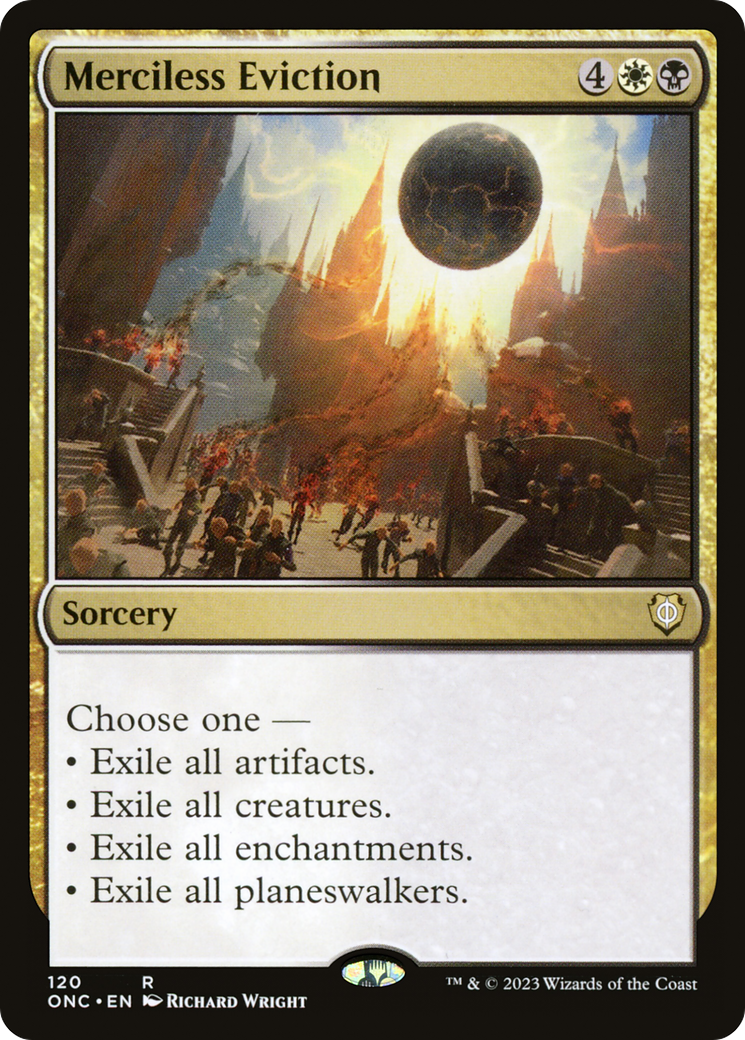
Absolute exile represents the highest tier of removal in Magic, and Merciless Eviction brings Orzhov’s signature ruthless efficiency to the table. The six-mana sorcery forces its caster to select a single card type—artifacts, creatures, enchantments, or planeswalkers—and exiles every instance of it currently on the board.
The permanent nature of exile ensures that indestructible threats, death triggers, and graveyard reanimation targets are completely neutralized. While it lacks the broad multi-modal selection of later spells like Farewell, its ability to cleanly erase an entire enchantment engine or artifact suite makes it a reliable cornerstone for multi-color control decks.

Living Death
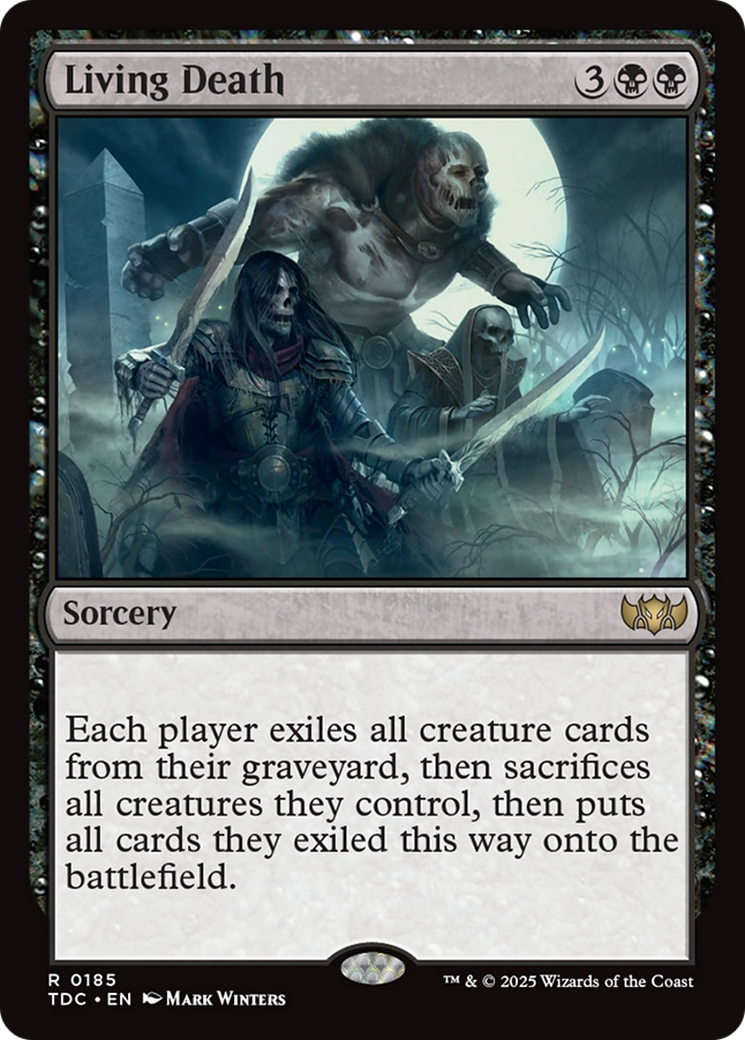
Equal parts mass removal and lethal game-ender, Living Death functions as a board wipe and a win condition rolled into a single chaotic spell. A staple dating back to Tempest, the five-mana sorcery forces every player to sacrifice their entire board and swap those creatures with the ones currently sitting in their respective graveyards.
While technically symmetrical on paper, a deck built specifically around Living Death turns the effect heavily asymmetrical. By filling the graveyard with massive threats and entering-the-battlefield triggers using self-mill or discard mechanics, casting Living Death clears all opposing threats while simultaneously resurrecting a game-winning army for the caster.
Earthquake
Scaling brilliantly from the early turns all the way to the final stages of a match, Earthquake stands out as a foundational red sweeper. By paying an adaptable variable mana cost alongside a single red symbol, it deals damage to each creature without flying and directly to each player.
This dual utility makes the card uniquely dangerous; it can be cast cheaply to clear out early mana dorks and aggressive tokens, or heavily fueled in the late game to serve as a massive burn spell. Because the damage misses flying creatures, decks heavily invested in dragons or angels can safely cast it to incinerate the ground beneath them while leaving their own airborne forces untouched.
Austere Command
Few board wipes offer the tactical flexibility of Austere Command. Ever since its introduction, it has been celebrated for its modular control, allowing players to pick two distinct options out of four to tailor the devastation directly to the current board state.
Casters have the option to wipe all small creatures and enchantments while preserving their own high-cost bombs, or clear away large threats and artifacts while leaving a token army intact. This level of adaptability ensures that Austere Command remains a reliable inclusion in both casual and competitive formats, consistently finding a creative angle to favor its controller over the rest of the table.