San Francisco — Optivolt, an innovative power electronics company working to establish an intelligence layer for the solar industry, announced a $32 million Series A funding round. The investment was led by VXI Capital, a specialized hard-tech fund established by the former Chief Technology Officer of the United States Military’s Defense Innovation Unit. Additional participation in the round came from RA Capital, Valo Ventures, and Atlas Innovate. This latest influx of capital brings Optivolt’s total funding raised to date to $42 million.
The round also boasts backing from a high-profile roster of industry veterans who helped build the modern solar sector. Key investors include Paul Nahi, founding CEO of Enphase; Tom Werner, former CEO of SunPower; and Richard Kauffman, former New York energy czar and Chairman of Energy and Finance for New York.
For nearly a decade, the solar panel has largely evolved into a heavily commoditized piece of passive hardware. Optivolt’s core innovation seeks to disrupt that paradigm by giving the traditional solar panel a digital brain. The company’s flagship technology, the Power Balancer, embeds active power electronics directly inside the physical panel. This system dynamically manages energy among individual cell groups in real time, actively recovering power that is conventionally lost due to shade, inclement weather, surface dirt, and uneven panel degradation over time.
By handling energy management internally, the technology forms a foundational architecture for adaptive, connected solar systems. Optivolt reports that more than 20,000 panels incorporating the Power Balancer have already been shipped to the market. With the closure of its Series A financing, the San Francisco-based firm plans to aggressively scale up its manufacturing operations and deploy its technology across solar installations of every scale. This spans from individual residential rooftops to massive utility-scale projects, including installations specifically designed to help power energy-hungry artificial intelligence data centers.
“Solar became cheap enough to compete. I founded Optivolt to make it intelligent enough to power the world,” said Rohit Kalyanpur, founder and chief executive officer of Optivolt. “For nine years, we’ve rebuilt the solar panel from first principles, embedding aerospace-grade power electronics so it can respond to Earth as it actually is, not the ideal conditions of a lab. The result is the first solar panel system that thinks for itself — one that adapts to shade, weather, dirt and degradation in real time, recovering energy conventional solar leaves behind. The next step is putting it everywhere.”
The broader energy landscape is facing mounting pressures to increase efficiency, reduce soft costs, and reliably meet surging electricity demands driven by industrial expansion and technological advancements. According to industry backers, incremental improvements to legacy designs will no longer suffice.
“The next era of energy will not be built by simply installing more of the same passive solar panels we already have. It will be built by making solar intelligent enough to become the backbone of the global power system,” noted Orin Hoffman, Managing Director at VXI Capital. “Optivolt has spent nine years building the architecture for that future. This financing is about taking it from a technical breakthrough to the platform on which the next generation of solar is built.”
Paul Nahi, who previously spearheaded microinverter technology development as the founding CEO of Enphase, pointed to the evolving demands placed on modern solar arrays as a primary driver for Optivolt’s approach.
“At Enphase, we transformed rooftop solar by managing power at the output of each panel. Today, rising panel power, the widespread adoption of storage, and the urgent need to reduce costs demand a new approach. Optivolt is bringing a new class of power electronics inside the panel itself to unlock the next leap in performance and economics,” Nahi said. “I helped build the last generation of solar power electronics. At Optivolt we are building the next.”
Solar, Rebuilt from the Inside Out
Despite decades of engineering advancements and falling manufacturing costs, the conventional solar panel has remained fundamentally passive hardware. Panels are traditionally rated and sold under strictly controlled laboratory conditions, yet they must operate in an unpredictable physical environment defined by shade, environmental debris, accumulation of dirt, and asymmetrical degradation across strings of cells.
Inside a standard commercial panel, a single underperforming or shaded cell can severely constrain the electrical output of an entire cell group. In many cases, it forces a bypass diode to trip, completely removing that section of the panel from active production. Consequently, a localized obstruction or minor defect can suppress the output of a much larger section of the module, leading to systemic energy losses over the life of the asset.
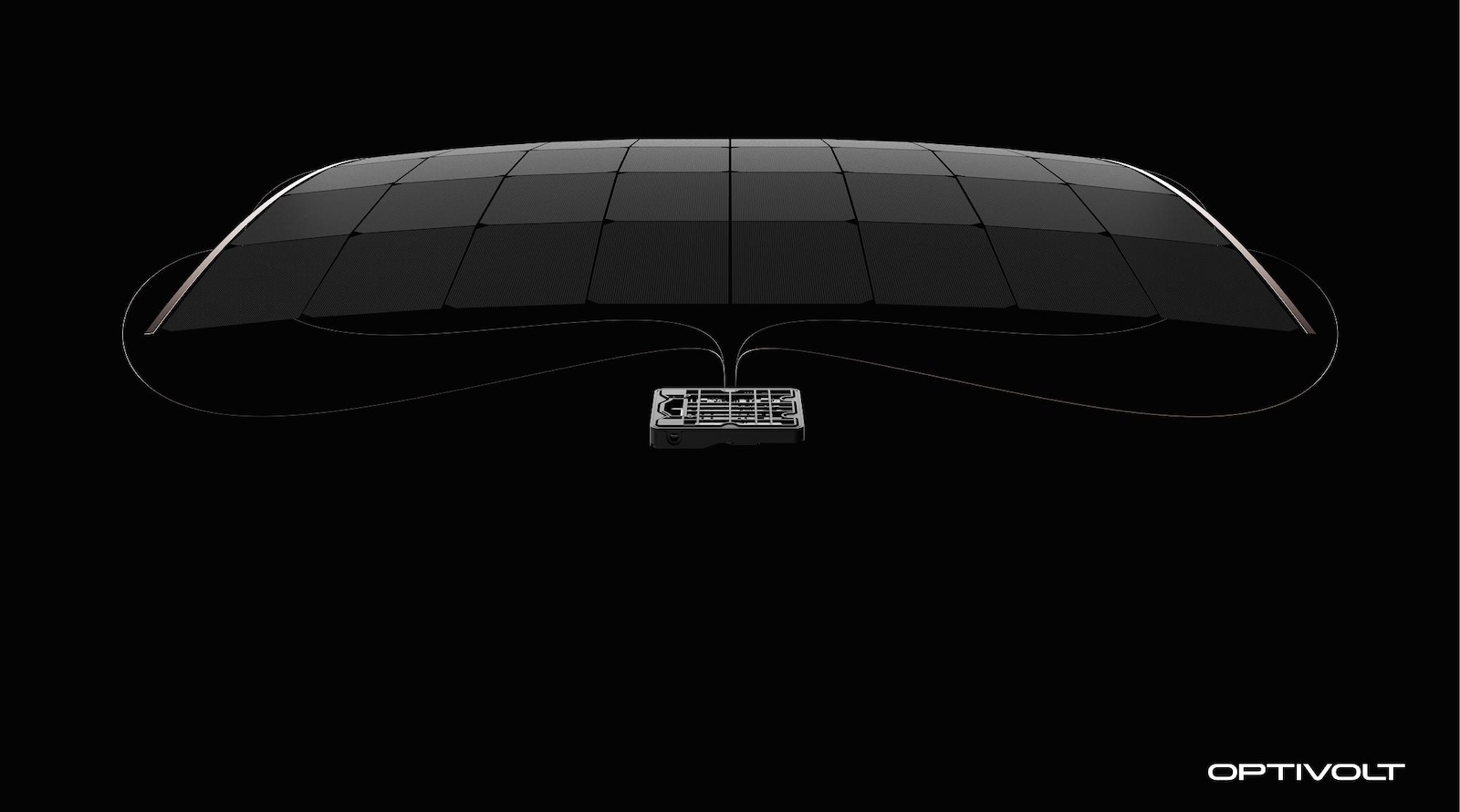
To tackle this inefficiency, Optivolt completely redesigned the electrical architecture housed within the panel by introducing a localized power electronics brain. The Power Balancer continuously redistributes energy among the panel’s internal cell groups in real time, intercepting performance mismatches before they materialize into major generation losses. Furthermore, the technology replaces conventional bypass diodes while integrating rapid-shutdown capabilities and granular monitoring directly into the module. This architectural shift allows solar engineers to design systems without the need for separate, bulky module-level optimizers, microinverters, or standalone rapid-shutdown devices.
Integrating active power electronics within the confined, sealed environment of a solar panel presented a formidable engineering challenge: managing internal heat dissipation. To overcome this hurdle, Optivolt deliberately recruited an engineering team with specialized backgrounds in designing power systems for satellites. This aerospace-inspired discipline—where every single watt of efficiency matters and hardware must operate autonomously in harsh environments without the possibility of physical repair—was successfully translated to a product designed to endure decades of exposure on a rooftop or utility field.
Through this rigorous development process, the team engineered the Power Balancer to achieve a 99.4 percent conversion efficiency rate under typical operating conditions. Optivolt’s intellectual property portfolio currently includes 19 issued patents and an additional 27 pending patent applications covering key elements of its panel-integrated power electronics architecture. Additionally, the company has secured comprehensive Underwriters Laboratories (UL) certifications verifying its integrated junction-box enclosures, panel-integrated electronics, rapid-shutdown mechanisms, and overall solar-module safety compliance.
In internal testing conducted by the company, panels equipped with Optivolt’s technology generated up to six times as much power as standard panels utilizing traditional bolted-on optimizers when subjected to defined shade scenarios.
Changing the Economics of Solar
Industry veterans backing the company emphasize that solving real-world energy yield losses represents the next major frontier for photovoltaic technology.
“At SunPower, we spent nearly three decades pushing the limits of how efficiently a solar panel could turn sunlight into electricity. Optivolt is attacking the other half of the problem: how much energy that panel actually delivers in the real world once it leaves the factory,” said Tom Werner, former CEO of SunPower and an investor in Optivolt. “The next great solar panel won’t just produce more power under ideal conditions. It will deliver more energy across the imperfect conditions of its working life.”

Richard Kauffman, former Chairman of Energy and Finance for New York, highlighted the macroeconomic implications of enhancing actual energy yields over a system’s multi-decade operational lifespan.
“I’ve spent most of my career making clean energy financeable at scale — building new financing tools, redesigning markets and driving deployment costs down,” Kauffman explained. “But finance can only take the industry so far. When the same solar project produces more energy over its lifetime, the economics change everywhere. Optivolt rewrote that equation inside the panel itself, dramatically expanding the share of the world’s energy demand that solar can economically serve.”
With its Series A funding secured and thousands of units already deployed in the field, Optivolt is positioned to scale its operations. The company’s overarching long-term vision is to transform every solar panel from a passive energy harvester into an intelligent, connected node within a global energy network—one capable of autonomously managing its own performance while dynamically coordinating with the broader electrical system surrounding it.