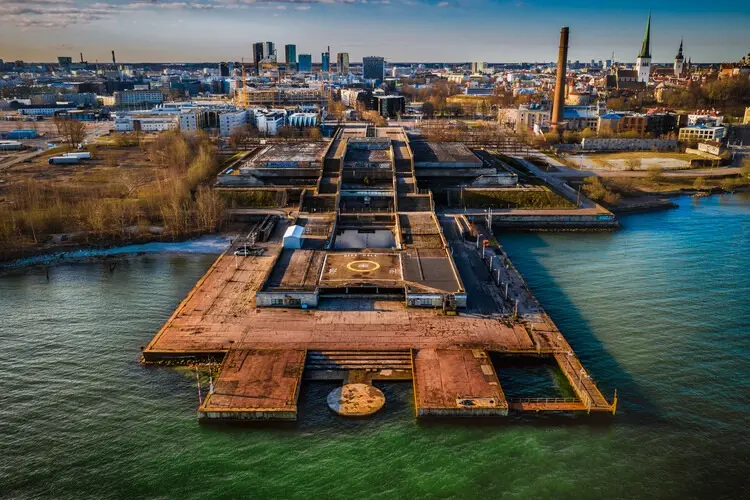
From the northern terminus of Mere Boulevard in Tallinn, Estonia, the Linnahall presents itself as an expansive, low-slung monolith. Constructed of heavy limestone and raw concrete, the structure stretches horizontally between the historic, UNESCO-listed Old Town and the waters of the bay. Its profile was deliberately kept low, intentionally designed to sit beneath the sightline of the city’s medieval architectural silhouette, ensuring that the historic church spires and defensive towers remain clearly visible from incoming vessels on the water.
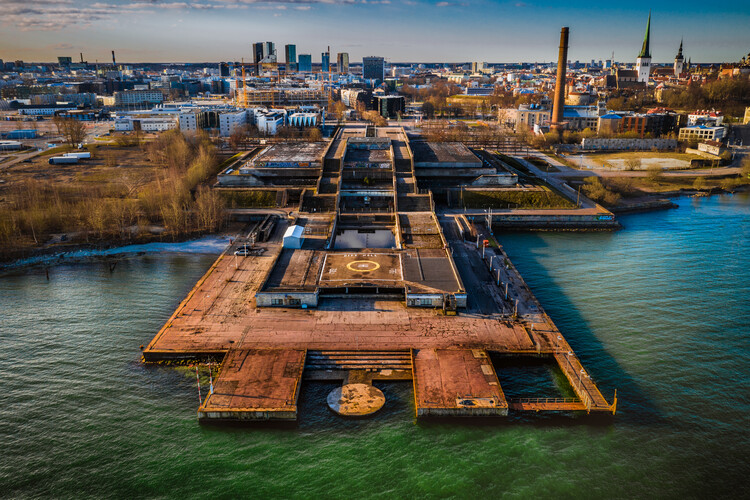
Broad, monumental stairways climb the flanks of the building, drawing pedestrians upward onto a sweeping roof that functions as an elevated public square. From this vantage point, visitors can traverse a sequence of wide terrace steps that descend gently toward a small pier, a historic helicopter pad, and the open expanse of the Gulf of Finland. Beneath this expansive pedestrian surface lies a massive civic interior. The building houses a sprawling amphitheater designed to seat 4,200 people, an expansive central foyer spanning 6,000 square meters, a dedicated ice hall, multiple cafés, a bowling alley, and a professional recording studio.
The monumental structure officially opened in the summer of 1980 under the name the V. I. Lenin Palace of Culture and Sport. Its rapid construction was tied directly to a massive deadline: the sailing regatta events of the 1980 Moscow Olympic Games. Because Moscow, the primary host city, lacked a coastline, the coastal city of Tallinn was selected to stage the Olympic sailing competitions. This designation triggered a massive wave of urban transformation and infrastructure development across the Estonian capital.

The V. I. Lenin Palace of Culture and Sport was just one of more than 120 distinct architectural and urban projects planned and executed under Tallinn’s ambitious Olympic development program. This sweeping modernization effort reshaped the city’s built environment, introducing major landmarks that remain integral to Tallinn today. Alongside the construction of the massive seaside hall, the program funded the creation of the prominent yachting center in the Pirita district, the towering Tallinn TV Tower, the landmark Hotel Olümpia, and an entirely new, modern terminal for the city’s growing airport.
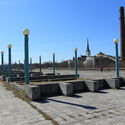
Decades after its debut for the Olympic Games, Linnahall remains an extraordinary example of monumental late-Soviet architecture, capturing a specific moment in the geopolitical and urban history of Tallinn. Its unique integration into the coastal landscape—bridging the gap between the historic urban fabric of the Old Town and the natural edge of the Gulf of Finland—continues to define conversations surrounding the city’s shifting shoreline and the evolving future of its post-industrial waterfront.