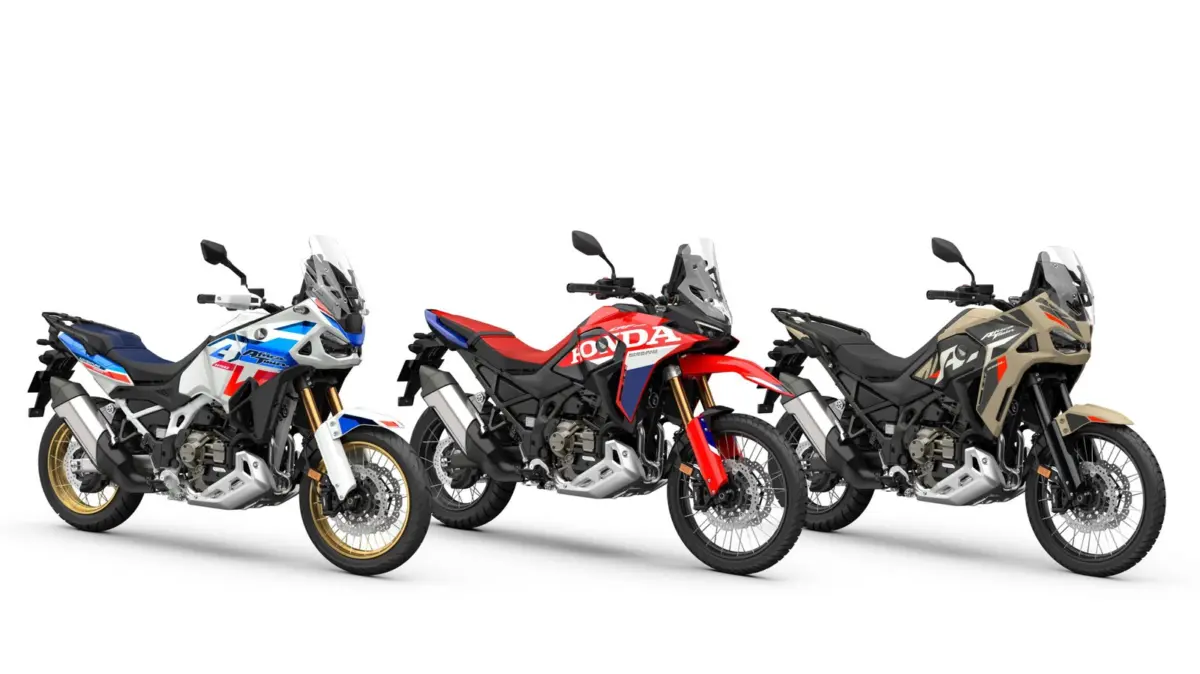
Honda is not resting on its laurels with the Africa Twin, widely regarded as one of the most capable adventure motorcycles on the market. During the recent EICMA exhibitions, the Japanese manufacturer officially pulled the cover off a heavily updated, next-generation iteration of its flagship adventure lineup. The bike is stepping up from the CRF1100L designation to the CRF1150L, bringing notable updates to its technology, styling, and long-distance comfort. The most striking development, however, is the introduction of a brand-new third sibling to the adventure touring family: joining the traditional Africa Twin and the long-haul Africa Twin Adventure Sports is the aggressive new Africa Twin Enduro Sports.
Underneath the updated bodywork lies a reworked powerplant. The new engine is a 1,31-cc parallel-twin cylinder motor, which presumably retains the character-rich 270-degree crank offset that has become immensely popular across the modern motorcycle industry. According to global specifications provided by Honda, this new mill generates 117 horsepower and 88 pound-feet of torque. Because these figures originate from the initial global and European-spec unveilings, riders in the United States should anticipate potential adjustments to accommodate local emissions and noise regulations once regional details are finalized.
This robust new engine is bolted into a completely redesigned frame. Notably, engineers have tucked the fuel tank beneath the rider’s seat to significantly lower the machine’s overall center of gravity. This innovative packaging trick—reminiscent of the layout seen on older middleweight adventure models like the BMW F800GS—promises to make the hefty new Africa Twin feel remarkably smaller and more manageable from the saddle, counteracting what will likely be a substantial curb weight once all liquids and accessories are factored in.
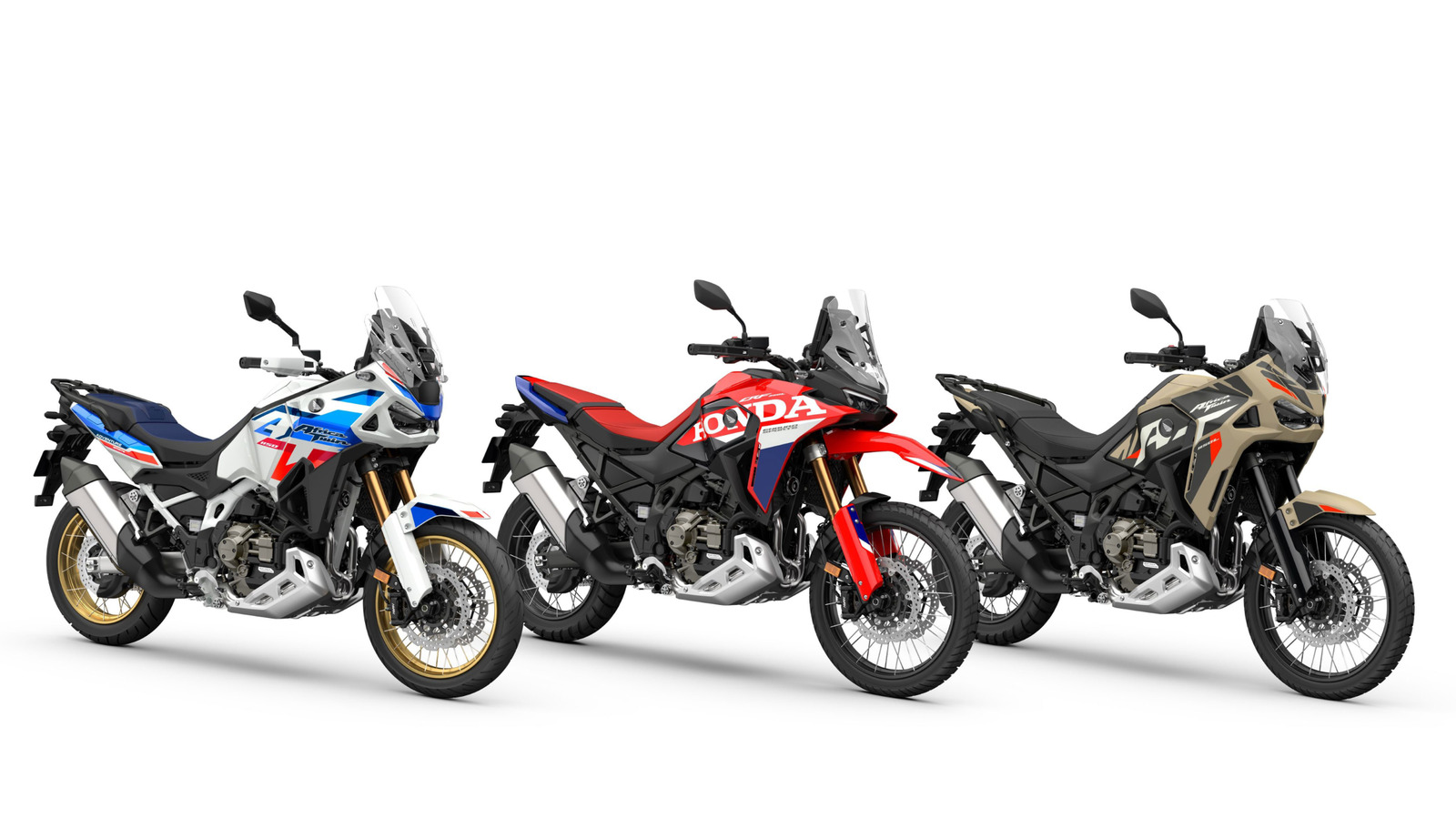
The New Sibling: Africa Twin Enduro Sports
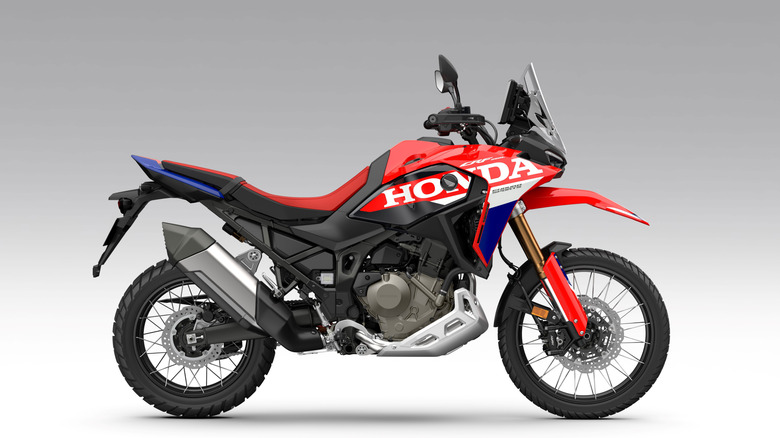
The most talked-about addition to the revamped lineup is unquestionably the Africa Twin Enduro Sports. Honda is positioning this new variant as a larger, heavier-duty spiritual sibling to its celebrated CRF450 dirt bike. In its official communications, the company asserts that the Enduro Sports features front suspension specifications "equivalent" to the smaller competition machine.
While interpreting what "equivalent" suspension truly means across two radically different motorcycle frames, dimensions, and intended riding styles remains open to debate, Honda’s intent is clear. The Enduro Sports is designed to be the most aggressively dirt-focused member of the Africa Twin family—pushing the envelope of what is realistically possible for a large-displacement adventure motorcycle.
For years, watching riders pilot heavily accessorized, heavy-displacement adventure touring bikes down grueling backroads better suited to lightweight dual-sport motorcycles has been a staple of the off-road community. With the Enduro Sports, Honda appears to have built a machine specifically tailored for riders who want to tackle deep sand dunes and rugged single-track at speed. Whether a machine weighing well over 500 pounds is truly the ideal tool for desert dune-ripping is debatable, leading many enthusiasts to wonder if this particular trim level was practically engineered with extreme riders like extreme stunt rider Pol Tarres in mind.
Advanced New Features and Electronic Aids
While the Enduro Sports carves out a niche for aggressive off-road enthusiasts, Honda has simultaneously overhauled the standard Africa Twin and the Adventure Sports models with sophisticated touring technology. Both foundational models receive what Honda formally designates as the Showa Electronically Equipped Ride Adjustment electronically controlled suspension with Honda Skyhook control—a mouthful of technology that can be more simply understood as a real-time adaptive damping system.
Honda claims this Skyhook technology continuously adapts damping parameters in near real time, isolating the rider from harsh road surface textures and minor imperfections. This heavy focus on touring comfort suggests that both the base model and its siblings are steering slightly more toward road-oriented touring capability than previous generations, even if the base Africa Twin steadfastly retains its traditional 21-inch front wire-spoked wheel for genuine off-road versatility.
This advanced electronic suspension is seamlessly integrated with a comprehensive suite of modern rider aids. The electronics package includes lean-sensitive anti-lock braking systems, advanced traction control, and comprehensive stability management, all of which can be customized across six distinct rider modes. Furthermore, Honda’s signature dual-clutch transmission (DCT)—which has long served as a defining pillar of the modern Africa Twin experience—is expected to be available across all three variants in the lineup.
Adventure Sporting and Radar-Assisted Safety
True to form, the Adventure Sports model remains firmly positioned as the premier long-distance road-touring variant within the family. It features a generous 6.34-gallon fuel tank (while Honda has not yet disclosed official capacities for the base and Enduro Sports variants) and a distinctive, road-focused fairing design. It maintains the 19-inch front wheel of its predecessor, utilizing a cross-spoked construction that ensures full tubeless tire compatibility.
For the new generation, Honda has equipped the Adventure Sports with advanced safety software typically reserved for luxury touring cruisers like the Honda Gold Wing. Selected DCT-equipped variants will now feature the Honda Sensing Ride system, which utilizes dual front and rear radar units to continuously monitor the immediate environment surrounding the motorcycle.
The front-facing radar unit powers an advanced adaptive cruise control system. However, Honda has taken this technology a step further by granting its adaptive cruise control the capability to bring the motorcycle to a complete, stationary stop in heavy traffic, and subsequently resume forward motion automatically when the vehicle ahead begins to move again—a level of automated intervention that marks a significant step forward for two-wheeled transit. Additionally, the comprehensive radar array enables forward and rear collision warning alerts, advanced brake assist functionality, and a dedicated group ride mode designed to support staggered formations during group motorcycle tours.
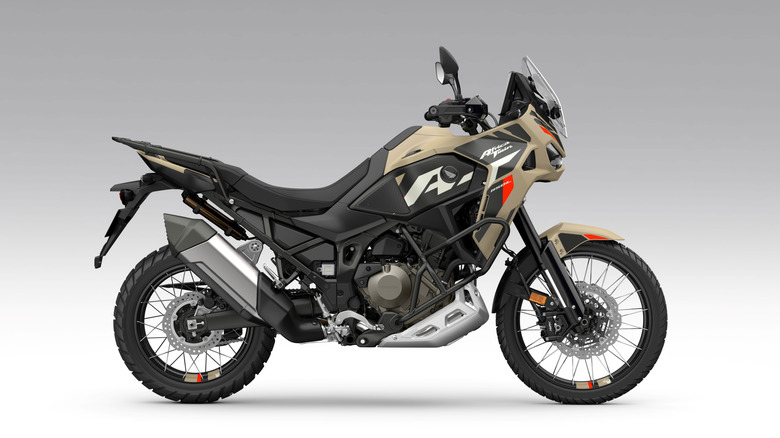
Ultimately, the 2027 Honda Africa Twin promises to be a comprehensive and meaningful evolution over the outgoing CRF1100L platform. By pairing increased engine displacement with a lower center of gravity, highly sophisticated electronic suspension, and advanced radar-based safety systems, the refreshed lineup leans further into refined, long-distance touring capability—with the delightfully aggressive, Dakar-inspired Enduro Sports standing ready for riders seeking uncompromised, large-displacement off-road fun.