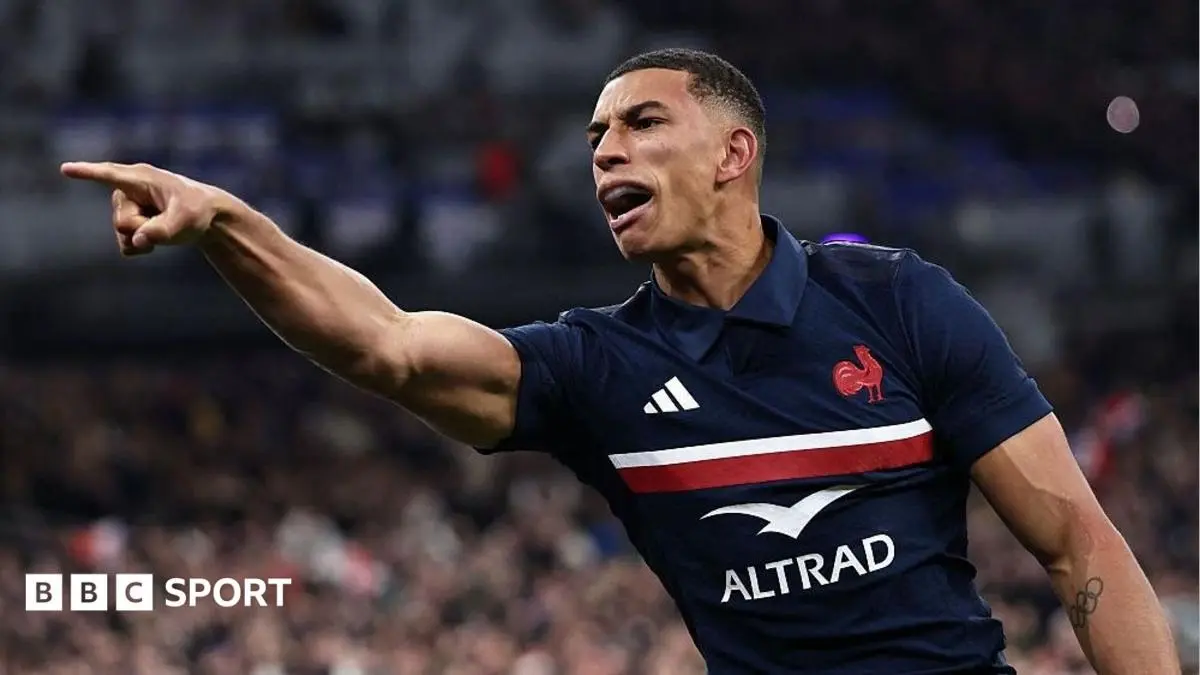
In a gripping encounter at the Stade de France, France secured a landmark 21-19 victory over South Africa, snapping a five-match losing streak against the reigning world champions. The result is a significant turning point in the Nations Championship, effectively denting the Springboks’ aspirations of reaching the tournament final while placing Les Bleus in a commanding position to top the Northern Hemisphere standings.
The match was an exhibition of contrasting styles and tactical intrigue. From the outset, France, orchestrated by their talismanic captain Antoine Dupont, played with a level of flair and precision that caught the visitors off guard. The hosts utilized an expansive game plan, relying on the speed and agility of their back three—Aaron Grandidier-Nkanang, Theo Attissogbe, and Louis Bielle-Biarrey—to dismantle the South African defense during a high-octane first half.
Tactical Ingenuity Amidst Personnel Crisis
The buildup to the clash had been defined by a significant injury crisis within the French camp. With first-choice fly-halves Matthieu Jalibert, Romain Ntamack, and Antoine Hastoy all sidelined, head coach Fabien Galthie faced a selection dilemma. His solution was as bold as it was unconventional: deploying Antoine Dupont in the number 10 jersey.
While the team sheet listed Dupont at fly-half, the reality on the pitch was a fluid, dual-playmaker system. Galthie seemingly played a game of chess against his South African counterpart, Rassie Erasmus, who had once again opted for his trademark "Bomb Squad" approach, swapping his entire front row just an hour before kick-off.
The French tactical gamble paid dividends almost immediately. A clever opening move saw Kalvin Gourgues carve through a gap in the Springbok defensive line, setting the stage for Grandidier-Nkanang to touch down in the corner. Shortly thereafter, with South African lock Lood de Jager sent to the sin-bin for a high tackle, Dupont showcased his world-class vision. A perfectly executed 50:22 kick pinned the visitors deep in their own territory. Following a fortunate bounce off Gourgues’ head, Attissogbe crossed for the hosts’ second try, with Maxime Lucu adding the extras.
The spectacle continued as Dupont added further magic to his repertoire, utilizing a precise grubber kick on his right foot that allowed Bielle-Biarrey to pounce and score, giving France a commanding lead. South Africa managed to respond through hooker Jan-Hendrik Wessels, who powered over from the back of a driving maul, but the momentum remained firmly with the French as they entered the interval with a 21-7 lead.
A Tale of Two Halves: The Springbok Fightback
The complexion of the match shifted dramatically after the break. South Africa, known for their relentless physical intensity, began to assert their dominance at the set-piece. Early in the second half, number eight Jasper Wiese was issued a 20-minute red card for a tucked-shoulder charge, a moment that appeared to offer France a golden opportunity to bury the contest.
However, the dismissal served as a catalyst for the world champions rather than a detriment. The Springboks tightened their structure, and the introduction of fresh legs from the bench—including replacement scrum-half Cobus Reinach and hooker Malcolm Marx—began to turn the tide. As France’s discipline faltered and fatigue began to take its toll, the game descended into a chaotic, loose affair that played directly into the hands of the South African pack.
Reinach darted over for a quick score, and Marx added another, bringing the visitors within striking distance at 21-19. The pressure intensified when France’s Grandidier-Nkanang was sent to the sin-bin for a deliberate knock-on, leaving the hosts a man down during a critical period. When replacement French prop Regis Montagne was also yellow-carded for collapsing a scrum, France was forced to defend their two-point lead with thirteen men against a surging South African forward pack.
The tension in the Stade de France was palpable. South Africa, relying on their set-piece supremacy, looked destined to clinch a dramatic comeback victory. However, in the dying moments, the match pivoted on a moment of individual defensive brilliance. As South Africa pushed for the decisive score, Bielle-Biarrey executed a crucial intervention, forcing the ball loose. Dupont, demonstrating the awareness that has made him the world’s premier player, gathered the ball to snuff out the danger and seal the win for his side.
The Cost of Fine Margins
The final scoreline will be a source of deep frustration for the Springboks, particularly for Manie Libbok. After Marx’s try, Libbok was presented with a conversion that would have leveled the game; the kick drifted wide, echoing his struggles in high-pressure moments during the 2023 World Cup. The missed opportunity ultimately proved fatal to South Africa’s hopes.
For France, the victory is a testament to their resilience. Often questioned for their defensive grit, the team produced a stunning scramble-defense effort in the final ten minutes, proving they could hold firm when their scrum was under extreme duress. This win marks a significant milestone for Galthie’s men, who are now six points clear at the top of the Northern Hemisphere standings.
The result also has major implications for the rest of the Nations Championship. England and Ireland, both of whom remain in contention for the final at the Allianz Stadium on November 29, will view this result as a significant blow to their own ambitions. France now turns their attention to a showdown against Argentina next Saturday, with the finish line of the tournament firmly in their sights.
South Africa, conversely, finds itself in a precarious position. Following the defeat in Paris, they travel to Dublin to face Ireland next Saturday. They will likely need a significant result there, along with a favor from England—who face New Zealand—if they are to salvage their standing in the tournament.
The match served as a stark reminder of the fine margins that define elite international rugby. While South Africa’s power game nearly secured them the win, France’s first-half clinicality and late-game defensive tenacity ensured the points remained in Paris. As the tournament enters its final stages, the landscape has shifted, with Les Bleus standing as the team to beat.
France: Attissogbe; Grandidier-Nkanang, Gourgues, Moefana, Bielle-Biarrey; Dupont, Lucu; Gros, Marchand, Falatea, Verhaeghe, Guillard, Cros, Woki, Alldritt.
Replacements: Mauvaka, Neti, Montagne, Ollivon, Staniforth, Capilla, Desperes, Gailleton.
South Africa: Willemse; Arendse, Kriel, De Allende, Hooker; Feinberg-Mngomezulu, van den Berg; Steenekamp, Wessels, T du Toit, De Jager, Nortje, PS du Toit, Kolisi, Wiese.
Replacements: Marx, Nche, Louw, Mostert, Hanekom, De Villiers, Reinach, Libbok.