By Tessa Wong and Osmond Chia
Reporting from Singapore
A seismic scandal involving the sudden resignation of Nvidia founder and CEO Jensen Huang has sent shockwaves through the global technology sector, casting a harsh, unforgiving spotlight on Singapore’s long-standing status as a premier global chip hub. The fallout, which centers on allegations of illicit trade and a high-profile personal affair, has exposed the vulnerabilities inherent in the city-state’s meticulously cultivated reputation as an open, business-friendly economy.
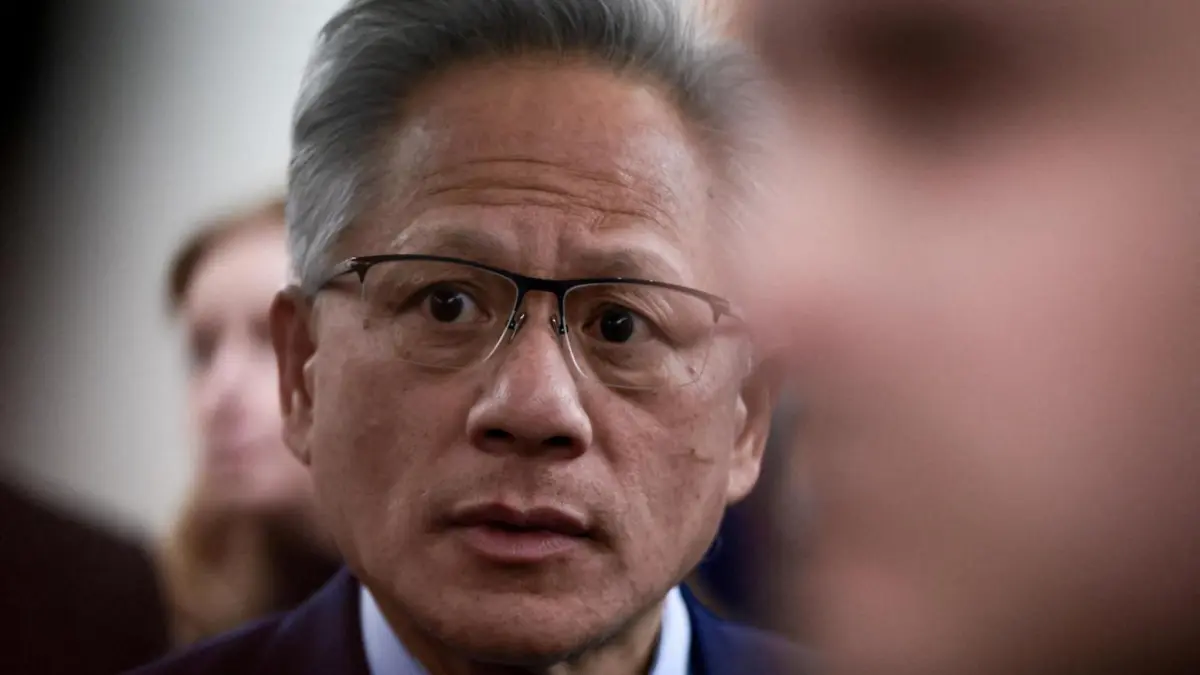
On Thursday, the technology world was stunned when Jensen Huang announced his resignation from the helm of the US-based semiconductor giant. The move followed a board meeting where the gravity of a personal scandal became untenable. Reports have linked the departure to an affair between Huang and Alice Huang, a prominent figure in the data center industry who ran Megaspeed, a Singaporean company that had emerged as a staggering, high-volume buyer of Nvidia’s most advanced artificial intelligence chips.
For decades, Singapore has operated as a vital bridge between the East and the West, offering an environment that seamlessly facilitates trade with both US and Chinese markets. In the wake of the global AI boom, the island nation has become a linchpin for the semiconductor trade. Last year, Singapore served as Nvidia’s second-largest billing center globally, accounting for nearly 20% of the company’s total earnings. However, the nature of this trade has drawn intense scrutiny; remarkably, less than 1% of those chips were destined for actual consumption within Singapore. Instead, the city-state has functioned as a massive, opaque conduit, allowing various Asian entities to aggregate orders and ship hardware to diverse, often obscured, final destinations.

This logistical role has put Singapore squarely in the crosshairs of US regulators. Since 2022, the United States has implemented stringent export controls to prevent advanced American semiconductors from reaching Chinese companies or military-linked entities. US officials have long harbored fears that intermediary hubs like Singapore could be exploited as backdoors. Megaspeed has emerged as the focal point of these anxieties.
As the largest purchaser of Nvidia chips in Southeast Asia, Megaspeed’s operations have been subject to intense investigation. Authorities suspect the company provided illicit, backdoor access to restricted AI hardware to Chinese firms, utilizing data centers spread across Malaysia, Indonesia, and Thailand as staging grounds. While Singaporean law does not explicitly prohibit the transshipment of advanced AI hardware to foreign entities, such activities frequently run afoul of unilateral US export controls.
The Singaporean government has maintained a delicate stance, stating that while it does not enforce the unilateral export restrictions of other nations, it expects all corporations within its jurisdiction to adhere to international regulations. In recent months, the city-state has demonstrated a willingness to crack down on violators. Authorities have already brought charges against four companies and five individuals, including several Chinese nationals, for fraud. These actions were prompted by reports that Chinese AI firm DeepSeek had been sourcing Nvidia chips through third-party intermediaries in Singapore.
Despite these successes, the investigation into Megaspeed has proven remarkably difficult. In an official statement released on Thursday, the Singaporean government revealed that it had been probing the firm and its associates since February 2025. The inquiry focuses on whether these companies filed false declarations regarding the final destination of high-end data servers. While the shipments were officially destined for neighboring Malaysia, Singaporean authorities suspect that the equipment was surreptitiously routed elsewhere.

A significant hurdle in the investigation has been a lack of international cooperation. Singaporean authorities reported that they had made multiple requests for information regarding Supermicro, a US-based supplier of the servers used by Megaspeed. Despite repeated attempts to engage with US officials, Singapore claims it has received limited assistance to date. The US State Department has yet to provide comment on the matter.
Furthermore, the investigation into Alice Huang herself has been complex. While she was probed by Singaporean authorities regarding her potential role in the suspected fraud, the inquiry did not extend to charges of espionage. After holding her passport for several months, authorities eventually found "insufficient evidence" of criminal conduct, allowing her to depart the country in February of this year. Nearly two years after the initial probe into Megaspeed began, no formal charges have been filed against the company or its key figures, though both US and Singaporean investigations remain ongoing.
The scale of the alleged deception is profound. A 2024 inspection by US officials at a Malaysian data center owned by Megaspeed reportedly uncovered crates of Nvidia technology still in their original packaging, fueling suspicions that the firm was operating as a front for unauthorized redistribution. Bloomberg has also reported discrepancies in import data, suggesting that in the previous year, Megaspeed had imported 50,000 more chips than could be accounted for by Nvidia’s own internal audits—figures that Nvidia only adjusted after conducting its own physical inspections of regional warehouses.
Megaspeed has consistently denied any wrongdoing, asserting that its operations have always complied with the law and that previous government inspections yielded no evidence of illegal activity. On Thursday, the company issued a statement welcoming "appropriate government scrutiny" and expressing a commitment to working transparently with the US government. Beijing, meanwhile, has repeatedly denied claims that its institutions are engaged in the illicit procurement of American technology.

The scandal has forced a conversation about the concept of "Singapore-washing." The city-state’s political stability, rule of law, and large ethnic Chinese population have made it an attractive base for major tech firms like TikTok and Manus. While these attributes facilitate genuine business, critics argue they also allow Chinese firms to obscure their origins, reducing suspicion and masking activities that might otherwise trigger red flags in Western markets.
Washington-based security analysts at C4ADS have characterized the creation of Megaspeed as a textbook example of this phenomenon. An examination of corporate records in China, Hong Kong, and Singapore revealed that in 2019, Alice Huang sold a gaming company to the Chinese firm 7Road. By March 2023, a 7Road subsidiary in Singapore had appointed Huang as its executive director, and the following day, the company was rebranded as Megaspeed.
Although Huang transferred the company to a Singaporean national after eight months, C4ADS assessed that she remained in effective control of the firm, noting that she continued to identify herself as Megaspeed’s "chairwoman" at industry conferences long after the supposed transfer of power. These corporate linkages raise fundamental questions about whether Megaspeed’s identity as a Singaporean entity is genuine or if it is effectively a vehicle under Chinese control. Megaspeed has declined to address queries regarding its relationship with the Chinese government.
For Singapore, the scandal has intensified an already precarious geopolitical balancing act. Nanyang Technological University lecturer Dylan Loh noted that Singapore has long thrived by maintaining excellent relations with both Washington and Beijing, positioning itself as a neutral party that is "pro-Singapore." However, as the chip wars escalate, this neutrality has become increasingly difficult to maintain.

Political scientist Chong Ja Ian of Carnegie China suggests that the situation puts Singapore in a lose-lose position. Beijing may view Singapore’s investigations as an act of alignment with US interests, while Washington may interpret Singapore’s public statements regarding the lack of US assistance as an attempt to deflect blame. "Singapore has made a policy position not to take sides," Chong said. "But by not choosing a side, they run the risk of being seen as complicit in either side’s agenda."
Ultimately, the downfall of Jensen Huang and the scrutiny surrounding Megaspeed serve as a stark reminder of the risks inherent in an interconnected, globalized economy. As Benjamin Ho, an expert on China at the S. Rajaratnam School of International Studies, observed, this is the inevitable cost of being a vital, open economy. When the relationship between superpowers turns sour, those caught in the middle often bear the brunt of the fallout. Whether Singapore can preserve its reputation as a neutral and trustworthy hub in the face of such intense pressure remains an open question.