Before the outbreak of the Second World War fundamentally reshaped the American landscape and economy, the nation was already experiencing a profound transformation in how people and goods moved across the country. Commercial transit was expanding rapidly via airplanes, expanding passenger rail networks, personal automobiles, and, most prominently for the era’s mass transit, cross-country buses. The Greyhound Corporation was enjoying such immense commercial success during this pre-war period that the company was actively exploring futuristic ways to take public transportation into the skies, experimenting with early concepts that foreshadowed modern aviation. Naturally, this burgeoning market created fertile ground for competing bus coach manufacturers to emerge, eager to capture a share of the growing demand for road travel.
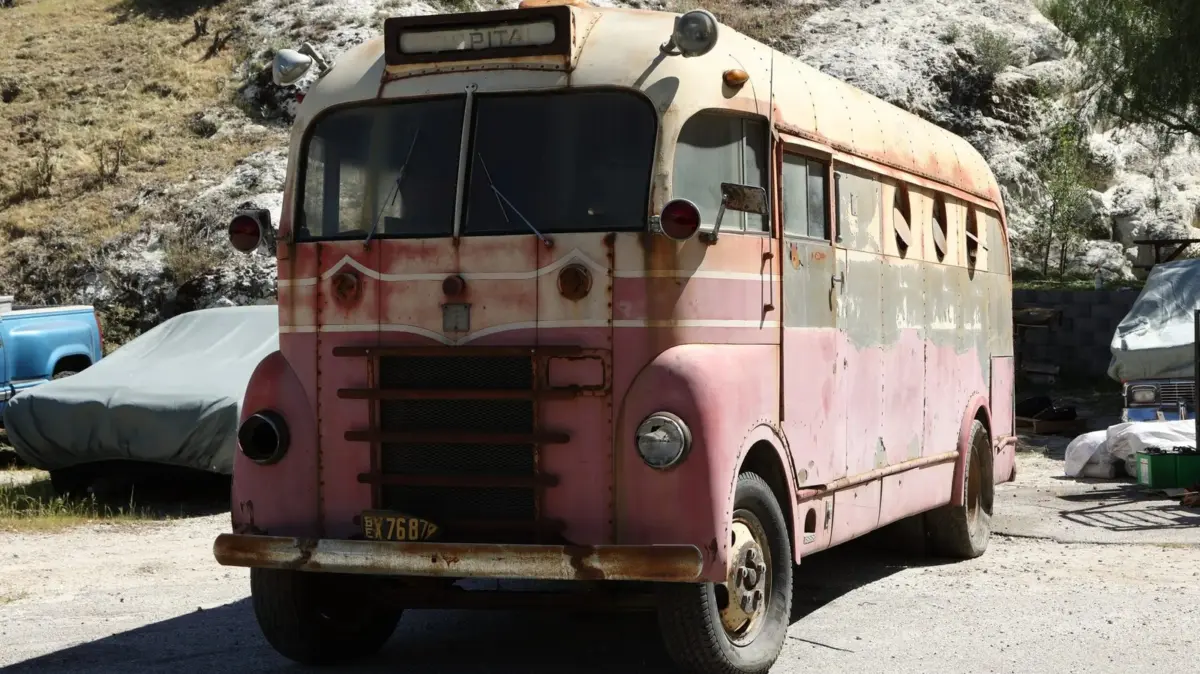
It was within this competitive environment that a distinct piece of American automotive history came into existence: a pinkish, delightfully idiosyncratic vehicle known as a Pony Cruiser. Currently listed on the automotive auction platform Bring a Trailer, this classic vintage bus carries a storied past and stands ready for a dedicated enthusiast to give it a beautiful, respectful second life on the open road.
Pony Cruisers were compact buses designed to accommodate between 16 and 18 passengers, manufactured primarily by the Michigan-based coachbuilder Kalamazoo Coaches during the early 1940s. As the decades progressed and industrial manufacturing evolved, the company transitioned into the Unifab Corporation in the 1950s—an enterprise that remarkably still operates today in nearby Portage, Michigan. During its active production run, Kalamazoo Coaches manufactured approximately 625 of these Pony Cruisers, catering to various commercial and municipal needs.
Out of that total production, however, a select three vehicles were diverted from standard passenger transit and converted into highly specialized Mobile Emergency Room Units, mirroring the patina-covered, history-laden bus currently making waves among vintage vehicle collectors. These particular units were specifically designed and commissioned for President Franklin Delano Roosevelt’s U.S. Office of Civilian Defense. Their intended purpose was entirely practical and rooted in the grim realities of wartime preparedness, designated for deployment during potential enemy air raids, severe industrial disasters, and battlefield-adjacent triage operations. These were matters of critical national importance, particularly in the immediate aftermath of the December 1941 bombing of Pearl Harbor, which thrust the United States into a state of total mobilization and civilian defense vigilance.
Following the conclusion of World War II, many of these specialized civilian defense assets were decommissioned and sold off to private entities. This specific unit found a second career with the Snyder Ambulance Company, where it remained in active service until 1951. Once it was finally retired from emergency duties, the vehicle was parked and effectively left to transform into a rolling time capsule. Over the decades, it accumulated a rich layer of natural patina while preserving a fascinating interior layout complete with untouched artifacts of mid-century emergency medicine, including unused gauze, vintage medicine bottles, and authentic plasma cans left behind from a bygone era of medical transport.
Causing a Scene in Patina Glory, Sirens Ablaze
Underneath its historic and weathered exterior, Pony Cruisers like this rare medical variant were constructed upon a sturdy Ford commercial chassis. Powering the vintage vehicle is a robust 239 cubic-inch flathead V8 engine, which is coupled to a traditional three-speed manual transmission. According to historical accounts and period specifications, the speedometer on these machines was designed to top out at around 100 miles per hour, an ambitious velocity for a vehicle of its size and era. Listings on Bring a Trailer indicate that the mechanical odometer currently reads around 19,000 miles, though due to the vehicle’s age and complex history, the true mileage remains officially unknown.
Stepping inside reveals a rear compartment that effectively functions as a miniature mobile hospital. The space is remarkably intact, outfitted with original storage cabinets, a functional 120-volt electrical outlet, patient examination tables wrapped in classic brown vinyl padding, and an assortment of period-correct medical equipment. Furthermore, the sale of the vehicle includes four rolling gurneys, preserving the complete operational context of its emergency medical background. While nearly all of the foundational components appear to be present, they naturally exist in a roughish, heavily weathered condition that reflects decades of storage and disuse.
The exterior of the bus tells an equally compelling visual story. The faded red-and-white paint job still stubbornly clings to faint traces of historical lettering along its sides, reading "Snyder Ambulance Service Hospital." Other notable exterior features include 18-inch steel wheels, functional front and rear spotlights designed for nighttime emergency responses, period-appropriate porthole-style side windows that define mid-century automotive design, and practical rear barn doors that allowed for efficient patient loading and unloading.
According to details provided in the Bring a Trailer listing, a traditional factory serial number could not be located on the vehicle, meaning this rolling historical monument will be transferred to its next custodian accompanied strictly by a bill of sale rather than a standard title. For a dedicated restorer, navigating the bureaucratic hurdles of obtaining a proper title may ultimately prove to be among the least daunting challenges.
Attempting a comprehensive, frame-off restoration of this rare American relic will undoubtedly demand immense patience, specialized skill, and considerable resources. Yet, undertaking such a project represents far more than a standard mechanical overhaul; it serves as a tangible nod toward preserving a monumental chapter of America’s past. This vehicle stands as a direct witness to the nation’s World War II history during a period of profound uncertainty, civic mobilization, and domestic defense. Beyond its wartime significance, preserving the Pony Cruiser offers a rare opportunity to safeguard a dwindling fragment of non-Detroit automotive history—a segment of American manufacturing heritage that is steadily disappearing as time, elements, and age claim the remaining physical reminders of a remarkable industrial era.