Driving through Upstate South Carolina today, it is hard to imagine that the bustling economic engine centered around Greenville, Spartanburg, and Woodruff was once an area facing severe post-industrial decline. Decades ago, the region’s landscape was dominated by cotton mills and textile manufacturing—a legacy that began in the 1870s. But as global competition intensified through the 20th century, those traditional mills struggled to keep pace, culminating in the closure of Greenville’s last major textile mill in 1977. For many communities, that era marked the beginning of a painful downward spiral.
Yet, the story of this region did not end with economic despair. Instead, it evolved into one of the most remarkable modern success stories of globalization, manufacturing resilience, and the transition toward clean transportation.
This deep-rooted transformation was on full display during BMW’s recent "Beyond The Machine" event in South Carolina. Attending the gathering provided a firsthand look at the German automaker’s sprawling footprint in the region, highlighted by the continued dominance of Plant Spartanburg in Greer—the company’s largest manufacturing facility globally—and the momentous opening of BMW’s brand-new high-voltage battery plant in nearby Woodruff.

Beyond the sheer scale of the automotive machinery, what resonated most deeply was the human element. From the residents and local business owners in Greenville to the plant employees and a visibly moved Woodruff Mayor Kenneth Gist speaking at the battery plant ribbon-cutting, the community’s appreciation for what BMW has brought to the area is palpable. Discussions throughout the event reflected a strong local pride, a profound resilience, and an optimistic outlook on the future of clean manufacturing and electrified vehicles.
A Success Story That Could Have Ended Differently
When BMW first broke ground in South Carolina in 1992, corporate leadership recognized immense potential in a region that other industries were abandoning. The groundwork had already been laid in part by Michelin, which began manufacturing tires in the area in 1978. Local leadership and residents met BMW with open arms, eager to embrace specialized training programs for advanced manufacturing jobs. Furthermore, the region’s geography offered distinct logistical advantages: the deep-water port of Charleston on the opposite side of the state provided an international gateway, while robust rail and highway links connected the Upstate directly to the rest of the United States.
Since that initial decision in 1992, BMW has poured more than $15.8 billion into its South Carolina operations. The newly established Woodruff battery plant represents the latest chapter in this ongoing financial and operational commitment. Rather than becoming another casualty of shifting global trade patterns, the region successfully reinvented itself into one of the greatest beneficiaries of international enterprise.

The manufacturing milestones speak for themselves. The very first vehicle to roll off the Spartanburg assembly line in 1994 was an E36 3 Series. Soon after, the plant began producing the Z3 roadster—famously earning cinematic fame as the first "German" car driven on camera by James Bond. However, the true turning point arrived in 1999 with the introduction of the X5. At a time when sport utility vehicles held only a niche market share in Europe, Plant Spartanburg was designed specifically to build SUVs for North American consumers. As global market trends rapidly shifted in favor of light trucks and crossovers, that strategic foresight paid off exponentially.
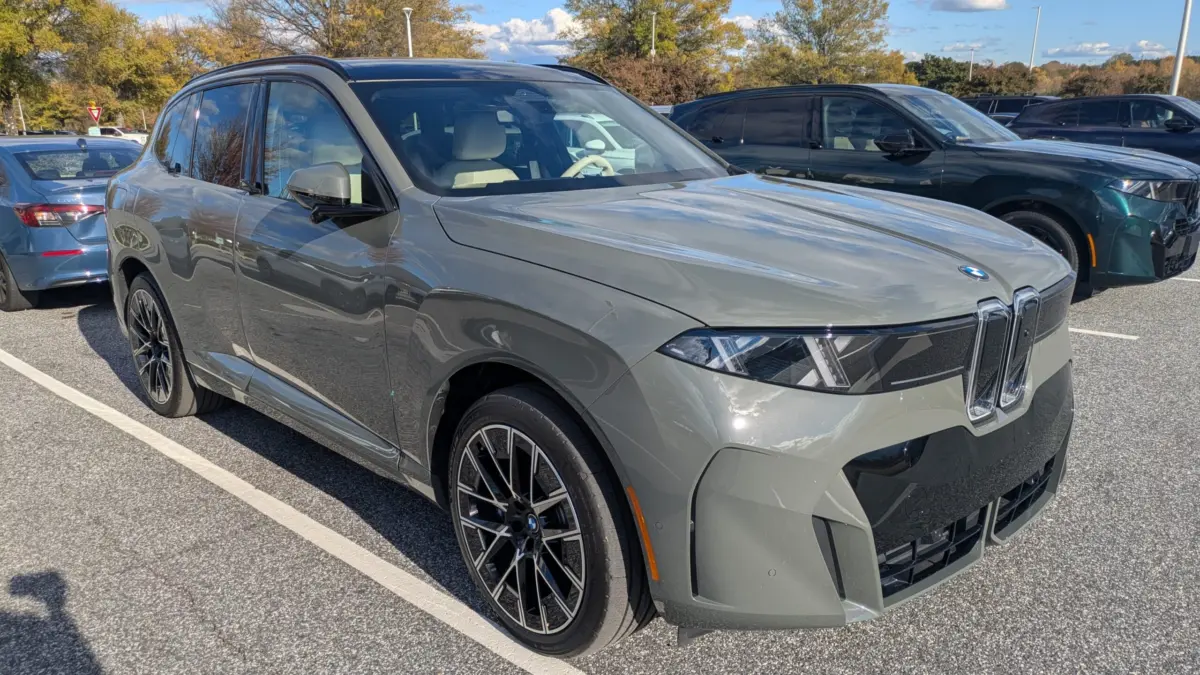
Today, Plant Spartanburg proudly bears the moniker "Home of X." The facility currently manufactures the X3, X5, X6, X7, and the high-performance XM, complete with advanced electrified variants. For several of these models, Spartanburg serves as the exclusive global production hub. More than half of the vehicles produced at the plant are exported overseas, making it consistently the leading automotive exporter in the United States. In 2025 alone, export volume from the facility surpassed $9 billion, encompassing roughly 200,000 X-series vehicles.
BMW’s engineering strategy emphasizes maximum flexibility. The automaker designs its platforms to accommodate internal combustion engines, plug-in hybrid electric vehicles, and battery electric vehicles on the same flexible architecture. While consumer preferences and market demands continue to evolve, this multi-powertrain approach allows BMW to adapt swiftly without sacrificing production volume. To maintain that level of operational resilience, however, the plant requires an exceptionally nimble supply chain capable of reacting to real-time market dynamics.

The Logistics and Supply Chain Masterclass of Plant Spartanburg
The sheer scale of operations at Plant Spartanburg is staggering. The facility receives approximately 3.3 million parts per day, delivered via roughly 1,200 truckloads and 50 sea containers, six days a week. Those components feed directly into an assembly line that produces over 1,500 vehicles daily.
Unlike traditional automotive factories that rely heavily on massive warehousing operations, Spartanburg utilizes a unique architectural layout. Multiple spur lines extend from the main manufacturing artery, allowing incoming parts to be delivered precisely where they are needed along the line. In many cases, parts delivered by truck in the morning are installed on vehicles driving off the assembly line by the afternoon.
In the early years following the plant’s opening, the vast majority of parts and components were sourced from overseas. However, as the facility established a permanent and reliable presence, an increasing number of suppliers chose to localize their operations. This growing supplier ecosystem eventually attracted other major automotive players to the region, including Mercedes-Benz, Volvo, and Scout Motors. The presence of multiple manufacturers creates greater scale for shared suppliers, driving down costs and encouraging broader industrial expansion across the Southeastern United States.

By 2027, BMW expects to work with more than 850 Tier 1 supplier locations across the Americas, supported by multiple times that number of Tier 2 and Tier 3 suppliers providing raw materials and specialized sub-components. Heavy and bulky components, such as battery packs, naturally lend themselves to localized production. For instance, while BMW designs its own battery cells and packs, it collaborates with multiple external cell manufacturers to meet strict specifications. Current packs utilize cells supplied by AESC, with plans to incorporate LG and other suppliers in future production cycles and global markets.
This localized approach extends beyond traditional automotive components. Through the BMW Venture fund, the company invests in innovative startups, such as a future supplier developing flax-based composite materials destined for upcoming M-model vehicles. Furthermore, BMW has worked closely with state authorities to upgrade regional infrastructure. Collaborating with the South Carolina Department of Transportation, the company helped build roads and transit networks capable of handling heavy industrial freight, while partnering with the South Carolina Ports Authority to establish an "inland port" offering a direct rail connection to Charleston. Moving freight via rail rather than highway trucks significantly reduces carbon emissions, while efficient intermodal transfers minimize the idling time of delivery vehicles.
Workforce development remains a cornerstone of the Spartanburg ecosystem. BMW partners closely with Clemson University—specifically through the Clemson University International Center for Automotive Research—to foster engineering talent and drive technological innovation. Technical training programs are deeply integrated into local community colleges, while educational initiatives begin as early as middle school through sponsorships of programs like the FIRST Robotics Competition. According to economic studies conducted by Clemson researchers, BMW’s direct employment of 11,000 workers generates a massive multiplier effect, supporting more than four times that number of jobs throughout the broader regional economy.

Bringing the "Green" to Greenville, In More Ways Than One
The economic windfall brought by BMW and its supplier network has fundamentally reshaped the character of the surrounding cities. Walking through downtown Greenville today reveals a vibrant urban center defined by thriving local shops, bustling restaurants, and walkable public spaces. Decades ago, parts of the city were desolate and economically depressed; now, it serves as a magnet for talent and investment from around the world. A major catalyst for this revitalization has been the deliberate restoration of the Reedy River, which flows directly through the heart of the city, flanked by parks, public art installations, and revitalized commercial districts.
Yet, the transformation is not merely financial—it is environmental as well. BMW’s manufacturing philosophy places heavy emphasis on corporate decarbonization and sustainable practices. Because electric vehicles inherently carry a higher manufacturing-phase carbon footprint than internal combustion vehicles due to battery production, decarbonizing the factory floor and the supply chain is an urgent priority.
Plant Spartanburg utilizes renewable energy sources, including solar power and gas captured from local landfills, to run its operations. BMW has also made major strides in incorporating low-carbon steel into its vehicle manufacturing, with over half of the steel used in its production lines classified as reduced-CO2 material. Shortened transportation distances for localized parts suppliers naturally cut down on transit emissions, and reusable packaging systems allow shipping containers to be sent back to suppliers repeatedly without generating excess waste.

The newly inaugurated Woodruff battery plant represents the next major milestone in this green evolution. Designed to produce BMW’s advanced sixth-generation battery technology, the facility will initially supply high-voltage packs for the iX5, catering to both domestic and international markets while paving the way for future EV models.
Ultimately, the trajectory of the Upstate South Carolina region offers a powerful lesson in perspective. In the face of industrial decline during the late 20th century, regional leaders resisted the temptation to erect protectionist walls or block global competition—a strategy that might have briefly prolonged the life of dying textile mills but would have ultimately sealed their irrelevance. By choosing to embrace international partnership, invest heavily in workforce education, and remain open to new industrial opportunities, the communities of Greenville, Greer, Spartanburg, and Woodruff laid the groundwork for enduring prosperity.
As Mayor Kenneth Gist aptly summarized during the opening of the Woodruff battery plant, the shared vision between the municipality and the automaker centers on mutual success, community enrichment, and building the next generation of world-class vehicles. By confronting technological change and global competition head-on rather than hiding from it, BMW and its South Carolina home have proven that industrial evolution can successfully transform both the vehicles we drive and the lives of communities for generations to come.