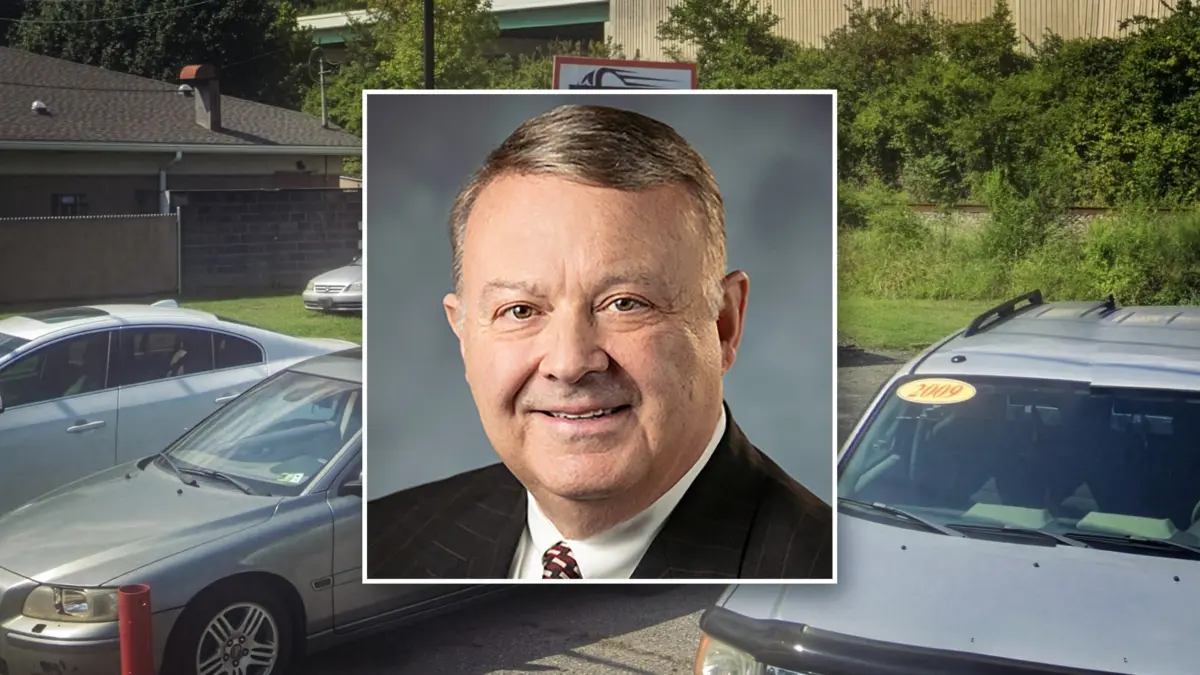
CHARLESTON, W.Va. — West Virginia State Auditor Mark Hunt has been federally indicted alongside several key office employees and a longtime business associate in connection with an alleged scheme to unlawfully transfer and seize multiple tax-delinquent properties. Prosecutors say the operation was designed to bypass established state laws and benefit a real estate company owned by the wife of Hunt’s close friend and landlord, Charleston attorney Robert Johns.
The indictment, announced on Monday by federal prosecutors, marks a severe escalation in a growing political and legal crisis surrounding the state auditor. The charges allege that Hunt, 66, abused his public office to push through the transfers of nine separate properties located across Kanawha and Boone counties, directly ignoring explicit warnings from career employees within his own agency who flagged the transactions as illegal.
The fallout from the federal indictment extends far beyond the disputed deeds. Investigative reporting by West Virginia Watch previously revealed deep financial entanglements between Hunt and Johns, including a landlord-tenant relationship involving Hunt’s used car dealership, which operated on land owned by Johns’ company. That revelation—combined with separate allegations involving state payroll irregularities and banking fraud—has triggered swift and bipartisan calls for Hunt’s immediate resignation, as well as mounting pressure from state leaders threatening impeachment proceedings.
The Disputed Property Transfers That Triggered Federal Scrutiny
At the heart of the federal indictment are nine tax-delinquent properties in Kanawha and Boone counties. Under West Virginia state law, properties whose owners fall severely behind on their property taxes can eventually be processed and transferred to interested buyers or investors, provided they strictly meet a series of legal requirements, deadlines, and financial obligations.
According to federal prosecutors, those statutory safeguards were systematically bypassed. A real estate firm known as MAPA Inc., owned by Patricia Johns—the wife of attorney Robert Johns—sought to acquire the properties. However, federal investigators assert that the purchaser failed to submit the necessary paperwork and execute required payments within the strict statutory timeframes established by state law.
Despite these glaring legal roadblocks, career professionals within the West Virginia State Auditor’s Office identified the statutory failures and formally advised Hunt that the transactions were ineligible for deed transfers and could not lawfully be completed.
Prosecutors allege that Hunt completely disregarded the guidance of his own expert staff. Instead, he personally signed deeds for eight of the disputed properties on March 28, 2025, and finalized the ninth property transfer on June 6, 2025. According to the federal indictment, these actions effectively amounted to stripping the properties away from their rightful owners in violation of state law and public trust.
“Public officials are entrusted to serve the people, not use their offices for personal benefit,” U.S. Attorney Moore Capito stated during the press conference announcing the charges on Monday. “When there is evidence that trust has been violated, our office will follow the facts and enforce the law, regardless of title or position.”
A Used Car Dealership, a Longtime Friendship, and Mounting Ethical Questions
The federal indictment compounds intense scrutiny stemming from overlapping financial and professional ties between the state auditor and his inner circle. Investigative reporting first brought to light that NAJ LLC, a company owned by Robert Johns, owned the commercial lot in Charleston where Hunt operated his small used car dealership, After Hours Used Auto, located less than a mile away from the state Capitol.
Hunt established the business in July 2024, just months before winning election to the State Auditor’s Office. Robert Johns also briefly served as special counsel within the Auditor’s Office in 2025, further deepening the connections between the regulators and the regulated.
While acknowledging that he and Johns have maintained a personal friendship for years, Hunt has consistently denied that their landlord-tenant arrangement influenced his official execution of the tax deeds. Defending the nature of the transactions to West Virginia Watch, Hunt downplayed the value of the real estate involved.
“There’s not a ghost behind every door. It’s just coincidental,” Hunt told the news outlet. “He happens to have all of these vacant lots, and most of this property is scrub property. It’s hillsides, it’s vacant lots, it’s right-of-ways, and he just happened to own this.”
Despite Hunt’s denials, the arrangement provoked sharp criticism from state lawmakers questioning whether the public official secured favorable lease terms or below-market rent in exchange for pushing through the contested property deeds.
“This new information raises significant additional questions about Hunt’s relationship with Johns,” Republican Delegate Tristan Leavitt told reporters. “Is Hunt’s car dealership paying market price for rent on the lot owned by Johns’ company, or did Hunt illegally sign his landlord’s deeds as payback for a sweetheart lease? Regardless, this business relationship further underscores Hunt’s cronyism and why he should resign as auditor immediately for signing those deeds.”
The controversy surrounding the dealership deepened further when West Virginia Governor Patrick Morrisey announced that the state Division of Motor Vehicles (DMV) had launched an independent investigation following a consumer complaint. According to the governor, a monthlong state review uncovered “significant and unexplained anomalies” in the dealership’s paperwork that pointed to potential violations of state and federal DMV and tax statutes.
State DMV Commissioner Everett Frazier formally suspended the dealership’s business license on November 6. Governor Morrisey subsequently referred those investigative findings to the U.S. Attorney’s Office for potential civil and criminal prosecution, asserting that the combination of the state findings and the federal indictment provides ample justification for the West Virginia House of Delegates to consider formal articles of impeachment.
While federal prosecutors have not explicitly charged Hunt with trading favorable lease terms for the property deeds, Hunt noted that the used car business has since closed its doors after sustaining approximately $40,000 in financial losses.
Expanding Indictments and Broad Calls for Immediate Resignation
The federal indictment reaches far beyond Hunt and Johns, pulling in multiple high-ranking figures within the State Auditor’s Office. Both Hunt and Johns face nine individual counts of theft of property. Additionally, two senior administrators within the Auditor’s Office—Deputy Chief of Staff David Cole and General Counsel Frederic Caudill—have been charged with the same property theft offenses for their alleged assistance in issuing the unlawful deeds. Cole and Caudill face supplementary charges accusing them of lying to federal investigators during the course of the probe.
Although Patricia Johns’ company allegedly stood to benefit directly from the questionable property transfers, she has not been named as a defendant in the federal criminal case.
In a separate count detailed in the federal documents, Hunt, Cole, and another state employee, Marie Ann Hoffmann, are facing bank fraud charges. Prosecutors allege that Hoffmann collected state government wages while simultaneously performing private work for Hunt’s personal law firm.
The sheer breadth of the federal charges has ignited a firestorm across the state political landscape, prompting immediate and forceful demands for Hunt’s resignation from prominent figures across the political spectrum, including Republican House Speaker Roger Hanshaw.
“Auditor Hunt should immediately resign from his office,” Hanshaw declared during Monday’s press briefing. “If he resolves to do otherwise, the House of Delegates will take swift action in January to restore integrity to the Office of the West Virginia State Auditor.”
Despite the growing pressure, the expanding criminal allegations, and the looming threat of legislative impeachment, Hunt has maintained his innocence and made it clear that he has no intention of stepping down from his elected post voluntarily.
“I am innocent of these charges,” Hunt said in a public statement posted to social media. “This indictment is an insult to the principles on which this country was founded. I am presumed innocent and will vigorously defend myself against these charges.”