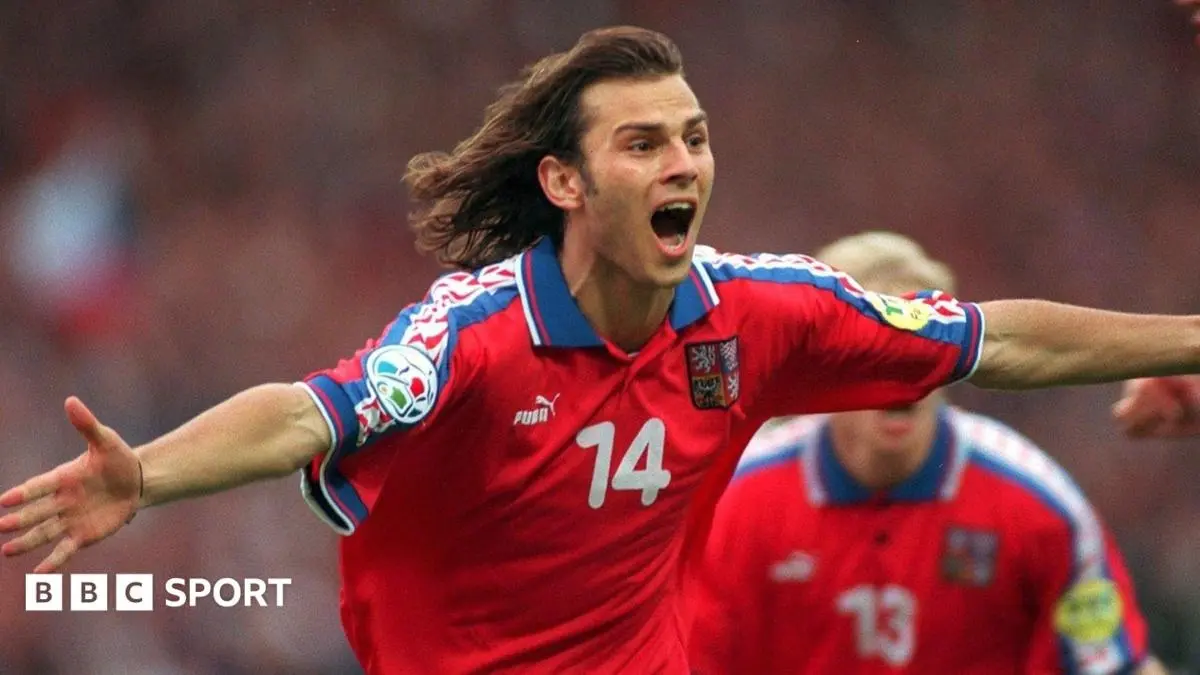
Euro ’96 remains a watershed moment in the history of European football, serving as the first major international tournament following the peaceful dissolution of Czechoslovakia. As the newly formed Czech Republic stepped onto the continental stage, expectations were remarkably muted. In fact, the prevailing sentiment—even among the players themselves—was that their involvement in England would be a brief, albeit pleasant, excursion before the summer break.
Most of the squad remained tethered to their domestic league, and the lack of external belief was matched by a lack of internal preparation. With a daunting group stage draw featuring footballing titans Germany, Italy, and Russia, many squad members had proactively booked their summer holidays to commence immediately following the group phase. Vladimir Smicer, a rising star of the era, had even gone as far as scheduling his own wedding for the days surrounding the final, assuming he would be safely back in Prague.
The obscurity of the Czech side was perhaps best illustrated by an exchange between midfielder Patrik Berger and his Borussia Dortmund teammate, Jurgen Kohler. As a member of the powerhouse German squad, Kohler was oblivious to the Czechs’ participation. Speaking to the BBC’s Sporting Witness podcast earlier this year, Berger recounted the disbelief in his teammate’s voice. "He was asking me what my plans were for the summer," Berger recalled. "I said, ‘I’m going to the Euros,’ and he said, ‘To watch games?’ I said, ‘No, we’re playing you guys in the first game of the group stages and then we will play in the final’—and he was laughing."
A Trial by Fire
The tournament began as many predicted: a sobering 2-0 defeat to Germany at Old Trafford. However, the narrative shifted dramatically at Anfield, where the Czechs secured a gritty 2-1 victory over Italy. The final group match against Russia at Anfield—a stadium that would eventually become a home of sorts for several Czech stars—proved to be a heart-stopping affair. Smicer’s late equalizer in a chaotic 3-3 draw, combined with Italy’s failure to break down Germany in a simultaneous 0-0 stalemate, meant the Czechs had squeezed through by the skin of their teeth.
"We knew we were still in it, but we didn’t know what the other result was," Berger explained. "One minute we’re not qualifying, the next it was we qualified, so we didn’t really know. After the final whistle, it took a few minutes before we realized we qualified for the quarter-finals."
The momentum carried them into the knockout stages, where they produced one of the most iconic moments in European Championship history. In their quarter-final match against Portugal at Villa Park, Karel Poborsky executed a sublime chip over goalkeeper Vitor Baia from the edge of the box. The audacity of the strike secured a 1-0 win and sent shockwaves through the tournament.
The semi-final against France at Old Trafford saw the Czechs hold their nerve through 120 minutes of goalless tension, ultimately triumphing 6-5 on penalties. Future Ballon d’Or winner Pavel Nedved, along with Berger and Poborsky, successfully converted their spot-kicks, proving that the squad possessed both the technical quality and the mental fortitude to compete with the continent’s elite.
Reflecting on the immense pressure of that shootout, Berger admitted the internal dread that every player faces: "You don’t want to go there. If someone says something different, they’re lying. Nobody wants to take that penalty." Following the victory, the team was left in a state of collective disbelief. "We were living the dream," Berger added. "It was an amazing feeling. An amazing moment for the country. To get to the final was kind of like a miracle for everyone."
The Wembley Heartbreak and a Lasting Legacy
The surreal nature of the tournament reached its peak just two days before the final, when Smicer briefly returned to Prague for his wedding. Despite the thousands of fans who gathered in the city center to celebrate the occasion, the honeymoon was put on hold; Smicer was back in England the very same day to prepare for the showdown at Wembley.
In the final, the underdog spirit was on full display. The Czechs took a 59th-minute lead through a drilled Berger penalty. Berger, who had stepped up despite not being the designated taker, noted the atmosphere on the pitch: "I could see nobody really wanted to take the ball. The only thing in my mind was hit it as hard as possible on target."
However, the dream was ultimately dismantled by Oliver Bierhoff. The German striker equalized in the 73rd minute and subsequently struck the first-ever "golden goal" in a major tournament final to claim the trophy for Germany. Despite the heartbreak, the impact of the tournament was transformative. "It wasn’t meant to be," Berger reflected. "I’d love to be European champion, but silver for us was like a gold because it opened doors to so many of us. And it opened doors to the generation after us. I have no regrets."
The squad returned home to a heroes’ welcome, with 100,000 fans flooding the streets of Prague. The tournament had effectively launched the careers of many of its stars, with Berger securing a move to Liverpool and Poborsky signing for Manchester United shortly thereafter.
The Evolution of the Czech National Team
The legacy of the 1996 squad stands as a high-water mark for the nation. While Czechoslovakia had previously tasted glory—winning the European Championship in 1976 and reaching two World Cup finals in 1934 and 1962—the Czech Republic has yet to return to a final since that summer at Wembley.
The subsequent years saw flashes of brilliance, most notably in 2004, when a squad blending the experience of Smicer, Berger, and Poborsky with the burgeoning talents of Petr Cech, Milan Baros, and Tomas Rosicky reached the semi-finals. For many, that 2004 side represented the peak of the "golden generation." Prague-based journalist Ondrej Zlamal believes that team played a more sophisticated brand of football than their predecessors in ’96. "This generation with Nedved and others culminated in 2004 and we had a feeling we should have won the Euros," Zlamal observed. "It was the second highlight of the golden generation."
However, the subsequent two decades have proven difficult. Two World Cup appearances in 2006 and 2026 resulted in group stage exits, and the pool of top-tier talent has seemingly diminished. Zlamal is candid about the current state of the national team, attributing the decline to a lack of players competing at the highest level of European club football. "I don’t believe this generation can reach such success because the competition and football is much bigger," he noted. "Miracles happen, and maybe there could be a new generation which could be as surprising as 1996, but I don’t believe it will happen again."
As the national team enters a new era under the leadership of Spaniard Santi Denia—the first foreign manager in the country’s history—the focus has shifted toward integration and youth. His initial squad for upcoming Nations League fixtures features a notable number of players with limited international experience.
Thirty years after the heartbreak of the Wembley final, the stadium itself has been entirely modernized, mirroring the changing tides of the sport. For the current generation of players, stepping onto the pitch under Denia represents an opportunity to carve out their own identity. While the ghosts of the 1996 "miracle" team continue to loom large over Czech football, the arrival of a new tactical philosophy offers a fresh, albeit challenging, path forward. Whether or not this new era can recapture the magic of that summer in England remains to be seen, but the history of the Czech Republic suggests that in football, as in life, the unexpected is always just one match away.