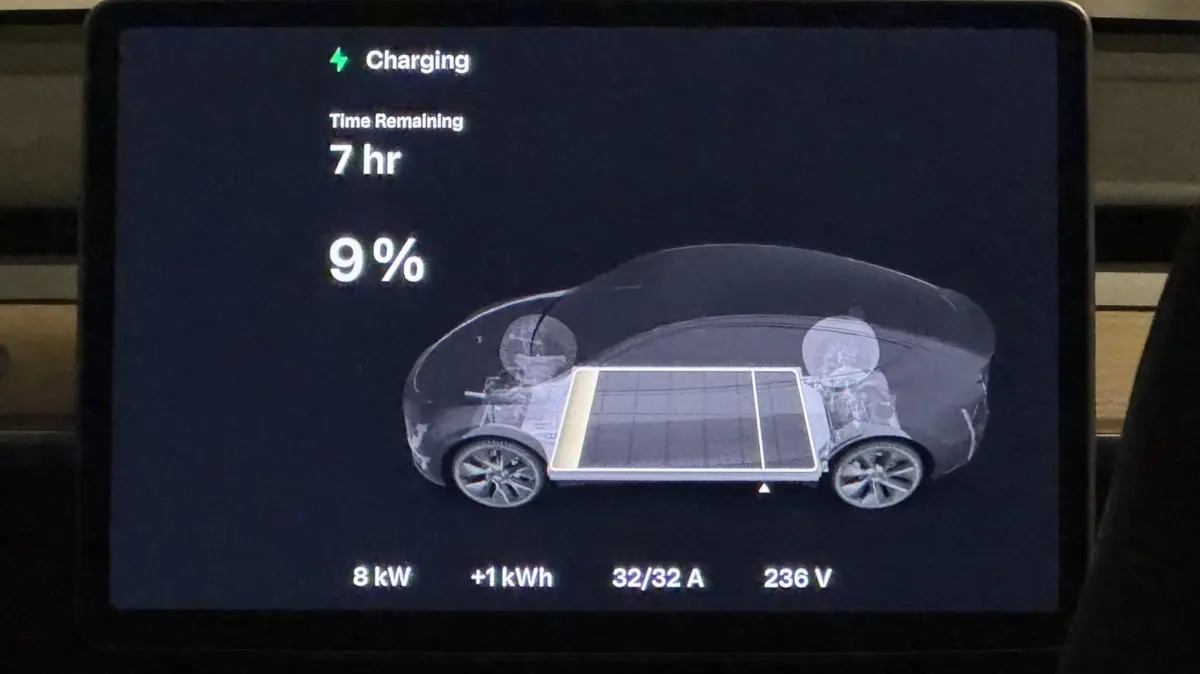
Like traditional internal combustion engine vehicles, modern electric vehicles are constantly running complex mathematical calculations in the background to determine remaining range. When drivers look at a fuel gauge in a gas-powered car, they are relying on a simple metric: a tank that goes from full to empty. While understanding that a quarter-tank of gas requires a rough mental calculation of fuel economy and tank capacity, electric vehicles introduce an entirely different layer of complexity. EV dashboards typically display a battery percentage alongside an estimated range in miles, but translating efficiency metrics—such as miles per kilowatt-hour—into real-world distance requires drivers to process vehicle efficiency data constantly.
As an electric vehicle’s battery level drops closer to zero percent, the vehicle begins to implement a series of self-preservation measures. Much like late-model gas cars that enter a low-fuel conservation state, EVs frequently transition into a restricted performance mode, commonly referred to as "limp mode," as the high-voltage battery nears exhaustion.
Vehicle manufacturers explicitly outline these safeguards in their official owner manuals. According to documentation for the Chevy Equinox EV, drivers experiencing critically low battery levels will notice "reduced acceleration," though safety features such as "brake and steering assist will continue to operate." Similarly, the owner’s manual for the Hyundai Ioniq 5 warns that "the driving speed may be limited, and the vehicle may not properly drive uphill." In an even more ominous warning, the Kia EV6 manual directs drivers to "go to a safe place and request rescue."
Beyond the immediate performance limitations and the dramatic loss of propulsion, running an electric vehicle down to zero percent charge triggers a cascade of mechanical and electrical quirks. Chief among these concerns is the vulnerability of the secondary 12-volt battery—a component that powers nearly all of the vehicle’s onboard computers, accessories, and safety systems rather than the high-voltage traction pack.
Your Zero Percent Mileage Will Vary
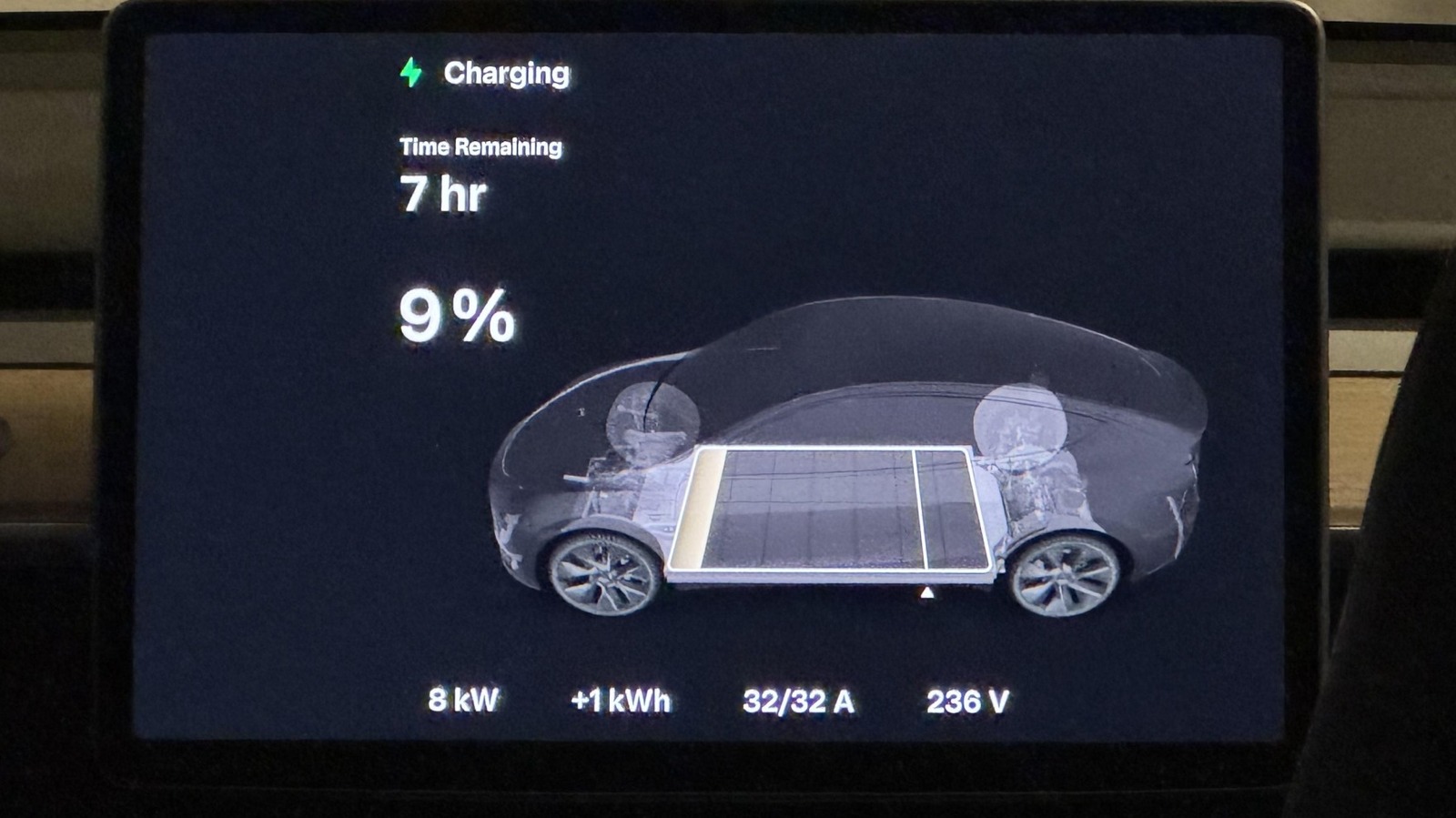
Numerous automotive journalists and independent content creators on platforms like YouTube have demonstrated that many electric vehicles can continue driving for a short distance even after the instrument cluster reads zero percent. Investigations by media outlets such as Reuters previously revealed that certain manufacturers, including Tesla, engineered a hidden buffer into their software, retaining an extra 15 miles of reserve range even when the dashboard gauge indicated a completely depleted battery.
Other manufacturers take a different approach to managing driver expectations. Hyundai’s manual for the Ioniq 5 explicitly informs drivers that when a low-range warning light illuminates at ten percent charge, the vehicle typically has between 18 and 31 miles of remaining range. However, the manufacturer also cautions that actual remaining distance can vary wildly depending on driving conditions, terrain, and climate control usage.
For motorists who lack firsthand experience with an electric vehicle battery reaching absolute depletion, the progression is swift. Once the onboard buffers are exhausted, the vehicle will begin to lose power in incremental stages before stopping entirely. Manuals across major brands—including the Kia EV6, Hyundai Ioniq 5, Chevy Equinox EV, and Tesla Model 3—use consistent terminology to explain that propulsion will be severely restricted, forcing the driver to pull over safely. While this resembles the experience of running out of gasoline, the inability to simply pour a gallon of fuel into the tank introduces an unprecedented logistical challenge.
Unlike traditional automobiles, where a roadside container of fuel can resolve a stranded vehicle situation, an electric vehicle requires complex electrical recovery. In addition to the massive high-voltage traction battery that drives the wheels, modern EVs rely on ordinary 12-volt batteries to operate computer modules, door locks, and safety relays. Without a functioning 12-volt system, the car cannot operate at all.
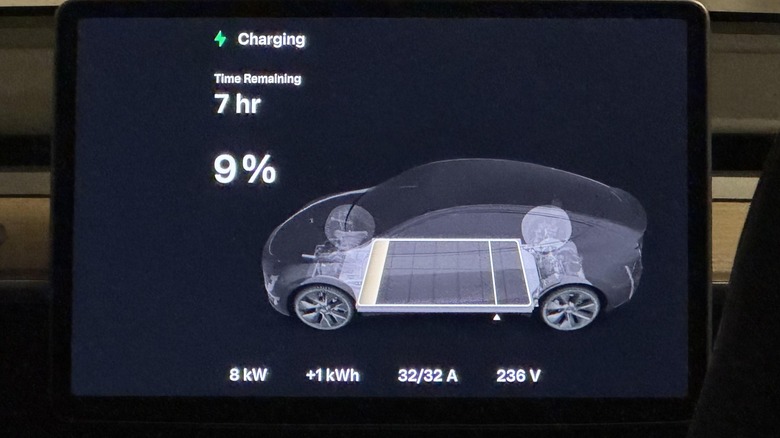
Documentation from the manufacturers of the Chevy Equinox EV, the Ford Mustang Mach-E, the Ford F-150 Lightning, the Tesla Model 3, and the Volvo XC40 Recharge indicates that once the primary traction battery is fully depleted, the internal mechanisms responsible for maintaining and charging the 12-volt battery are compromised. This creates a severe risk of total electrical failure, which can subsequently prevent the vehicle from accepting a charge even after it has been towed to a charging station.
Route Planning to the Rescue
The complex interplay between high-voltage traction batteries and auxiliary 12-volt systems has drawn increased scrutiny from federal regulators. Following an investigation by the National Highway Traffic Safety Administration into reports that the Kia EV6 was mysteriously losing motive power, and addressing similar electrical failures in its corporate twin, the Hyundai Ioniq 5, both automakers issued safety recalls. These campaigns were launched to address system faults related to the continuous charging and depletion cycles of their respective 12-volt batteries.
The National Highway Traffic Safety Administration has also conducted separate technical evaluations into Tesla Model Y vehicles regarding auxiliary electrical issues. These regulatory actions highlight a pressing engineering concern: when the main propulsion battery loses all power and the secondary 12-volt battery dies simultaneously, the vehicle enters a deeply compromised electronic state.
That small auxiliary battery is essential for powering accessory mode, which enables critical functions such as releasing an electronic parking brake and shifting a completely disabled electric vehicle into tow mode. Placing the vehicle into tow mode acts similarly to shifting a conventional gas-powered car into neutral, preventing catastrophic drivetrain damage while the vehicle is being recovered. Industry standards dictate that stranded electric vehicles should almost exclusively be transported on flatbed tow trucks to protect their sensitive electric motors and reduction gearboxes.
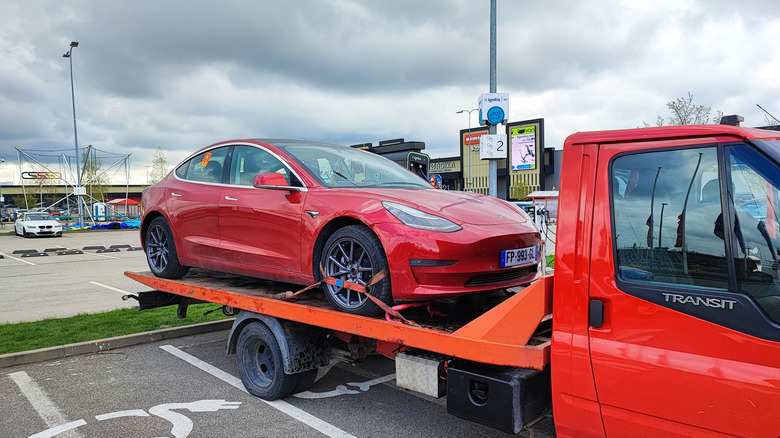
Even after a stranded electric vehicle is successfully loaded onto a flatbed and transported to a charging station, owners may face an additional hurdle. Depending on the specific make and model, a dead EV may require its 12-volt battery to be jump-started using an external power source or booster pack before the vehicle’s onboard computers will wake up and allow the high-voltage battery to accept a charge.
To avoid the mechanical headaches, towing complications, and potential electrical damage associated with fully depleting a modern electric vehicle, automotive experts recommend utilizing integrated navigation and route-planning software. In the vast majority of modern EVs, the factory Global Positioning System does more than simply estimate the current state of charge; it actively manages route planning to steer drivers toward reliable charging stations well before the battery reaches critical levels.
Additionally, motorists navigating remote areas or embarking on long road trips may consider carrying a portable Level 1 charging adapter compatible with standard household electrical outlets. While Level 1 charging is exceptionally slow—typically recovering only about three miles of range per hour—having the ability to plug into any standard wall outlet provides a reliable failsafe, eventually generating enough electricity to reach a high-speed DC fast charger and complete a journey without incident.