The automotive industry has traditionally adhered to a predictable rhythm. Over the last few decades, most generations of passenger vehicles have lasted between seven and ten years, typically receiving a major facelift or two somewhere halfway through their lifecycles. While the fast-paced design cycles of the 1950s—when automakers completely overhauled styling on an annual basis—are long gone, modern vehicle lifecycles are beginning to compress once again. Reaching that extreme level of yearly overhauls is neither realistic nor economically viable with modern vehicle architectures, but the South Korean automotive conglomerates are testing the boundaries of traditional planning.
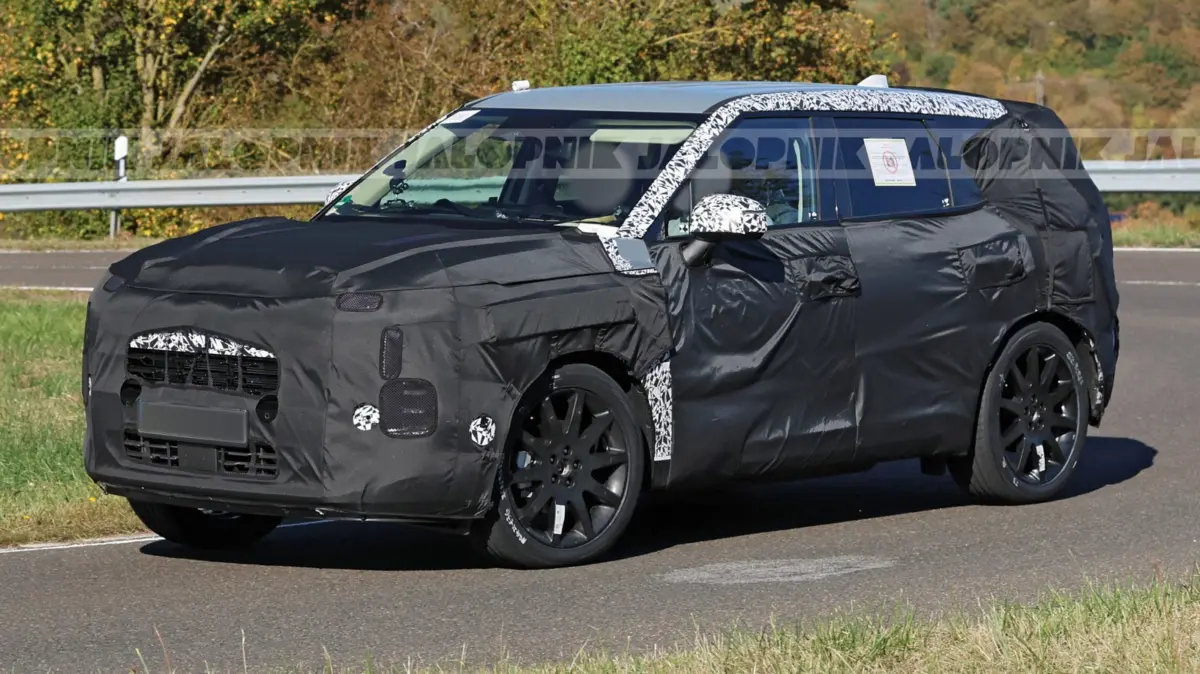
Korean brands have consistently introduced brand-new vehicle generations quicker than almost any of their global competitors, implementing massive leaps in exterior styling and interior technology between each iteration. The latest volume-seller caught in this accelerated cycle is the Kia Sportage, which has just been spotted undergoing early prototype testing by spy photographers.
The current fifth-generation Sportage was originally revealed in the summer of 2021 before officially arriving at dealerships in the United States for the 2023 model year. Despite that relatively recent introduction, the compact crossover already received a substantial mid-cycle refresh for the 2026 model year. That makes for an extraordinarily short lifespan for a vehicle that serves as the cornerstone of Kia’s global and domestic sales strategy. In the United States alone, Kia has sold well over 145,000 Sportages through the month of September, a sales volume that comfortably outpaces stablemates like the K4 compact car and the larger Telluride three-row SUV.
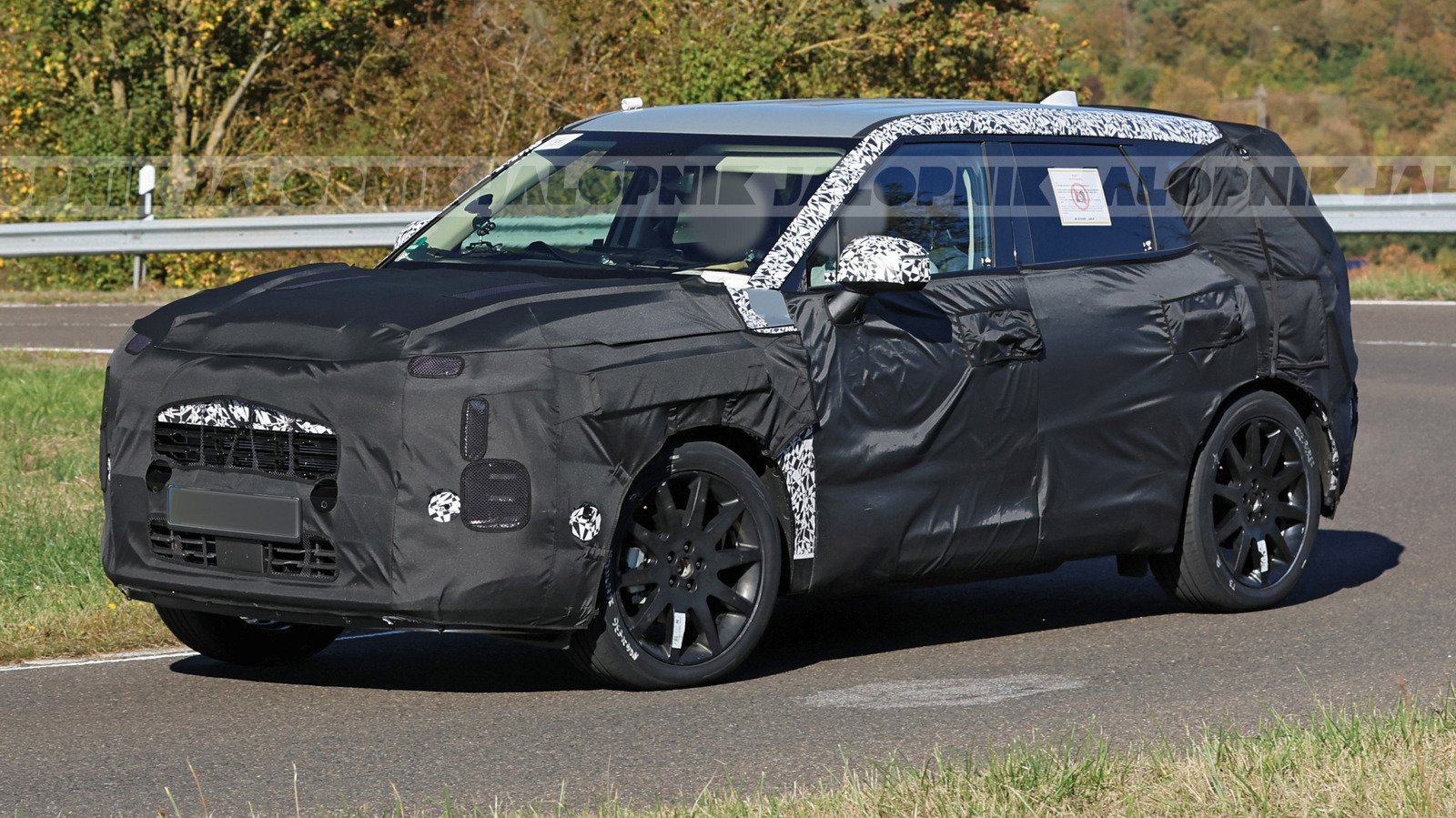
Early glimpses of the heavily camouflaged prototype indicate that the upcoming redesign will lean even further into futuristic and unconventional styling themes than the current model. Beneath the patterned wrap and protective cladding, the mechanical foundation of the next-gen Sportage is expected to closely mirror the newly revealed Hyundai Tucson, sharing platform updates, powertrain families, and structural engineering.
We’ve Already Seen What the Lights Look Like
Even though prototype models are typically buried under heavy black coverings and distorted vinyl wraps to obscure their definitive sheetmetal, keen observers can still glean plenty of design direction. The recent 2026 model-year facelift gave the current Sportage tall, rectangular headlight clusters that echoed the distinctive front fascia styling seen on the larger Kia Carnival minivan. While initial glances at the new prototype might suggest an even more dramatic evolution of those stacked vertical lights flanking a wider, more angular grille, the reality is a bit more intricate.
Spy sightings and design leaks indicate that while a primary cluster of illumination will remain positioned low down in the front bumper, the upper design will feature a much sleeker approach. Thin sections of LED daytime running lights will trace the outer edges of the grille before kinking sharply upward toward the edge of the hood, eventually angling inward to meet a smaller, centralized light array.
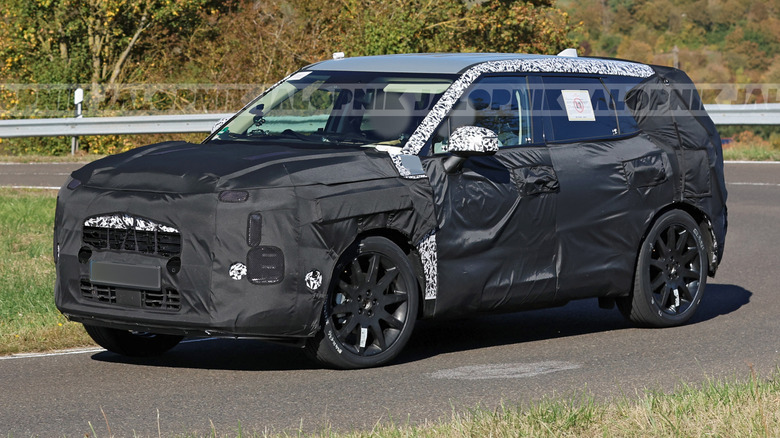
Much like its corporate cousin, the Hyundai Tucson, the upcoming Sportage is expected to adopt a modern clamshell hood—an impressive engineering touch for an affordable, high-volume compact crossover. The mismatched wheels fitted to the test mule are clearly temporary testing units utilized purely for development miles, as production models will feature more expressive alloy designs. The overall greenhouse appears noticeably more rakish than the current Sportage architecture, potentially featuring a blacked-out A-pillar design that creates a wraparound visor aesthetic.
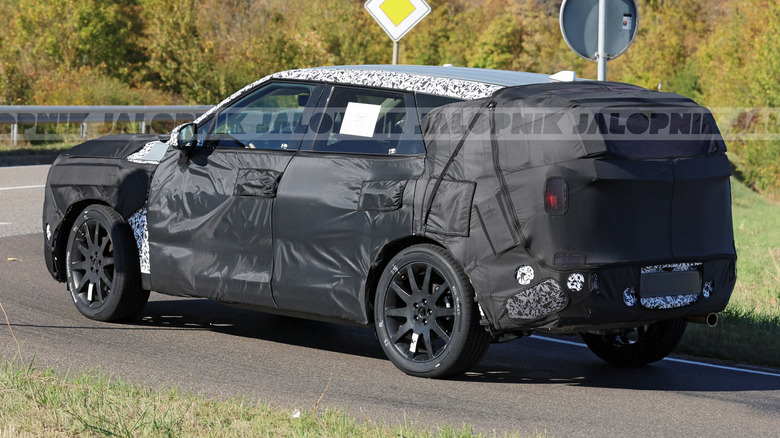
Viewers should expect dynamic body surfacing and sharp character lines along the vehicle’s profile, accompanied by prominent, squared-off fender flares that emphasize a planted stance. The rear end of the prototype remains entirely obscured by heavy camouflage, but automotive analysts anticipate that the final design will draw significant inspiration from newer additions to the brand’s portfolio, such as the all-electric EV3 and the flagship Telluride.
Because this specific prototype was captured undergoing testing in Europe, it is almost certainly the short-wheelbase variant rather than the extended-wheelbase SUV engineered specifically for the North American market. While both versions will share core front-end architecture and mechanical components, the two variants will likely feature unique D-pillar configurations and rear glass geometry to accommodate regional packaging preferences.
It’ll Have Pleos Inside
While official interior photography of the next-generation Sportage has not yet surfaced, the cabin is slated to be among the first in the Kia lineup to integrate Hyundai Motor Group’s advanced Pleos infotainment software architecture. This next-generation digital ecosystem enables a sweeping array of advanced features, ranging from sophisticated active-safety capabilities to downloadable, user-created applications and deeply expanded over-the-air update functionality. Given the impressive interior execution seen in recent product launches like the redesigned Telluride and the new Tucson, the upcoming Sportage’s cabin is expected to punch well above its price class in terms of material quality, digital integration, and ergonomic layout.
Under the hood, the Sportage is widely expected to follow the path carved by its Hyundai Tucson sibling by retiring its legacy base naturally aspirated inline-four engine. In its place, the new entry-level powertrain will likely be a more potent turbocharged 1.6-liter four-cylinder engine, delivering improved horsepower and responsiveness over the outgoing model. That same turbocharged powerplant, when paired with an electric motor and battery pack, will form the foundation of the optional hybrid variant. In the comparable Tucson setup, this hybrid configuration achieves an impressive fuel economy rating of up to 42 miles per gallon, suggesting the Sportage will offer similar efficiency gains. While a traditional plug-in hybrid electric vehicle variant may not be immediately prioritized, industry observers suggest that a dedicated range-extender variant could eventually fill that electrified gap.
Industry insiders project that Kia could orchestrate a global debut for the next-generation Sportage as early as the spring, setting the stage for an official market launch in the United States before the end of the calendar year. Furthermore, given the recent introduction of rugged, off-road-focused variants like the America-only Hyundai Tucson XRT Pro—which brings dedicated mechanical upgrades and enhanced capability to the dirt—it is highly probable that a rugged Sportage X-Pro equivalent will join the lineup shortly after launch to capture the booming adventure-crossover market.