The United States Commodity Futures Trading Commission (CFTC) has officially advanced a major regulatory initiative concerning digital asset transactions and markets, submitting a new regulatory package to the White House for review. This strategic move signals that federal financial regulators are aggressively pressing forward with oversight frameworks for the digital asset sector, utilizing existing statutory tools in the wake of legislative setbacks in Congress.
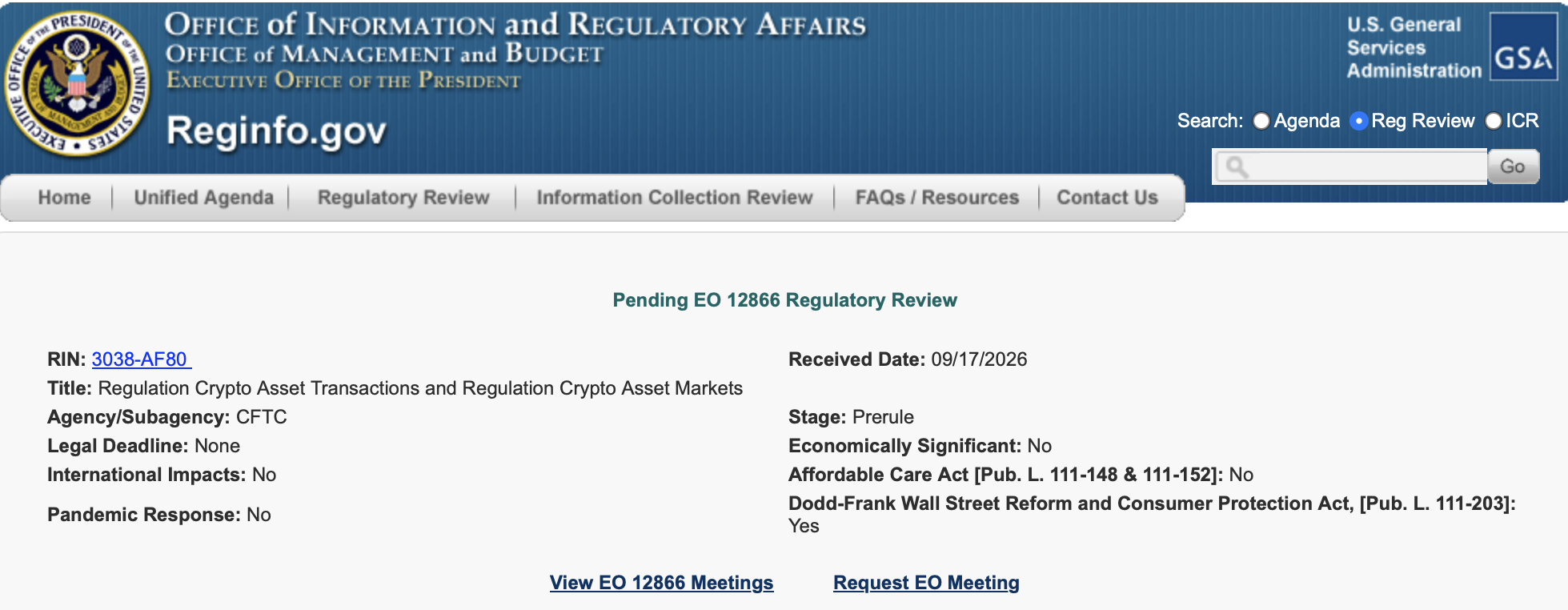
According to an official filing with the Office of Information and Regulatory Affairs (OIRA), the proposed regulatory action is titled “Regulation Crypto Asset Transactions and Regulation Crypto Asset Markets.” The submission was formally received on Sept. 17 and is currently designated at the “prerule” stage of the federal rulemaking process. This early-stage classification indicates that while the regulatory machinery has been formally set into motion, the policies have not yet been formally proposed or published for public commentary, leaving the precise operational details of the prospective rules undisclosed for the time being.
The timing of this regulatory advancement is notable, arriving just days after a high-profile legislative defeat in the U.S. Senate. Lawmakers failed to advance the CLARITY Act, a piece of bipartisan legislation specifically designed to establish a comprehensive, purpose-built federal regulatory framework for cryptocurrency markets. With Congress struggling to pass new statutory guidelines tailored explicitly to digital assets, financial regulatory agencies have quickly pivoted to execute their own independent oversight agendas.
Just a day after the Sept. 15 Senate vote, CFTC Chair Michael Selig took to social media platform X to signal the agency’s resolve. Selig declared that the commission was “locked in and ready to ship” comprehensive rules for cryptocurrency markets, asserting that the agency is fully prepared to act using its existing statutory authority. Simultaneously, Securities and Exchange Commission (SEC) Chair Paul Atkins echoed a similar sentiment, publicly stating that the securities regulator would forge ahead with its own market oversight initiatives “with or without legislation.”
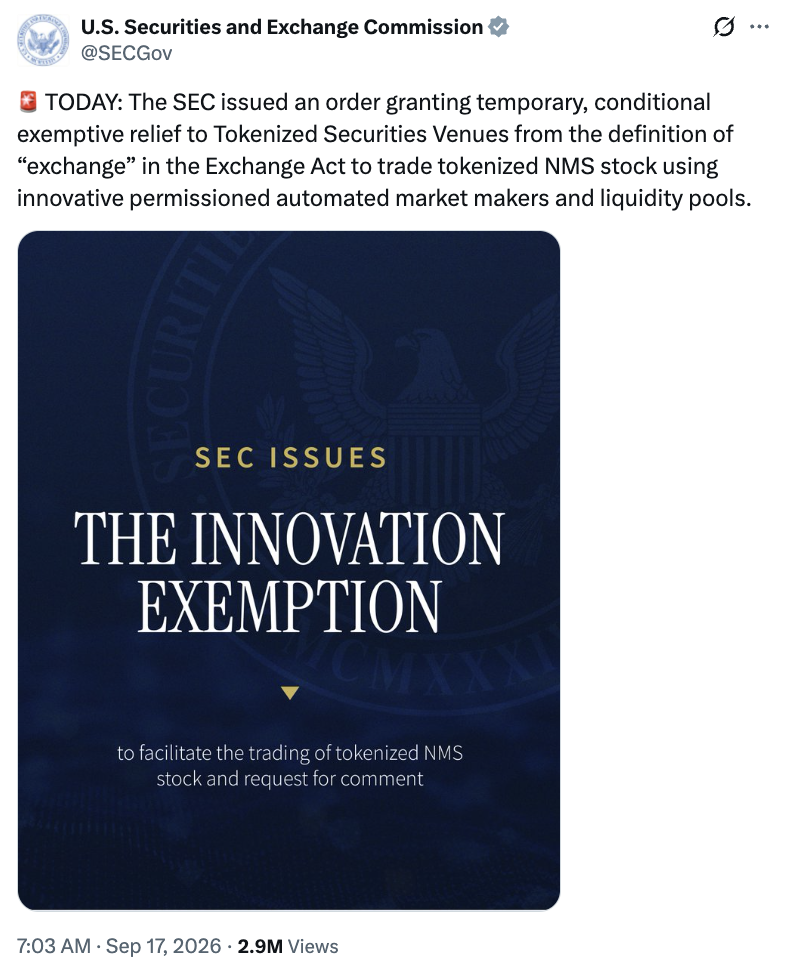
Both regulatory bodies backed up their rhetoric with swift administrative actions the very next day. The CFTC issued a crucial no-action position aimed at providers of passive trading software, offering regulatory relief and clarity to developers and service providers operating in the decentralized ecosystem. Meanwhile, the SEC announced a series of temporary exemptions tailored for specific platforms that facilitate the onchain trading of tokenized securities, demonstrating a coordinated effort by federal watchdogs to manage market realities independently of congressional action.
CFTC and SEC Move Ahead Without New Legislation
The pursuit of administrative rulemaking independent of congressional intervention did not catch industry observers entirely off guard, as the CFTC had already been exploring pathways to advance crypto rules prior to the Senate’s failure to pass the CLARITY Act. Addressing attendees at the CFTC’s Innovation Advisory Committee conference on Aug. 20, Chair Selig outlined the agency’s contingency plans. He explicitly stated that the commission was fully prepared to leverage its pre-existing statutory authority to forge a functional crypto asset market regime if legislative efforts in Congress ultimately stalled.
During those August remarks, Selig elaborated on his directives to agency staff, revealing instructions to explore regulatory pathways that could allow both established institutional registrants and currently unregistered cryptocurrency exchanges to transition into a specialized category of designated contract markets. Under this envisioned framework, these entities would be classified as “crypto asset markets,” enabling them to offer leveraged or margined cryptocurrency trading legally under the direct oversight and supervision of the CFTC.
Major figures within the cryptocurrency industry have closely monitored these regulatory shifts, anticipating that federal agencies would step into the legislative vacuum. Following the Senate vote, Coinbase CEO Brian Armstrong weighed in on the unfolding situation through a post on X published on Sept. 15. Armstrong expressed confidence that the SEC and the CFTC possess “the tools they need to create clear rules under existing authority,” adding that he anticipated both agencies would begin tackling the complex task of market structuring “in earnest.”
“So clarity is coming to crypto regardless,” Armstrong wrote, highlighting the industry’s growing resignation toward administrative rulemaking in the absence of congressional statutory reform.
As the White House begins its review of the CFTC’s newly submitted prerule actions, market participants, legal experts, and digital asset firms are bracing for a period of intensive regulatory development. While the lack of detailed disclosures in the initial OIRA filing leaves many specific compliance questions unanswered for now, the dual momentum displayed by the CFTC and the SEC underscores a definitive shift. Federal regulators are determined to shape the future of digital asset transactions through administrative enforcement and rulemaking, ensuring that oversight of the fast-growing cryptocurrency sector moves forward regardless of legislative gridlock on Capitol Hill.