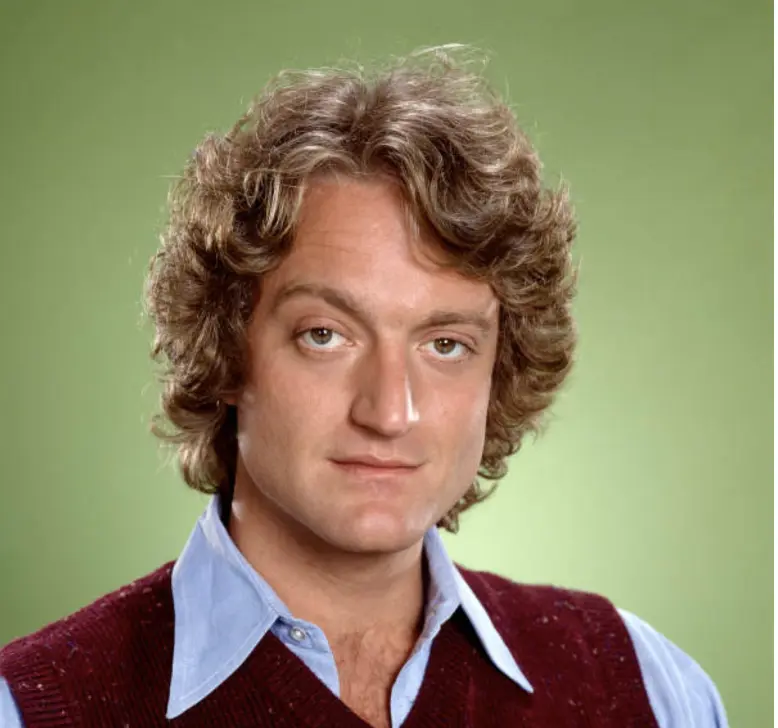
Gerrit Graham, the multifaceted performer, screenwriter, and lyricist whose career spanned decades of cult-classic cinema, television staples, and high-profile musical collaborations, passed away on Tuesday in Rhinebeck, New York. He was 77 years old. According to reports, his death followed a period of illness, including complications from lung disease.
Known as a "performer’s performer," Graham carved out a distinct niche in Hollywood through a singular ability to disappear into roles, whether he was playing a comedic heavy, a sleazy salesman, or a tragic glam-rocker. His death marks the conclusion of a life defined by creative restlessness and a rare versatility that allowed him to move fluidly between the avant-garde cinema of the 1970s, mainstream television sitcoms, and the intricate, jam-heavy world of rock and roll songwriting.
A Career Forged in New York’s Independent Cinema
Born in New York City to John and Janet Graham, Gerrit Graham’s journey into the arts was shaped by a childhood that took him across the country, with stints in Missouri and Michigan before his family eventually settled in Chicago. However, it was his return to the New York film scene that ignited his professional life.
Graham’s early career is inextricably linked to the emergence of director Brian De Palma. In the late 1960s and early 1970s, as independent cinema began to challenge the status quo, Graham became a recurring face in De Palma’s experimental works. He starred alongside a young Robert De Niro in "Greetings" (1968) and its follow-up, "Hi, Mom!" (1970). These films, which captured the social and political anxieties of a turbulent era, served as a launchpad for both Graham and De Niro.
Graham’s capacity for transformative acting was perhaps most memorably captured in De Palma’s 1974 rock opera cult classic, "Phantom of the Paradise." In the role of Beef—a flamboyant, over-the-top glam rocker—Graham showcased his theatrical range. The character, famously introduced in a coffin and met with a grizzly, shower-bound fate involving a plunger, remains one of the most iconic images of 1970s genre cinema. It was a role that required a balance of absurdity and genuine charisma, a tightrope walk that became a hallmark of Graham’s approach to acting.
From Character Actor to Television Staple
Throughout the 1980s and 1990s, Graham became a recognizable fixture of the American television landscape. His mastery of dialects, impressions, and timing made him a go-to choice for casting directors looking for memorable guest spots. He appeared in an array of quintessential shows, ranging from the workplace humor of "Laverne & Shirley" to the iconic observational comedy of "Seinfeld" and the nostalgic warmth of "The Wonder Years."
His genre work was equally prolific. For fans of science fiction, Graham was a familiar face, making appearances in both "Star Trek: Deep Space Nine" and "Star Trek: Voyager." These roles highlighted his ability to adapt to the highly specific, high-concept demands of the Star Trek universe, bringing depth to characters that might have otherwise remained one-dimensional.
On the big screen, Graham continued to pick projects that favored character-driven comedy and grit. He took on the role of a sleazy used car salesman in Robert Zemeckis’s "Used Cars" (1980), a performance that played on his gift for portraying high-energy, morally ambiguous characters. His filmography also included "Demon Seed" (1977), the drama "Pretty Baby" (1978), the horror sequel "Child’s Play 2" (1990), and the comedy "National Lampoon’s Class Reunion" (1982). Across these diverse titles, Graham rarely played the leading man, yet he was often the actor who left the most distinct impression on the audience.
A Writer’s Voice: Disney to The Grateful Dead
While Graham’s face was familiar to millions, his pen was responsible for some of the most enduring creative works of the era. His transition into screenwriting revealed a penchant for storytelling that was just as varied as his acting career. He contributed to the scripts for Disney classics such as "The Little Mermaid" and "Oliver & Company," helping to shape the narratives that defined a generation of animation.
His collaborative spirit was evident in his work with his brother, Chris Hubbell, with whom he co-wrote the Disney adaptation of "The Prince and The Pauper." Beyond his work in film, he brought his unique narrative voice to the small screen, writing for episodes of the iconic anthology series "The Twilight Zone."
Perhaps his most unexpected and celebrated creative outlet was his work as a songwriter and lyricist, specifically his collaboration with Bob Weir of The Grateful Dead. Graham’s partnership with the legendary guitarist resulted in the song "Victim or The Crime." The track became a significant entry in the band’s later catalog, featuring on their 1989 studio album "Built to Last." The song, characterized by its darker, more introspective tone, resonated with the band’s sprawling, dedicated fanbase and was later performed by Weir and bassist Rob Wasserman, appearing on their 1998 "Live" album. This collaboration underscored Graham’s ability to operate within the creative ecosystem of one of the world’s most influential rock bands, proving that his artistic reach extended far beyond the soundstage.
Life in Rhinebeck and Legacy
In his personal life, Graham found a sense of stability that complemented his often nomadic professional career. In 1982, he married his wife, Deborah. Together, they raised two children, building a life that eventually led them to the quiet landscape of Rhinebeck, New York.
Graham spent the last three decades of his life in Rhinebeck, where he became an active member of the local community. His commitment to the region was perhaps best exemplified by his service on the Burger Hill Preservation Society, a role that saw him working to protect the natural beauty of the Hudson Valley. This period of his life followed years spent in California, where he had dedicated time to caring for his mother, a testament to the values he carried outside of his public persona.
Gerrit Graham is survived by his wife, Deborah; his brother, Sam; his two sons, Jack and Henry, along with their wives, Talia and Joelle; and his four grandchildren, Nolan, Micah, Vera, and Joey.
As news of his passing spread, colleagues and fans alike remembered Graham not just for the breadth of his work, but for the distinct energy he brought to every frame and every stanza. Whether he was channeling a rock star on the big screen or drafting lyrics for a Grateful Dead record, Graham approached his work with a blend of professional discipline and creative whimsy. He leaves behind a legacy of work that spans the disparate worlds of high-concept sci-fi, classic animation, and the improvisational soul of American rock, ensuring that his voice will continue to be heard by those who seek out the eclectic and the enduring in entertainment history.