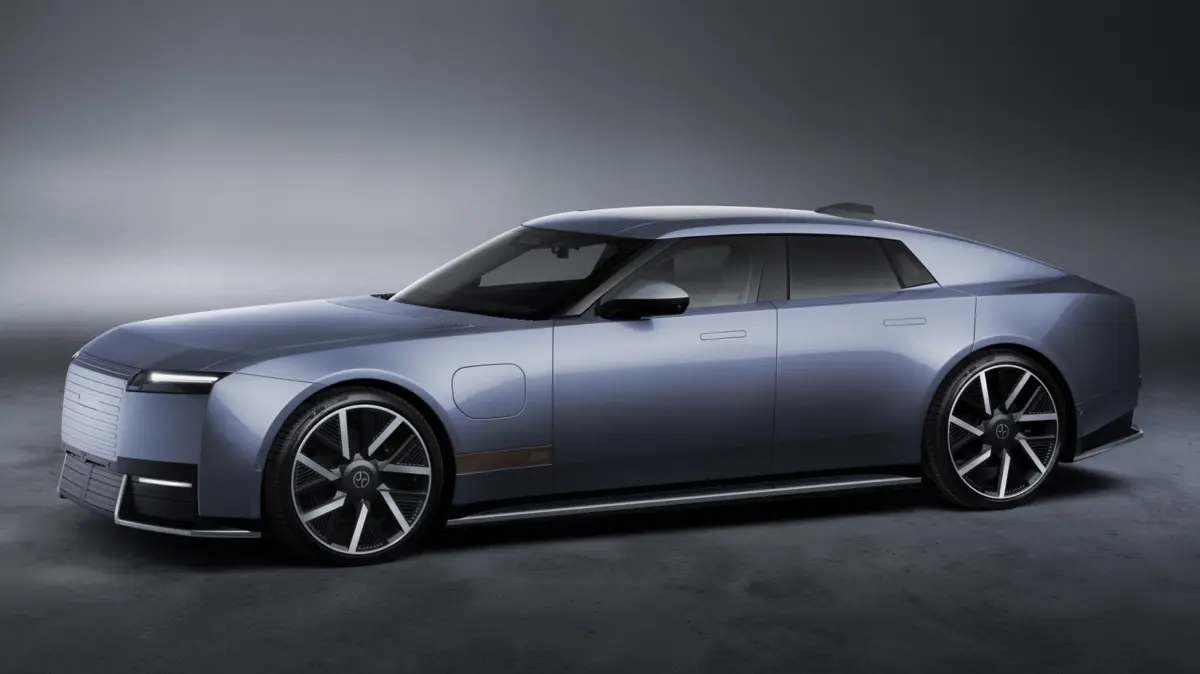
Following months of intense public discourse surrounding its dramatic and polarizing brand overhaul, Jaguar has officially pulled the wraps off the production-ready Type 01 EV in New York City. While the conceptual preview—most notably the pink-hued Type 00—sparked relentless debate across the automotive landscape, the arrival of the production-spec Type 01 shifts the conversation firmly away from marketing campaigns and back onto the car itself. Boasting staggering performance metrics, avant-garde design choices, and a price tag that positions it competitively against established luxury players, the Type 01 represents a completely new trajectory for the storied British marque.
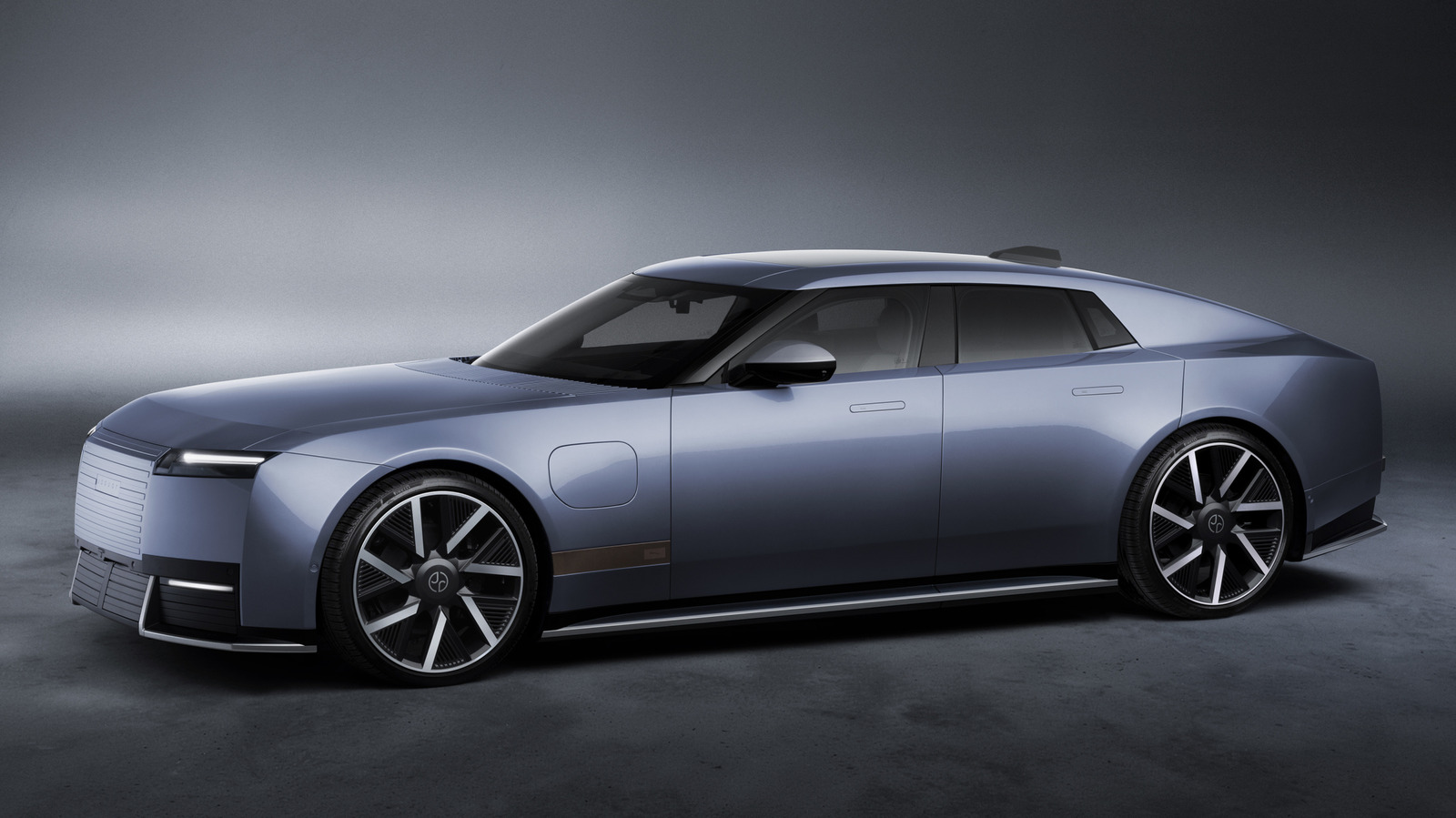
Though the production model has gained an extra set of doors and smoothed out some of the more extreme, unachievable proportions of the initial concept car, the Type 01 arguably looks even stranger and more futuristic on closer inspection. Beneath its striking skin lies a sophisticated engineering effort designed to push the boundaries of high-end electric mobility. When it officially goes on sale in the United States next year, the Type 01 will start at just over $130,000, offering up to 1,015 horsepower and an estimated 400-mile driving range.
Design and Exterior Engineering
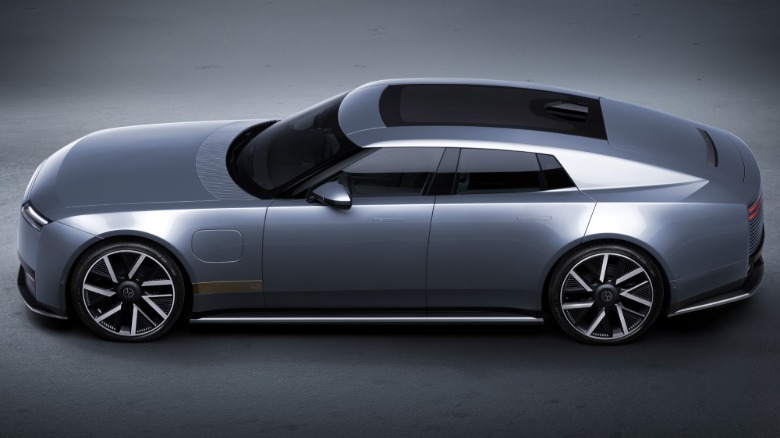
Evaluating the exterior of the Type 01 requires looking past the traditional constraints of automotive styling. While the vehicle features necessary production adaptations such as functional side mirrors, visible windshield wipers, and more refined detailing, it remains remarkably faithful to the show car that preceded it. The silhouette retains strong visual links to classic Jaguars like the legendary E-type, blending sharp, angular lines with voluptuous curves. In line with the brand’s philosophy that the best Jaguars have always resembled spaceships, the Type 01 is unapologetically futuristic.
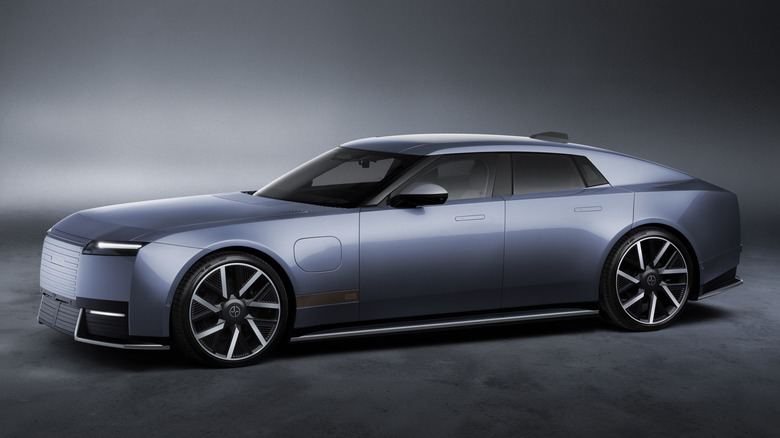
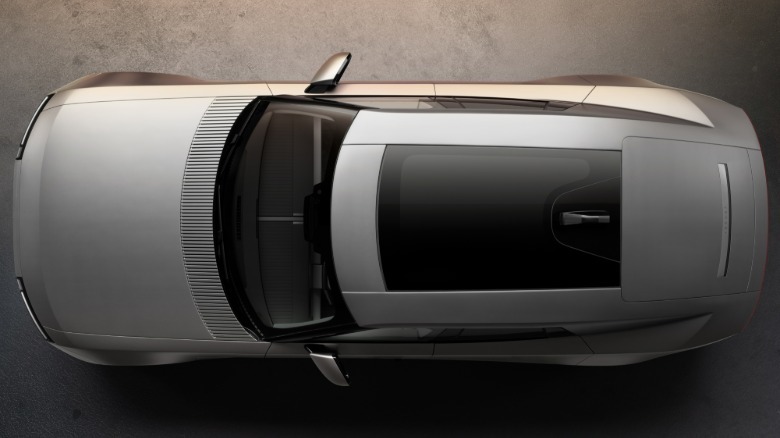
Measuring 208 inches long and standing just 55 inches tall, the Type 01 is a massive grand tourer. It stretches nine inches longer and sits an inch lower than a Porsche Panamera, featuring a dramatic chop-top greenhouse and a sweeping roofline. Through more than 7,000 hours of wind tunnel testing, Jaguar achieved a drag coefficient of 0.23 cD. This aerodynamic efficiency is further assisted by an automatically deploying three-stage spoiler that reduces drag or increases downforce depending on driving conditions, alongside a system that lowers the car by over half an inch at highway speeds.
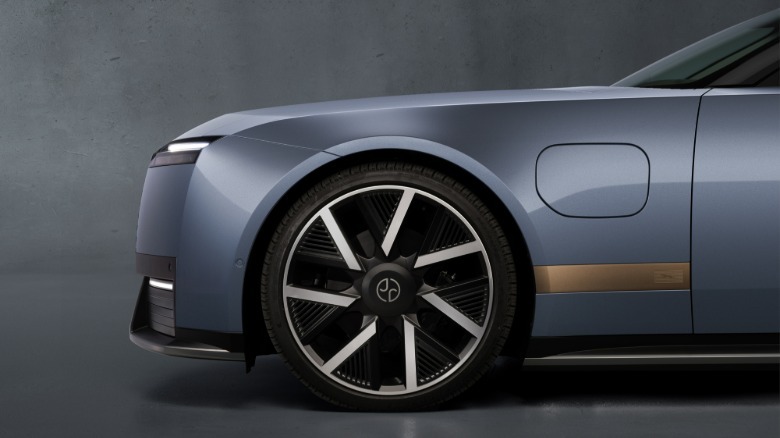
The vehicle’s proportions are defined by what Jaguar terms a "luxury gap"—a prominent dash-to-axle ratio measuring 35 inches long, which accounts for roughly 17 percent of the car’s total length. This span is bridged visually by a trim piece called the Fender Ingot, which serves as the sole location on the exterior housing the traditional Leaper emblem. While 21-inch wheels come standard, the vehicle can be equipped with massive 23-inch wheels that match the stance of the original concept.
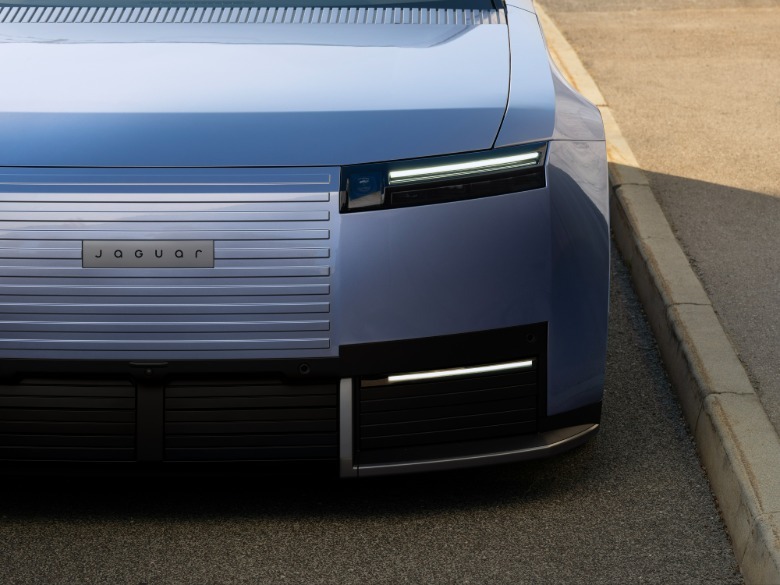
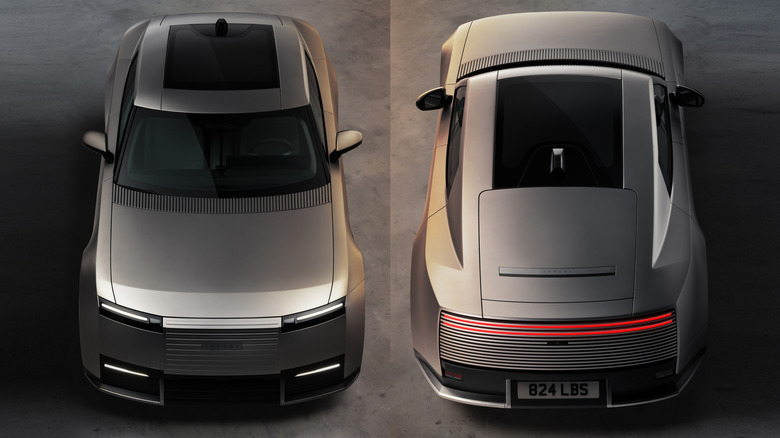
At the front, the Type 01 utilizes the thinnest headlights ever fitted to a Jaguar production vehicle, packing 17,000 individual pixels capable of advanced cornering and projection technology into a housing just 3.3 inches tall. Instead of a traditional grille, the front fascia features a ribbed panel displaying the new Jaguar wordmark, flanked by an angular lower bumper equipped with active cooling vanes. The distinctive hood strakes from the concept, which flow seamlessly into the base of the dashboard, have also been carried over.
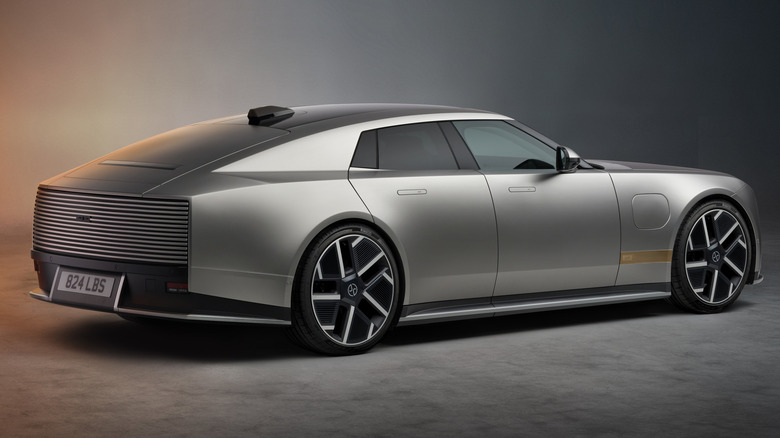
In a move mirroring the concept, the Type 01 dispenses with a conventional rear window, relying instead on a roof-mounted shark fin camera system. The hatchback panel incorporates a slim trim piece housing the center high-mounted stop lamp alongside stamped Jaguar lettering. Perhaps the most striking rear design element is a collection of over a dozen vertical strakes that conceal a pair of full-width taillights, a visual signature developed over 4,000 hours of engineering.
The Mission: Impossible Panel
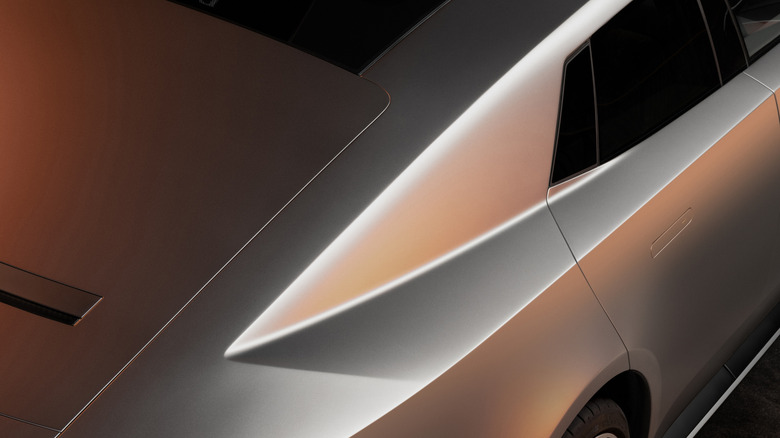
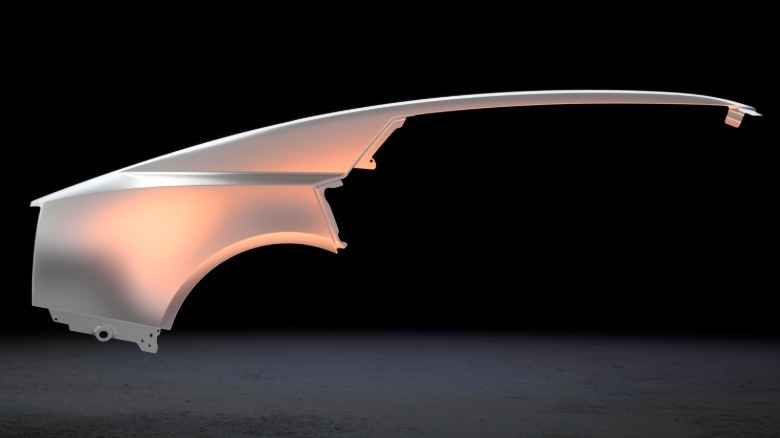
One of the most notable manufacturing triumphs of the Type 01 is what Jaguar calls the "Impossible Panel." This massive body stamp forms the entire side of the roof, the C-pillar, and the rear quarter panel. Traditional automotive design wisdom dictates that a single body panel should feature no more than three planes with sweeping curves and no acute angles. The Type 01 shatters these rules with a complex execution of surfacing creases designed to mimic a swift pen stroke.
Stamping this intricate panel requires a specialized six-step cold-forming process utilizing 2,500 tons of pressure from a four-story-tall machine, an engineering feat that took 1,500 hours to finalize. Despite its manufacturing complexity, it does not add time to the production process and contributes to creating a high-pressure aerodynamic zone. The side windows themselves appear remarkably small, set within tight door openings. A new compressed-radius hemming technique hides the glass seals entirely, eliminating the need for additional cosmetic trim and reinforcing the clean, concept-like aesthetic.
For buyers looking to personalize their vehicle, Jaguar offers a diverse palette of exterior finishes. Standard gloss options include Compelling Blue, Dramatic White, Iconic Black, Refined Grey, and Visionary Silver, while satin finishes comprise Mesmerizing Copper, Modernist Blue, and Visionary Silver Satin. Additionally, a limited run of 60 units known as the Chromatic Moments collection will be offered in French Ultramarine—a satin hue inspired by Renaissance art—and London Red, nodding to British heritage.
Performance and Charging Capability
Underpinning the Type 01 is the Jaguar Electric Architecture (JEA), a completely new, rigid platform purpose-built for a high-performance four-door grand tourer. Mounted low within the chassis is a massive 118-kWh lithium-ion battery pack that delivers an estimated 400 miles of total range in the U.S. market, including a targeted 320-mile range at sustained 75-mph highway speeds.
The electrical system operates on an 850-volt architecture, supporting DC fast-charging speeds of up to 350 kW. This capability allows the vehicle to recover 200 miles of range in just 13 minutes, or replenish the battery from 10 to 80 percent in 22 minutes. The car also features split-charging capability, enabling 250 kW charging compatibility when plugged into 400-volt infrastructure. AC charge ports are located on both front fenders, with the passenger-side port also integrating the DC connection and native NACS compatibility.
Power is delivered via a sophisticated tri-motor setup, featuring a 349-horsepower motor on the front axle and dual 416-horsepower motors at the rear. Utilizing silicon carbide inverters derived from Jaguar’s Formula E racing program, the system produces up to 1,015 horsepower and 1,007 pound-feet of torque. The Type 01 accelerates from zero to 62 mph in 3.2 seconds, with a 62-to-112-mph passing maneuver taking just 4.0 seconds flat.
The tri-motor layout facilitates advanced torque vectoring, capable of sending up to 87 percent of torque to the rear axle in Dynamic mode. During routine cruising or city driving, the vehicle automatically decouples the rear motors to optimize efficiency.
The chassis layout achieves a 50:50 weight distribution, with the center of gravity positioned 2.4 inches below the driver’s hip point. Handling is managed by a dynamic air suspension system featuring twin-valve dampers that adjust 1,000 times per second, paired with rear-wheel steering that articulates up to six degrees to ensure a tight turning radius comparable to a BMW 3 Series.
Interior Design and Technology
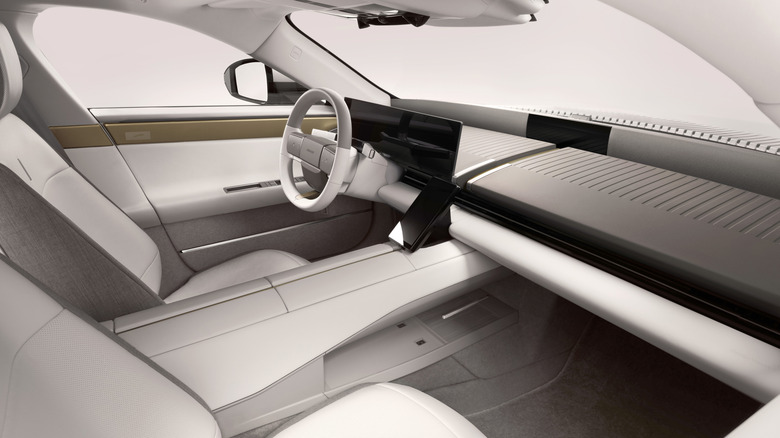
Inside, the Type 01 eschews the industry trend toward excessive screen dominance, opting instead for a minimalist, driver-focused cabin. A sprawling 24-inch OLED display spans the area behind the steering wheel, handling gauge cluster duties and primary infotainment functions. A secondary 7-inch touchscreen is integrated into the center console for climate and media controls, with a matching display provided for rear-seat passengers.
The rearview camera display is mounted centrally at the base of the windshield within the Panoramic Soundbar, positioned at eye level with the side mirrors to reduce driver eye fatigue. This soundbar houses 13 speakers, forming part of a comprehensive 38-speaker Meridian audio system distributed throughout the cabin.
Cargo capacity measures 15.9 cubic feet behind the rear seats, expanding to 35 cubic feet when the rear seats are folded flat. The trunk area incorporates multi-level flooring with underfloor storage, though the vehicle’s long hood houses a front trunk restricted to essential emergency gear.
Interior color themes draw inspiration from travertine stone, designated as The Light Story, The Dark Story, and The Original Story—the latter serving as the first "Curated by Jaguar" Design Vision edition. Cabin materials include a choice of leather or Ultrafabrics NeoGrain, alongside Kvadrat wool-blend textiles incorporating recycled materials. Details include embroidered headrests, anodized aluminum trim finishers, and four distinct, individually contoured seating positions. The front seats feature 12-way adjustability and a hot-stone massage function, while the rear outboard seats are both heated and ventilated.
Pricing and Market Outlook
While Jaguar’s official press materials omit a precise curb weight, prototype test drives indicate the vehicle will tip the scales at approximately 6,000 pounds. Despite its substantial footprint and high-end positioning, the pricing strategy for the Type 01 remains surprisingly aggressive.
When order books open in early 2027, the Jaguar Type 01 will carry a starting price of $130,500 in the United States, excluding destination charges. This positions the base model slightly below the Porsche Taycan 4S, competitively against the Mercedes-AMG GT55, and roughly $15,000 above a Lucid Air Grand Touring. Fully optioned models are expected to approach the $200,000 threshold.
As Jaguar moves forward with its comprehensive brand reinvention following the disruptions of recent years, the Type 01 serves as the vanguard for a new family of vehicles built on the JEA platform. Whether it captures the hearts of traditionalists and new buyers alike remains to be seen, but the brand has firmly committed to delivering a distinctive, high-performance vehicle unlike anything else currently on the market.