By Yolande Knell
Middle East Correspondent, Reporting from Kibbutz Nir Oz
The silence at Kibbutz Nir Oz is profound, broken only by the rhythmic cooing of roosting birds nesting in the fractured ceiling tiles of the community’s once-bustling dining room. This space, which served as the social and emotional heartbeat for a community of 400 people, now stands as a hollowed-out monument to a life that was irrevocably shattered on 7 October 2023.
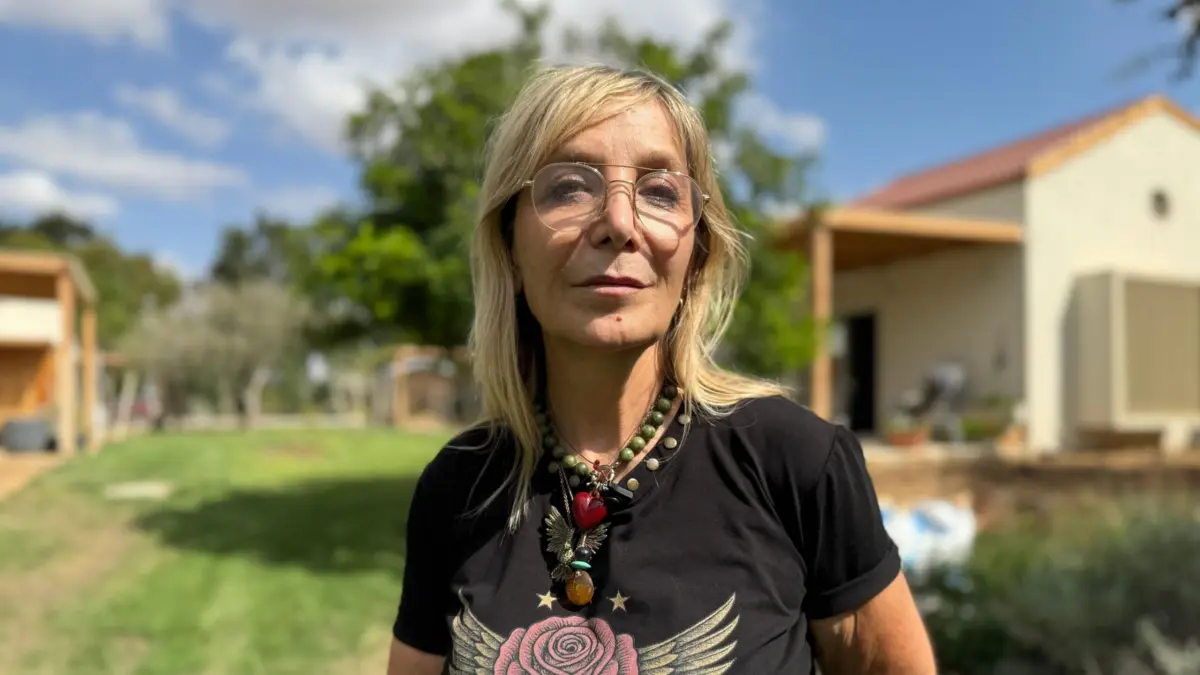
"We used to come here to see each other, to eat together, to share our lives," says Dalit Ram Aharon, her voice barely rising above the stillness as she walks through the wreckage with her husband, Achi. "There were so many activities, so many holidays to celebrate. It was a place of community."
As Israel observes the third anniversary of the Hamas-led attacks—the deadliest day in the country’s history—the residents of Nir Oz are navigating a landscape of profound grief and memory. Situated just one mile from the Gaza border, the kibbutz was one of the primary targets of the assault. Today, the remnants of that violence are everywhere. At the glass entrance doors of the communal buildings, bullet holes scar the frames, serving as a jarring, physical testament to the terror that unfolded here.
Perhaps the most poignant and haunting reminder of the loss is found on the rows of postboxes. Stickers placed by the community tell the story of the devastation: red markers indicate those who were killed, and black markers signify those who were taken hostage. "That is one out of every four of us," Dalit says, her gaze lingering on the colors. "Murdered or kidnapped. Including children and babies."

The Unfinished History of a Broken Home
Time appears to have stopped at the nearby house of the Siman Tov family. A wind chime still dangles by the front door, a delicate relic of a domestic life that was extinguished in an instant. A photograph remains, showing Tamar and Yonatan with their three young children: five-year-old twin daughters, Shahar and Arbel, and their two-year-old son, Omer.
The family’s home was equipped with a bomb shelter—a standard feature in southern Israel designed to protect residents from incoming rocket fire. However, the shelter proved no defense against the assault they faced that day. The parents were shot through the door, and according to the accounts understood by neighbors, the house was then set on fire. The children, trapped inside, succumbed to smoke inhalation.
Dalit, who survived the ordeal alongside Achi and their three children by sheltering in their own safe room for nearly 12 hours, recalls the final, frantic digital breadcrumbs left behind in the community’s social media groups.
"On that morning, at the very beginning, Tamar wrote in the women’s group, ‘Is everyone fine?’" Dalit recounts. "Then, a little later, she wrote, ‘They are shooting at us.’ And after that, she wrote with a lot of mistakes, ‘We are very injured.’ From what we understand, they torched the house, and the children died from suffocation. The entire family was killed."
The assault on Nir Oz was carried out by an estimated 500 individuals, including Hamas’s elite Nukhba force fighters, joined by various civilians who looted homes and participated in the chaos. The toll was catastrophic: 41 residents and foreign workers were killed, alongside six people who had sought refuge in the kibbutz after fleeing a nearby music festival. Seventy-six people were kidnapped into Gaza. Of those, nine were taken as bodies, and 14 hostages who were initially taken alive were killed in captivity. It was not until 13 October 2025 that the last living hostages from the kibbutz were returned, with the remains of the final deceased hostage, Amiram Cooper, recovered two weeks later.

Walking Through the Debris
The greenery of the kibbutz—once a source of pride for the community—now feels eerily quiet, save for the mewing of stray, hungry cats. Dozens of the simple, one-story homes have been demolished, leaving behind only the stark, reinforced concrete skeletons of the safe rooms.
The Aharons and other survivors are currently embroiled in a difficult, deeply personal debate about what should remain. They advocate for preserving some of the damaged structures as evidence of the atrocity. "We really support that," Achi says. "People should see what happened. They should see the destruction and the pure hatred that occurred here."
Throughout the site, the scars remain visible: the spot in the kindergarten where a teacher, Maya Goren, was killed; the makeshift memorials dedicated to the seven-member security team, three of whom died while fighting to hold off the gunmen. An investigation by the Israel Defense Forces (IDF) later acknowledged the failure of the military to respond in time, noting that the army, overwhelmed by the simultaneous assault on more than 20 communities, did not reach the kibbutz until 40 minutes after the last attackers had departed.
Dalit pauses before a tree planted years ago by her parents, who were among the co-founders of the kibbutz. Known for its commitment to farming and peace activism, the kibbutz had been their life’s work. While her parents survived the attacks physically, the emotional toll proved too great, and they passed away in the following months.
Next to that tree is the home of Shiri Bibas, the mother of four-year-old Ariel and nine-month-old Kfir. The image of the mother and her two ginger-haired boys became a global symbol of the hostage crisis. For Dalit, this house is the most difficult to visit.

"Shiri was a very, very good friend," Dalit says. "She was like a sister to me. We were pregnant at the same time—me with my daughter and her with Ariel. We used to laugh that they would grow up and marry each other." Shiri was a happy, vibrant person who lived a simple life, and her death—after being held captive by an armed group—remains a source of profound, inconsolable grief. While her husband, Yarden, was released during a ceasefire in February 2025, Shiri and the children were killed. Despite initial claims from Hamas blaming an Israeli airstrike, forensic evidence later confirmed they had been murdered by their captors.
The Struggle for Recovery
The road to restoration is daunting. While some former hostages, such as co-founder Gadi Moses, have returned to the 20 homes already renovated or rebuilt, many others have moved away permanently.
Emi Palmor, the director of the reconstruction project, describes the process as a delicate balance between providing a place to live and avoiding the re-traumatization of the survivors. "It is a huge, painful debate," Palmor explains. "Some people say they want the area to look serene, that they don’t need reminders because they remember every day. Others say that if we tear down the last houses, the world will eventually stop believing what happened here."
The scope of the project is unprecedented; approximately 97% of the households were penetrated, and nearly half were burned. "It is the only place in Israel that has to be completely demolished and completely replanned," Palmor says.
For survivors like the Aharons, the wait to move back will last at least another two years. Currently living in an apartment in a northern town, they are forced to confront the persistent symptoms of post-traumatic stress. Dalit speaks of her eldest son, Uri, who turned nine on the day of the attack. "He told me, ‘Mum, I don’t want to die on my birthday,’" she says. "People don’t understand that we are still living in that horrible day."

Yet, there is a sense of resolve. With the hostages finally returned, the community has begun the long, agonizing shift from a state of total, frantic crisis to the beginning of a personal, internal recovery.
"We will come back for the memory of Shiri, for those who didn’t have the chance to live here, for the memory of my parents, and to keep our roots alive," Dalit says. "This is our home." For the Aharons and their neighbors, the future of Nir Oz is not merely about bricks and mortar, but about reclaiming a piece of their identity from the ruins, honoring those lost, and attempting to build a future on ground that remains forever marked by the past.