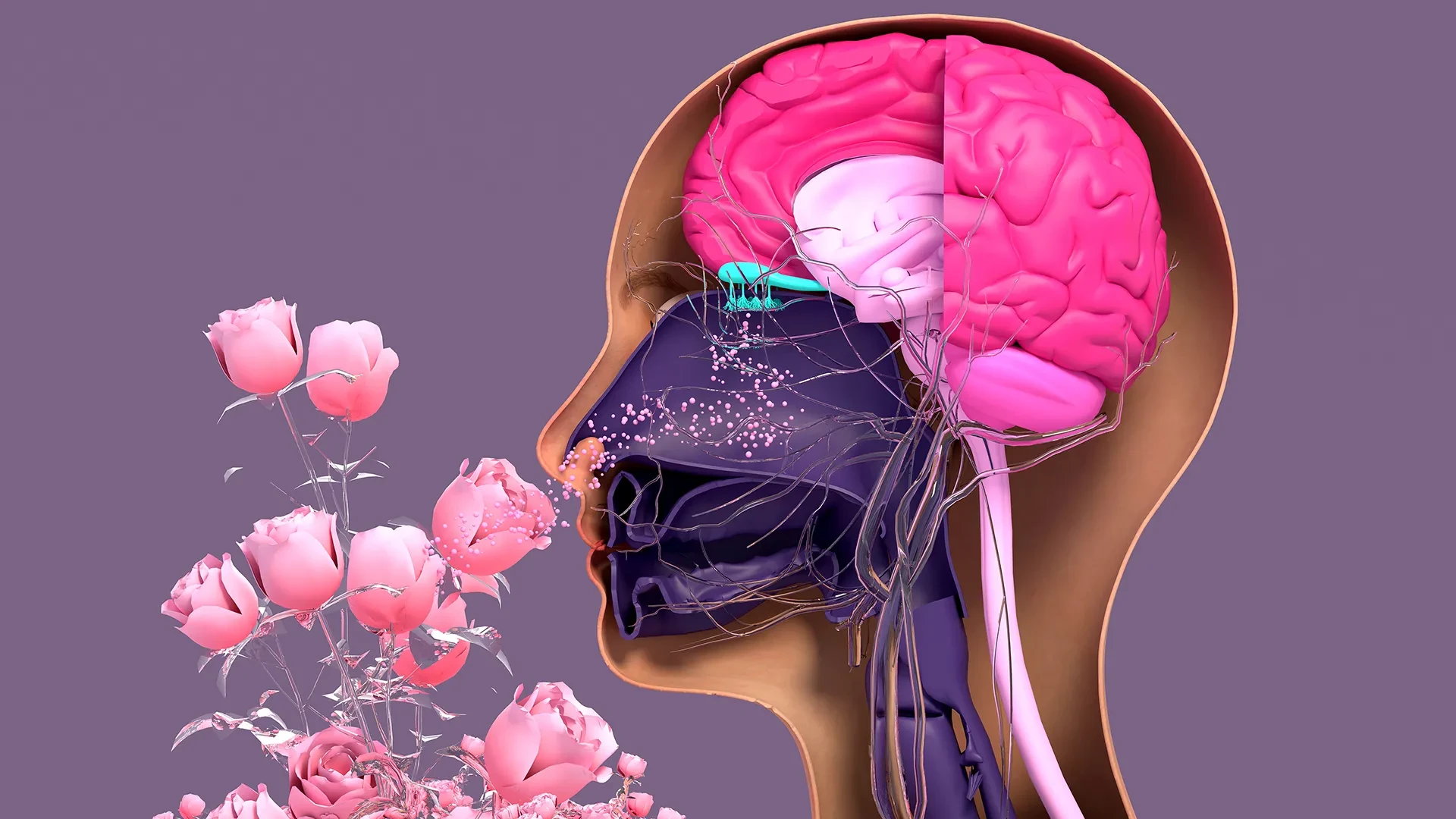
In a significant leap forward for regenerative medicine, researchers at Tufts University School of Medicine and the Graduate School of Biomedical Sciences (GSBS) have unveiled a sophisticated three-dimensional model designed to study the renewal of nerve tissue in the nose. This scientific advancement has led to the unexpected discovery that a specific population of stem cells, previously dismissed by the scientific community as dormant, plays a far more critical role in maintaining our sense of smell than anyone had dared to imagine.
The sense of smell, or olfaction, is a complex sensory process that relies on the health and vitality of neurons within the nasal cavity. Unlike the neurons found in the central nervous system—which are notoriously difficult to repair once damaged—sensory neurons in the nose possess a remarkable, lifelong capacity for regeneration. This ongoing renewal allows the olfactory system to withstand constant exposure to environmental toxins, pathogens, and the wear and tear of daily life. However, this protective mechanism is not infallible.
When the delicate balance of this regenerative process is disrupted—whether through viral infections such as COVID-19, prolonged exposure to environmental toxins, or the natural progression of aging—the function of these sensory neurons can deteriorate. The resulting impairment often manifests as a partial or complete loss of smell, a condition that can profoundly diminish an individual’s quality of life and serves as a precursor to several neurodegenerative disorders.
To better understand the mechanisms governing this biological repair, the research team at Tufts developed an easy-to-create, three-dimensional olfactory tissue mouse model, known as an organoid. This "mini-organ" allows scientists to observe, in real-time, how neurons are continually generated within the nose and, crucially, to identify the specific biological hurdles that cause this regenerative capacity to falter during disease or the aging process.
The team’s findings, recently published in the journal Cell Reports Methods, clarify the complex dance of cellular communication between two distinct types of stem cells residing in the nasal cavity: horizontal basal cells (HBCs) and globose basal cells (GBCs).
"Our research suggests that these two stem cells may be interdependent," explains Brian Lin, a research assistant professor in the Department of Developmental, Molecular and Chemical Biology and the senior author of the study. "One type that we thought was largely dormant—HBCs—may actually play a crucial role in supporting the production of new neurons and the repair of damaged tissue."
By utilizing their novel 3D organoid model, the researchers identified a unique subpopulation of HBCs, distinguishable by their expression of the protein KRT5. Contrary to the traditional view that these cells sit in reserve until a catastrophic injury occurs, the team observed that these KRT5-positive HBCs are active participants in the routine generation of olfactory neurons. When the researchers selectively depleted these specific cells from the organoid cultures, the formation of new neurons was significantly impaired, confirming that these cells are essential pillars of the regenerative process.
The implications of this discovery extend to the broader conversation regarding human longevity and health. In the same study, the team examined olfactory cells harvested from mice at different stages of their lifespan. "We also looked at cells from mice of different ages and grew them in the model," Lin notes. "We found a decline in the ability of the older mice cells to generate new neurons. We think this is due to a decrease in the GBC population as we age, but we need to do more work to test this hypothesis and, if so, develop ways to rejuvenate them."
An Easy-To-Use Model
The development of this 3D organoid was a labor of dedication led by Juliana Gutschow Gameiro, the study’s lead author and a former Ph.D. student visiting GSBS from the State University of Londrina in Parana, Brazil. According to Lin, Gameiro was driven by the goal of creating a model that was not only scientifically rigorous but also accessible to labs operating with limited funds and specialized equipment.
The urgency of this work is highlighted by the global health landscape. The COVID-19 pandemic brought the fragility of the olfactory system to the forefront of public consciousness, as millions of patients reported sudden, and sometimes lasting, losses of smell. Furthermore, olfactory dysfunction is a well-documented early clinical sign of Parkinson’s disease and other neurodegenerative conditions.
"Because loss of smell is associated with COVID-19, as well as with Parkinson’s disease and other conditions, a much larger number of researchers from a variety of different fields have begun researching olfactory epithelial cells in the last few years," says Lin. "We wanted to develop an easy-to-use model so that non-stem cell biologists and those working in labs with limited resources could use it to better understand how olfactory neurons regenerate and what happens that causes that process to diminish or fail completely."
By lowering the barrier to entry for this type of research, the Tufts team hopes to catalyze a wider investigation into the underlying causes of olfactory loss, potentially accelerating the pace of discovery across the global scientific community.
Next Step: A Human Organoid
The successful validation of the mouse-tissue model is merely the first chapter in a much larger narrative. The ultimate ambition of the research team is to translate this methodology into a human-derived organoid. Such a tool would provide an invaluable platform for drug screening, allowing researchers to test therapeutic compounds in a controlled environment to determine if they can effectively restore or preserve the sense of smell in patients.
Organoids represent a paradigm shift in pre-clinical research. They offer a method that is significantly faster, more cost-effective, and arguably more ethical than relying on whole-animal models or legacy human cell cultures. While organoid technology has already been successfully applied to study the lungs, kidneys, and other major organs, the creation of human olfactory organoids has remained an elusive goal.
The primary obstacle, Lin explains, is the difficulty of obtaining pure, usable samples from the human nasal cavity. In a clinical setting, obtaining tissue involves an invasive procedure where a brush—similar in design to a COVID-19 testing swab—is inserted deep into the nasal cavity while the patient is under anesthesia. The collected sample is often a chaotic mixture of respiratory stem cells and the desired olfactory stem cells, making them notoriously difficult to isolate for laboratory cultivation.
"It’s challenging to get pure olfactory tissue from humans," Lin says. "Unlike in our mouse model, human respiratory stem cells and olfactory stem cells collected in this process are difficult to separate."
As the team looks toward the future, their primary challenge is to develop a simple, inexpensive technique that can effectively isolate human olfactory stem cells from this mixed population and provide the necessary conditions to coax them into thriving within a laboratory environment. By bridging the gap between mouse models and human clinical applications, the researchers at Tufts University are laying the groundwork for a new era of sensory restoration, offering hope to those who have lost their ability to perceive the world through scent. Through continued innovation, the goal of rejuvenating the human olfactory system is moving steadily from the realm of theory into the realm of possibility.