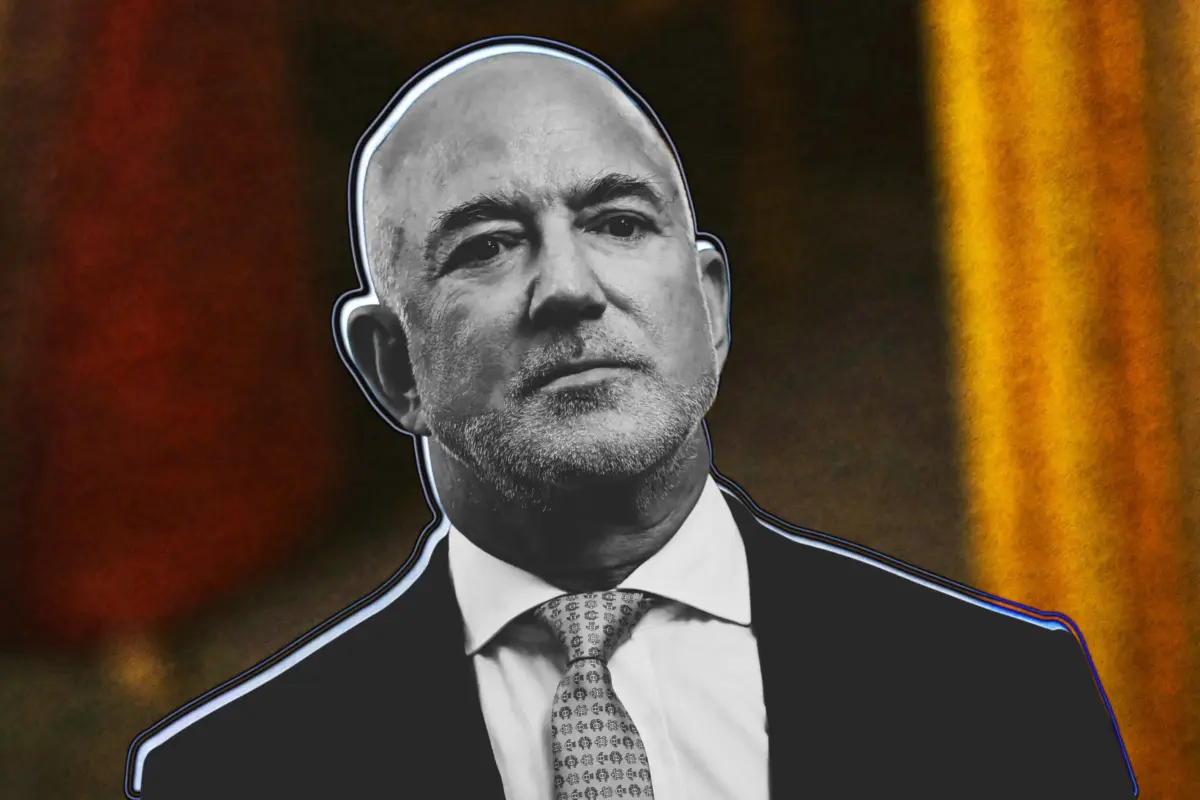
The rapid evolution of artificial intelligence has sparked a fierce debate among the world’s most influential business leaders, creating a stark dichotomy in how we envision the future of the human workforce. On one side of the spectrum, industry pioneers are warning of a potential economic catastrophe characterized by mass job displacement and structural unemployment. On the other, visionaries like Amazon founder Jeff Bezos are painting a portrait of a radically transformed society—one where AI-driven productivity creates an era of abundance, shorter workweeks, and a fundamental shift in the economic requirements of the average household.
This tension between the promise of prosperity and the fear of obsolescence has become the defining narrative of the current technological revolution. As companies integrate sophisticated AI systems into every facet of operations, from administrative tasks to complex white-collar analysis, the implications for the global labor market have moved from the realm of science fiction to the center of boardroom discussions.
A Vision of Abundance: The Bezos Perspective
Jeff Bezos recently offered a compelling, if controversial, outlook on this trajectory. In a wide-ranging interview with Fox News anchor Bret Baier, the Amazon founder challenged the prevailing anxiety that AI will simply render humans redundant. Instead, Bezos proposed that the true impact of AI will be a dramatic surge in economic productivity, which will fundamentally reshape the economics of family life.
The most notable of his predictions concerns the necessity of the dual-income household. For decades, the rising cost of living has driven the standard model where both partners in a relationship must work full-time to sustain a family. Bezos posits that the efficiency gains provided by AI will reach a threshold where this standard becomes unnecessary. "You’re not going to need to have a two-earner income household," Bezos suggested, outlining a future where the output of a single worker, bolstered by intelligent machines, could provide the financial security currently afforded only by two.
This shift in productivity, according to Bezos, will ripple outward, fundamentally altering the relationship between the individual and the clock. He suggests that as economic output per worker increases, the traditional five-day workweek—a relic of the industrial age—will become obsolete. "Some people will also decide, you know what, I can support my family working three days a week," he said, emphasizing that this transition is the natural hallmark of an economy that has achieved a higher tier of productivity.
Bezos takes his prediction a step further, suggesting that this new economic reality will create a labor supply crisis for employers. He argues that if the baseline for survival is lowered through increased productivity, the leverage in the labor market will shift toward the employee. "It’s going to actually be difficult to hire people because the productivity in the economy is going to make it so that if people don’t want to work two jobs, they won’t have to," he explained.
A Growing Consensus on Flexibility
Bezos is not a lone voice in this optimistic assessment. Several other prominent figures in the business world have expressed similar views, suggesting that future generations will experience a structural shift in how they spend their time.
JPMorgan Chase CEO Jamie Dimon has long been a proponent of the idea that technology should serve to liberate the human spirit from the grind of traditional employment. In an October 2023 interview with Bloomberg TV, Dimon projected that the children of the current generation would likely transition to a three-and-a-half-day workweek. This perspective frames AI not as a replacement for human endeavor, but as a mechanism to facilitate a better work-life balance, allowing humanity to focus on pursuits outside of traditional labor.
Elon Musk, the CEO of Tesla and SpaceX, has taken this narrative to its most extreme conclusion. Speaking at the U.S.-Saudi Investment Forum last year, Musk suggested that the ultimate destination of this technological progression is a world where money becomes "irrelevant." By his estimation, as AI and robotics advance to the point of near-total automation, the necessity of human labor will evaporate. Musk envisions a future where work becomes entirely "optional"—a scenario he likens to playing sports or engaging in video games, where activity is driven by choice, passion, and personal interest rather than economic necessity.
The Counter-Argument: A More Pessimistic Reality
However, these optimistic visions are met with deep skepticism by other leaders who focus on the immediate, potentially brutal, economic disruption that such a transition could cause. While Bezos and others look toward the long-term equilibrium of an AI-driven society, critics warn that the transition period could be marked by unprecedented social instability and job losses.
The warnings from the AI sector itself have been particularly pointed. Dario Amodei, the CEO of Anthropic, provided a stark forecast in May 2025. He cautioned that the rapid adoption of AI is likely to target entry-level white-collar positions first. Amodei told Axios that AI could eliminate nearly half of all such jobs within a one-to-five-year window, potentially pushing U.S. unemployment rates into a range between 10% and 20%. Such a surge in unemployment, if realized, would likely overwhelm social safety nets and create a political and economic crisis that could negate any long-term benefits of the technology.
This fear is shared by those who have been instrumental in the creation of these systems. Geoffrey Hinton, often referred to as the "Godfather of AI," has spent the past year articulating his concerns regarding the distribution of the wealth generated by AI. In a September 2025 interview with the Financial Times, Hinton argued that the economic gains from AI productivity would be captured by the owners of the capital, not the workers. "What’s actually going to happen is rich people are going to use AI to replace workers," Hinton stated. "It’s going to create massive unemployment and a huge rise in profits."
For Hinton, the scenario is not one of increased leisure for the masses, but rather a concentration of wealth that leaves the displaced workforce behind. His critique highlights a significant blind spot in the utopian arguments for AI: the assumption that increased productivity will automatically translate into higher wages or reduced working hours for the average employee, rather than simply higher profit margins for corporations.
The industrial reality seems to align more closely with these pessimistic forecasts. Ford CEO Jim Farley raised a similar alarm during the Aspen Ideas Festival in June 2025, where he echoed the sentiment that the corporate world is looking at AI primarily as a tool for cost reduction. Farley remarked that artificial intelligence is poised to replace, quite literally, half of all white-collar workers in the United States. This perspective suggests that for the immediate future, companies are far more likely to use AI to downsize their headcounts than to experiment with three-day workweeks.
As the debate continues, the fundamental question remains unresolved. The divide between the vision of a "leisure-class" future and the reality of a "displaced-worker" present is not merely a disagreement on timing, but a clash of ideologies. Whether AI will act as a bridge to a new era of human freedom or a wedge that deepens economic inequality will depend not just on the capabilities of the software, but on how policymakers, corporations, and society at large choose to manage the transition. For now, the workforce remains in a state of uncertainty, waiting to see which of these two visions will ultimately define the next chapter of the global economy.