For years, racing games like the Forza Horizon series have served as the premier choice for virtual video game tourism. Set across stunning real-world destinations, these titles allow players to slide behind the wheel of their favorite vehicles and embark on high-speed sightseeing tours through meticulously designed representations of the Mediterranean coast, the Scottish highlands, the Australian Outback, or the bustling streets of Tokyo.
For many virtual road-trip enthusiasts, this remains a deeply treasured pastime. The joy of exploring open roads, both in the real world and inside a digital sandbox, commands a dedicated following. Some players even go so far as to map out comprehensive guides detailing the finest scenic drives hidden across every iteration of the Forza Horizon franchise. Yet, despite the undeniable visual splendor, an underlying unreality persists within the Forza road-trip experience, occasionally pulling players out of the immersion.
The maps, while vast and breathtakingly gorgeous, ultimately function as condensed, theme-park versions of actual geographic locations. Players can effortlessly drive from a quaint Cotswolds village straight into the rugged Scottish highlands in a matter of five mere minutes. Consequently, the authentic sense of journeying across significant distances—the gradual transition from one distinct biome to another—is entirely lost. Older titles, such as the Test Drive Unlimited games on the Xbox 360, handled this philosophy differently by offering true-to-life, 1:1 scale recreations of islands like Oahu and Ibiza. Even so, those island settings inevitably introduced strict boundaries regarding terrain variety and the overarching scope of long-haul adventure.
For virtual trucking enthusiasts, however, the definitive answer to this geographic conundrum has long resided within SCS Software’s peerless, long-running, and immensely popular simulation titles: Euro Truck Simulator 2 and American Truck Simulator. These expansive games feature staggering, continent-spanning maps built on a roughly 1:20 scale, parceled out through steadily expanding downloadable content that continues to grow year after year.
Within these virtual landscapes, players possess the freedom to undertake monumental journeys, driving all the way from Uppsala, Finland, down to Malaga, Spain, or from the humid coastline of Galveston, Texas, up to Seattle, Washington. While these trips still require hours of driving rather than actual days, the in-game clock functions on a matching scale. As a result, drivers watch the daylight gradually fade, the stars emerge across immaculate skyboxes, and the weather dynamically shift overhead. The simulation demands practical survival discipline as well, requiring motorists to carefully plan necessary pit stops for rest and refueling. For many, this represents the genuine essence of a true road trip.
Yet, a singular hurdle has historically prevented these truck simulators from claiming the crown as the ultimate road-trip games: the occupation itself. Confined behind the wheel of a heavy commercial semi-truck, a player’s ultimate destination is rarely a scenic vista or a national landmark. Instead, routes routinely terminate at industrial parks, distribution centers, and logistical facilities. While this routine carries a certain blue-collar, workaday romance, it lacks the spontaneous inspiration of pure tourism.
That fundamental limitation has finally shifted with the arrival of a game-changing expansion for American Truck Simulator titled Road Trip. This latest DLC introduces two long-awaited features that completely transform the experience: drivable passenger cars and dedicated tourism mechanics.
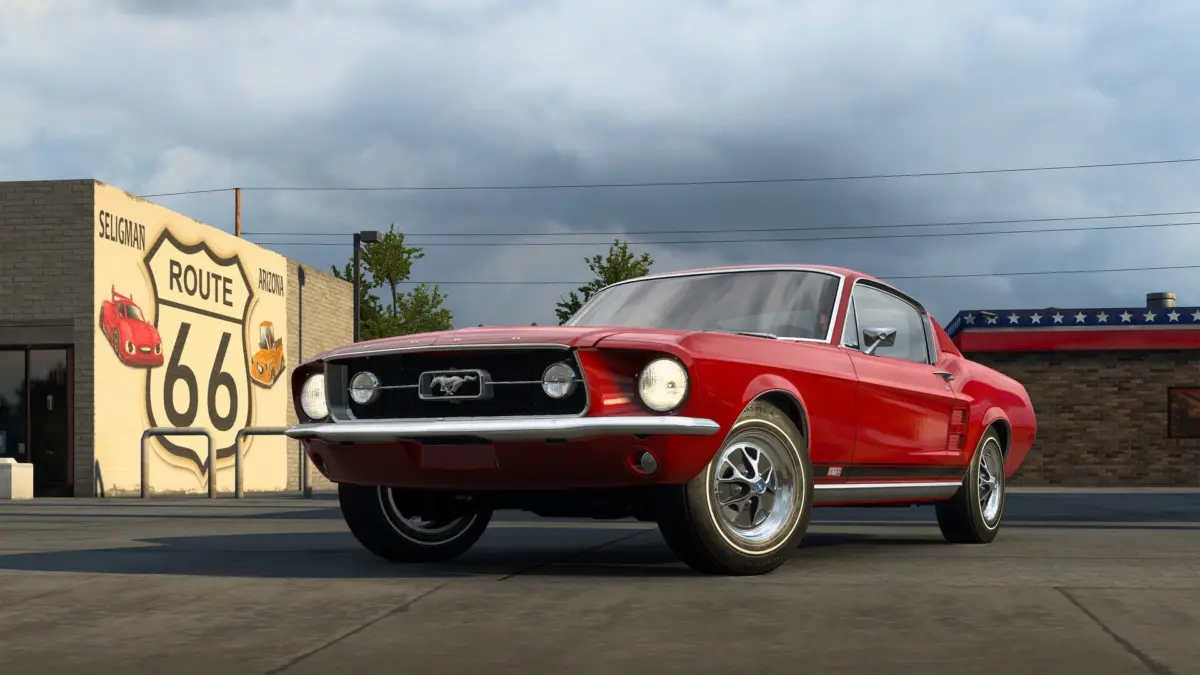
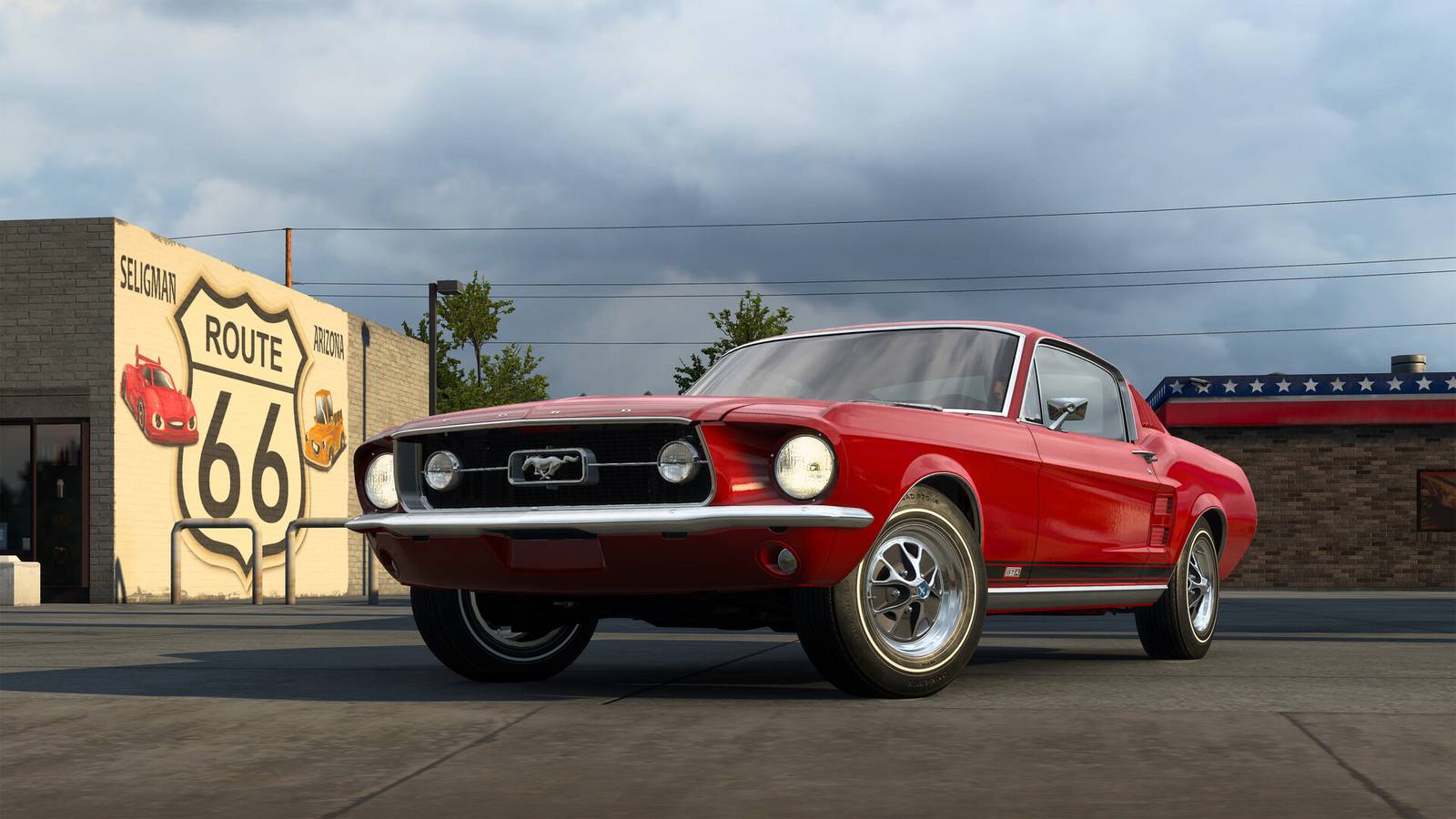
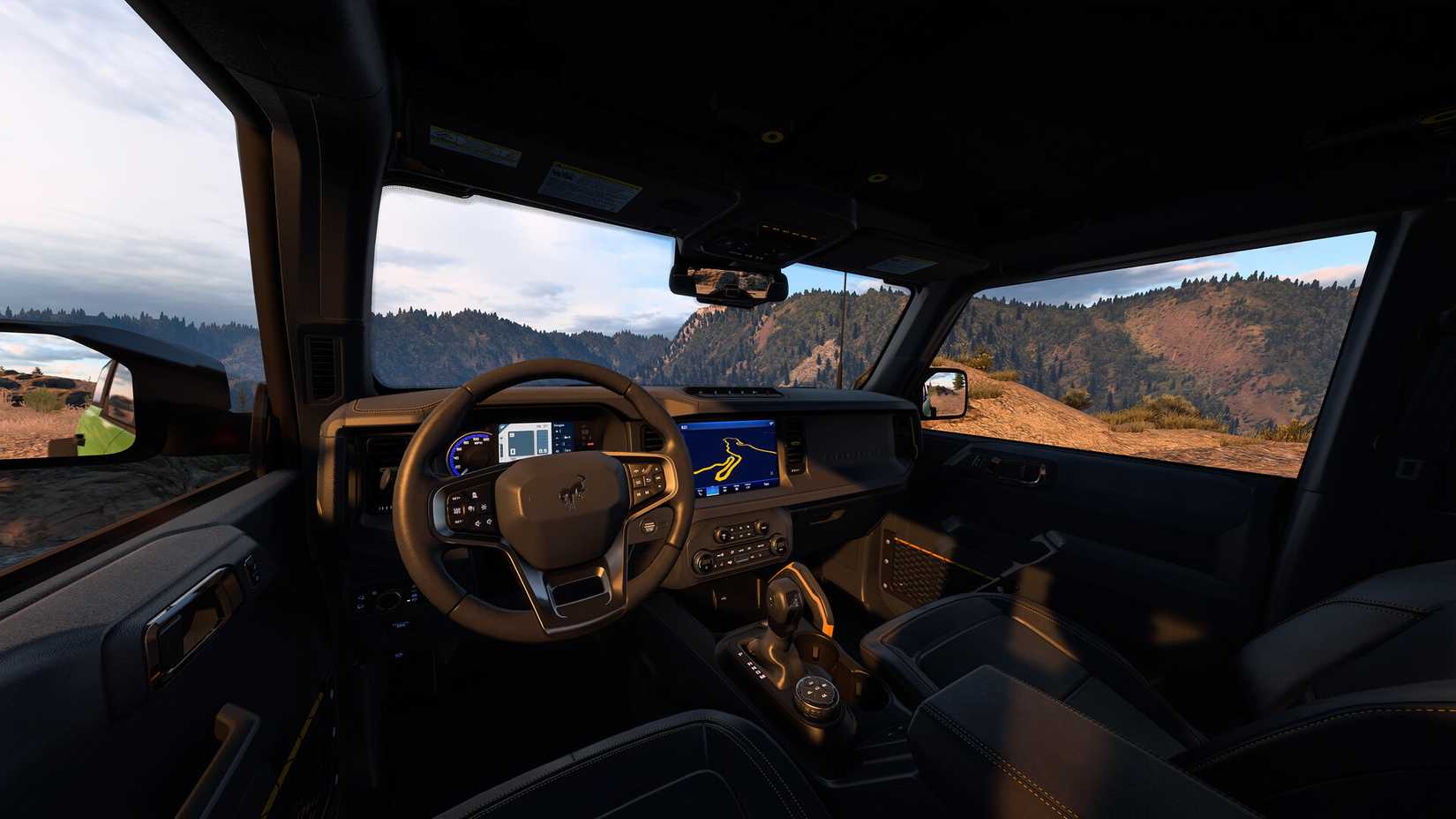
At present, the expansion introduces a curated selection of vehicles, drawing entirely from iconic Ford lineups. Players can climb into modern F-150 pickups and robust Broncos, fire up the classic engine of a 1967 Ford Mustang Fastback, or slide behind the wheel of the humble yet universally recognized 1998 Crown Victoria—the very same sedan immortalized as taxicabs and police cruisers across decades of cinema. Additional vehicle selections, including forthcoming Dodge and Ram packs, are slated to expand the garage further.
Alongside these automobiles, the Road Trip DLC introduces Tourist Boards across seven of the twenty-one states currently modeled within American Truck Simulator. By navigating a vehicle to one of these designated locations, players unlock curated itineraries filled with local regional attractions to visit and check off. In Northern California, for example, the Sierra Crossing board directs travelers toward iconic destinations such as Lake Tahoe, the Eldorado National Forest, and Yosemite National Park. Meanwhile, a separate Golden Horizon board highlights urban and coastal wonders like Alcatraz, the Golden Gate Bridge, and the vibrant Santa Cruz beachfront.
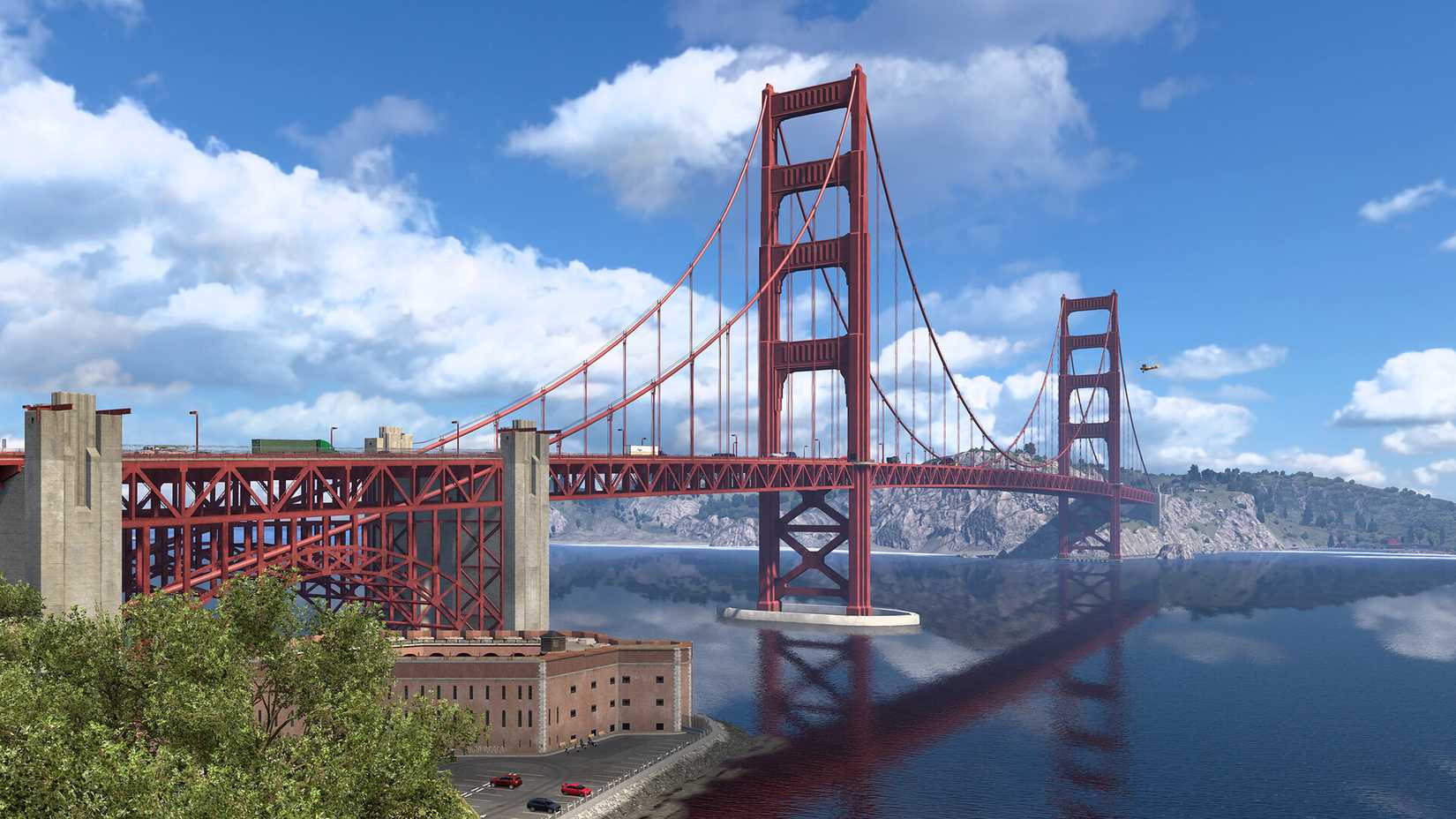
These landmark highlights are realistically spaced across the map, meaning it can genuinely take an hour or more of real-world driving—spanning a couple of days of in-game time—to thoroughly explore all the points of interest associated with a single regional board.
Rather than relying on the theatrical, hyper-stylized spectacle typical of arcade racers, these sights are rendered with a grounded, authentic realism. Reaching them feels genuinely rewarding because players experience the genuine effort of travel: meticulously plotting out a navigation route, managing fuel and fatigue, and watching the surrounding ecosystem, architecture, and topography gradually transform mile by mile. While motorists can technically speed if they choose—the financial penalties for traffic violations and vehicular damage within American Truck Simulator remain relatively trivial—the preferred simulation approach leans toward hitting the open highway, locking in cruise control at the legal speed limit, and letting the world drift past the window.
The depth of verisimilitude is striking. For those familiar with actual American geography, driving a route from Las Vegas up to Flagstaff, Arizona, while pausing to admire the Hoover Dam along the way, mirrors real-world memories with startling accuracy. Even though the digital distance is scaled down, the visual cues, the exquisite lighting conditions, and the atmospheric weather systems combine to forge a profound sense of presence.
The distinctive realism inherent to truck simulation bleeds into this tourism loop in compelling ways. Starting a fresh save file with access to Arizona, Nevada, California, Oregon, and Washington, a player might choose Flagstaff as a home base simply out of personal familiarity. However, immediate sightseeing is not handed out freely; cash must first be earned to purchase a personal automobile.
To secure those funds, players take on standard commercial trucking contracts until they have accumulated enough capital to buy a Crown Victoria, leaving a safe margin for gas money. Only then does the actual vacation begin. Setting a course for the nearest Tourist Board located deep within Death Valley requires an overnight transit, necessitating a stop at a roadside motel to rest the driver’s eyes. After spending another full day and night navigating the arid, sun-baked landscape, the player earns a digital postcard that can be pinned directly to the virtual dashboard. Once the travel funds are exhausted, the holiday concludes, forcing a return to the cab of a semi-truck to earn enough money for vehicle maintenance, such as reupholstering the Crown Victoria’s interior before the next getaway.
While American Truck Simulator natively supports building a sprawling logistics empire complete with hired drivers and corporate profits, role-playing as an itinerant, blue-collar trucker working solely toward the next modest vacation offers an entirely different kind of engagement.
Of course, the transition is not entirely without minor friction. While the passenger cars are faithfully modeled and handle convincingly, they naturally lack the intricate mechanical engagement and heavy momentum that make driving massive semi-trucks so absorbing. Furthermore, the underlying road network remains fundamentally optimized for heavy commercial freight, placing a primary focus on major interstate corridors rather than winding, intimately detailed scenic backroads.
Nevertheless, the sheer scale and fidelity of the map easily eclipse these minor compromises. Eschewing the compressed layout of a theme park, the simulation presents an astonishingly faithful scale model of the American landscape. With developers continuing to expand eastward toward Illinois and Louisiana after a decade of continuous development, vast horizons remain open to future exploration. For virtual travelers seeking the open road, the journey is far from over.