In the autumn of 1966, CBS debuted what would quickly become a permanent fixture of holiday television culture: It’s the Great Pumpkin, Charlie Brown. In the now-classic animated special, the beloved Peanuts gang engages in the quintessential traditions of the season, from carving jack-o’-lanterns to trick-or-treating for candy. Yet one member of the neighborhood stands apart from the festivities. While his peers embrace the tangible joys of Halloween, Linus van Pelt dedicates his October to preparing for the arrival of a mysterious, mythical entity known as the "Great Pumpkin."
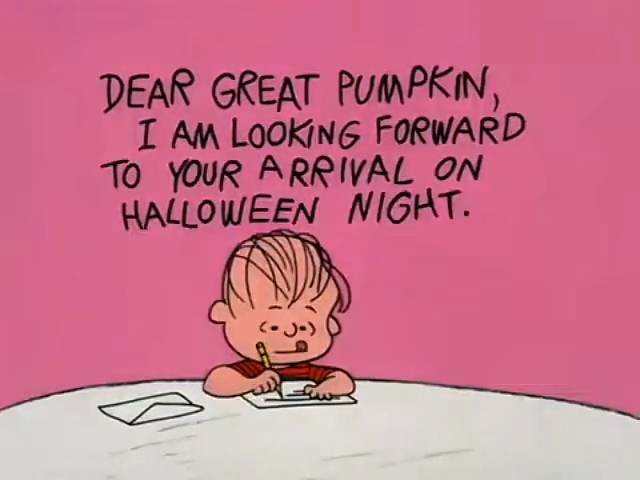
As Linus famously explains to anyone willing to listen, the Great Pumpkin emerges each year from the single pumpkin patch he deems the most sincere. Once risen, he traverses the globe, distributing toys and gifts to the children who have devoted their evening to waiting for him. Throughout the television special, Linus meticulously drafts letters, attempts to convince his stubbornly skeptical friends of the entity’s reality, and ultimately spends a chilly Halloween night shivering alone in the patch. The Great Pumpkin, of course, never materializes. Yet, undeterred by disappointment or mockery, Linus vows to return to the patch the very next year.
To the casual viewer or temporary fan, this solitary television special might define the entirety of the Great Pumpkin mythos. However, dedicated readers of Charles Schulz’s daily Peanuts comic strip know that Linus’s fixation is far richer, funnier, and more complex than what made it to the screen.
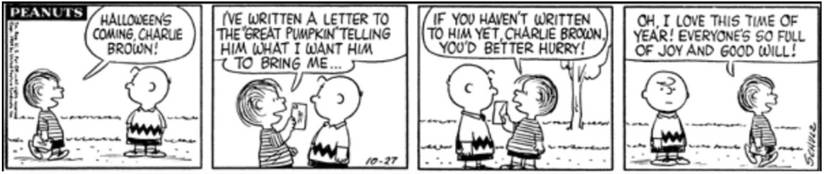
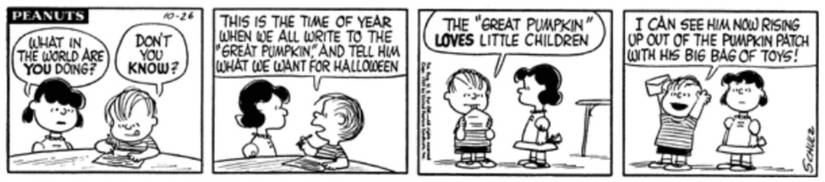
The origin of the Great Pumpkin dates back well before the CBS special, making its first appearance in a Peanuts strip published on Oct. 26, 1959. In the strip, Linus is intensely focused on writing his seasonal correspondence when Lucy approaches him, demanding to know what he is doing. Linus replies with complete earnestness, asking if she does not know that this is the time of year children write to the Great Pumpkin to share their Halloween wishes. Describing the entity as a creature that deeply loves little children, Linus envisions him rising out of the patch with a massive bag of toys, while Lucy stares back in absolute, dumbfounded silence.
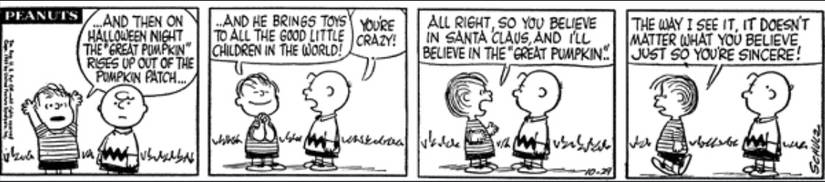
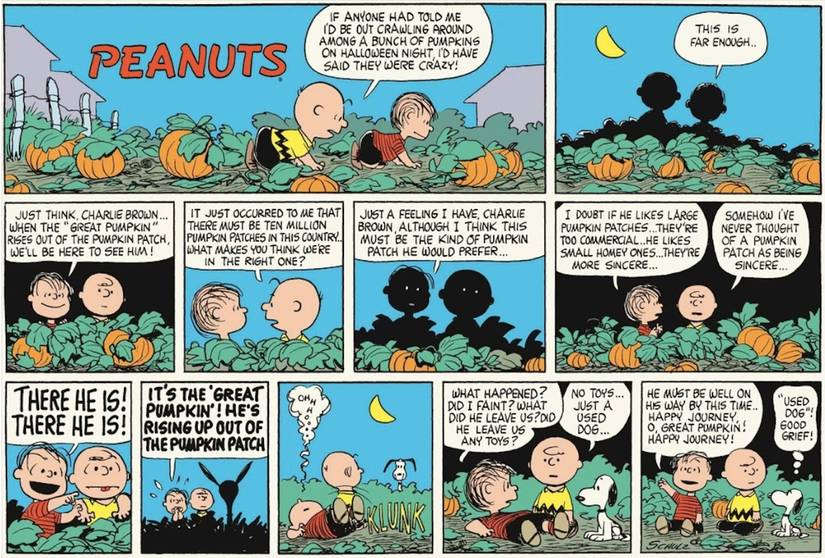
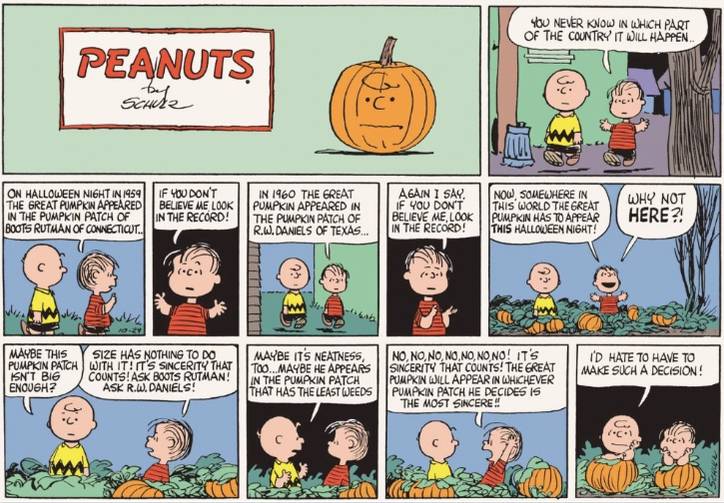
The very next day, Charles Schulz published a follow-up strip featuring Linus once again lecturing an unresponsive Charlie Brown about the Great Pumpkin’s imminent arrival. Over the next few years, Schulz established a familiar comedic pattern. During the final week of October, Linus would pen more letters and preach about the Great Pumpkin’s impending journey, while friends like Charlie Brown and Lucy listened with a mix of disbelief and annoyance. By 1960, Linus successfully persuades Charlie Brown to join him in the chilly patch, prompting a wonderfully logical question from the round-headed boy: it occurs to Charlie Brown that there must be millions of pumpkin patches across the country, leaving him to wonder why they could possibly be sitting in the correct one.
By 1961, Schulz had introduced even greater specificity to Linus’s bizarre mythology, incorporating detailed historical accounts of previous sightings. Linus cites past appearances with absolute conviction, noting that on Halloween night in 1959, the Great Pumpkin supposedly visited the pumpkin patch of a man named Boots Rutman in Connecticut, followed by a 1960 appearance in the patch of R.W. Daniels in Texas. The precise inclusion of real-sounding names and locations brought a uniquely absurd layer of humor to the strips—details that, curiously, never made their way into the television adaptation, despite many other comic storylines being adapted for the script.
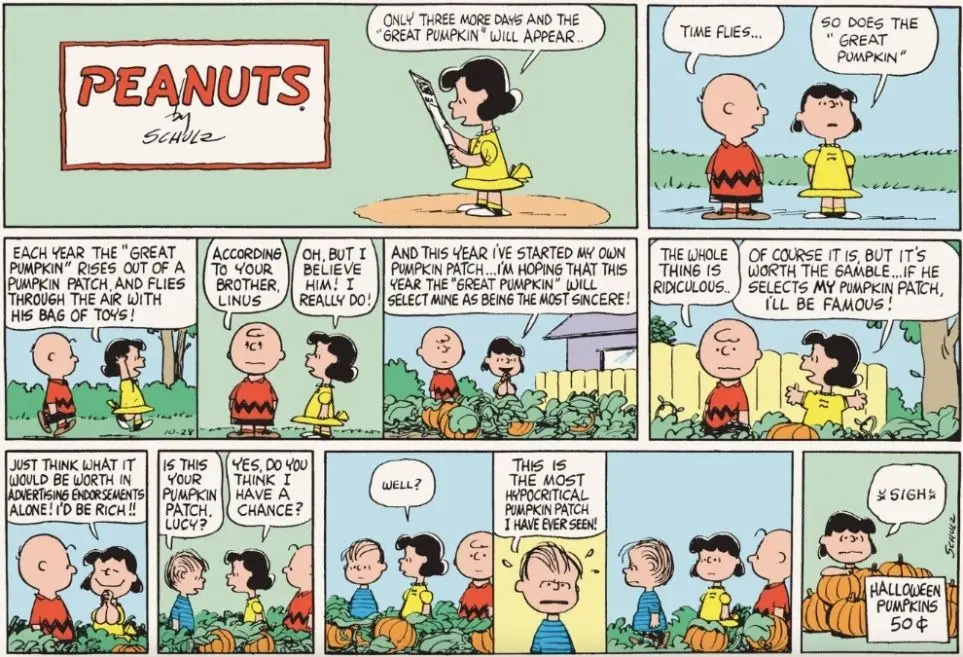
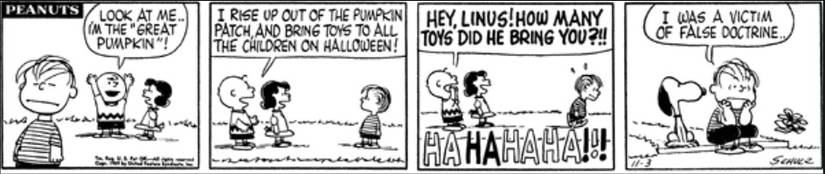
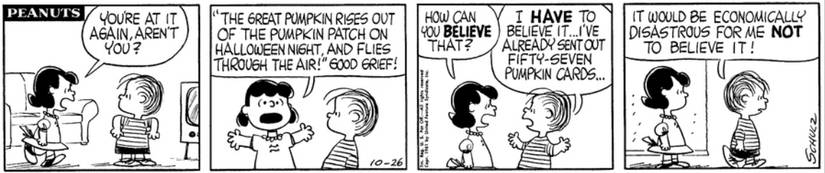
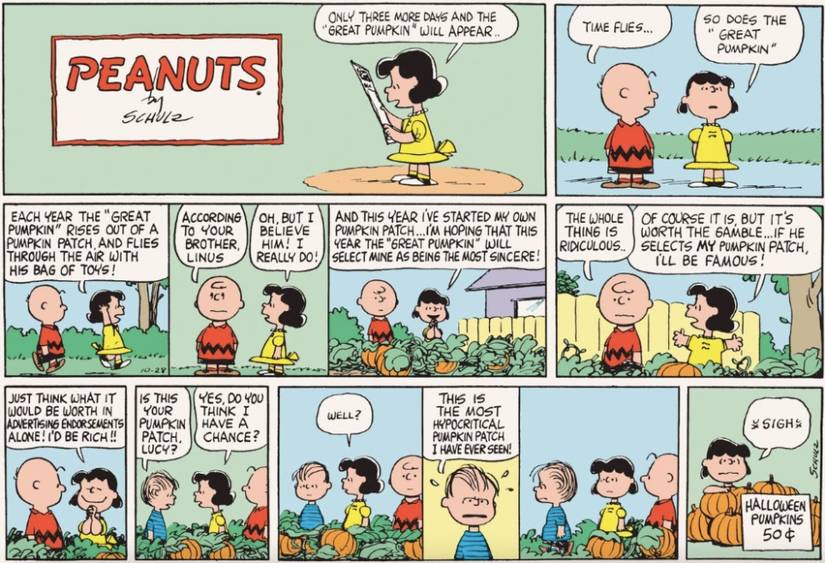
Another memorable strip from the era reframes Linus’s belief through an unexpected economic lens. Explaining his unwavering devotion to Lucy, Linus reveals that he has already sent out 57 pumpkin cards, concluding with the dramatic realization that it would be entirely disastrous for him financially not to believe. Perhaps most surprisingly for long-time fans, 1962 saw Linus actually succeed in converting Lucy to "Great Pumpkinism." Lured by the prospect of receiving a mountain of presents, Lucy establishes her own competing pumpkin patch. However, Linus quickly denounces her endeavor as entirely hypocritical due to her transparent greed, leading a frustrated Lucy to abandon her faith and simply sell her gourds for a profit instead.
When readers go back through the October archives to read these strips consecutively, the cumulative effect is transformative. For those familiar only with the animated special, the comics read like lost deleted scenes, offering a broader window into Linus’s campaign to win over his skeptical friends. More importantly, reading the strips back-to-back shifts the perception of Linus himself. While the television special portrays him as a boy with a quaint, innocent quirk, the daily comics present him as a deeply obsessed, almost madly devoted evangelist of a nonexistent holiday figure, elevating the comedy significantly.
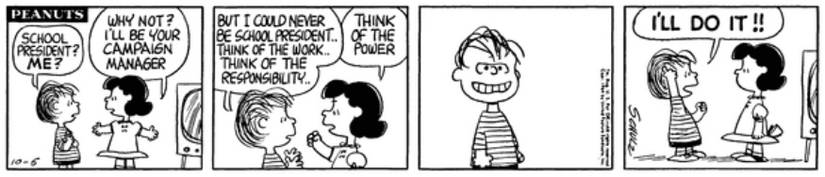
This narrative dedication reached its peak in October 1964, when Schulz broke from his usual routine. Typically, Schulz reserved Great Pumpkin-themed strips for the final week of October, wrapping up with a brief post-Halloween gag. But in 1964, coinciding with a real presidential election year, Schulz launched a multi-week storyline beginning on Oct. 5 focused on Linus running for class president.
For two consecutive weeks, the daily strips centered entirely on Linus’s political campaign. Proving to be an unexpectedly formidable candidate, Linus delivers powerful, revolutionary speeches that electrify his classmates and cause him to rapidly climb the polls. Victory appears assured until Oct. 21, when Schulz executes a brilliant narrative twist. During his rousing final election speech, Linus abruptly pivots to preaching about the Great Pumpkin, instantly torpedoing his political career and shocking his constituents.
Examined on its own, the strip serves as a sharp satire on how a single extreme position or political misstep can destroy a candidate’s viability. But viewed in the broader context of the month-long narrative—where Schulz spent two weeks ignoring the Great Pumpkin only to let it consume Linus’s moment of triumph—the storyline highlights the extraordinary patience and brilliance of Schulz as both a visual storyteller and a humorist.