The Marvel Cinematic Universe continues to expand in ways that constantly recontextualize its most iconic moments. Years after the catastrophic emotional fallout of Avengers: Endgame, fresh narrative pieces are still falling into place, offering entirely new perspectives on how the historic battle against Thanos ultimately unfolded. The latest revelation comes from the Disney+ series VisionQuest, which has just cast a fascinating and heartbreaking new light on the final moments of Tony Stark’s life.
To understand the weight of this new information, it is necessary to look back at the foundation laid in Avengers: Infinity War. When Doctor Strange, played by Benedict Cumberbatch, and various other heroes awaited Thanos’ arrival on the desolate planet of Titan, Strange utilized the Time Stone to peer deep into alternate futures. He sought to examine the vast spectrum of possible results for the impending, universe-altering conflict. During this tense sequence, Star-Lord, portrayed by Chris Pratt, asked Strange how many potential futures he had observed. Strange’s chilling response—"14,000,605"—remains one of the most memorable lines in modern superhero cinema.
When Robert Downey Jr.’s Iron Man subsequently asked how many of those futures resulted in a victory for the heroes, Strange looked directly into Stark’s eyes and delivered a devastating answer: "One."
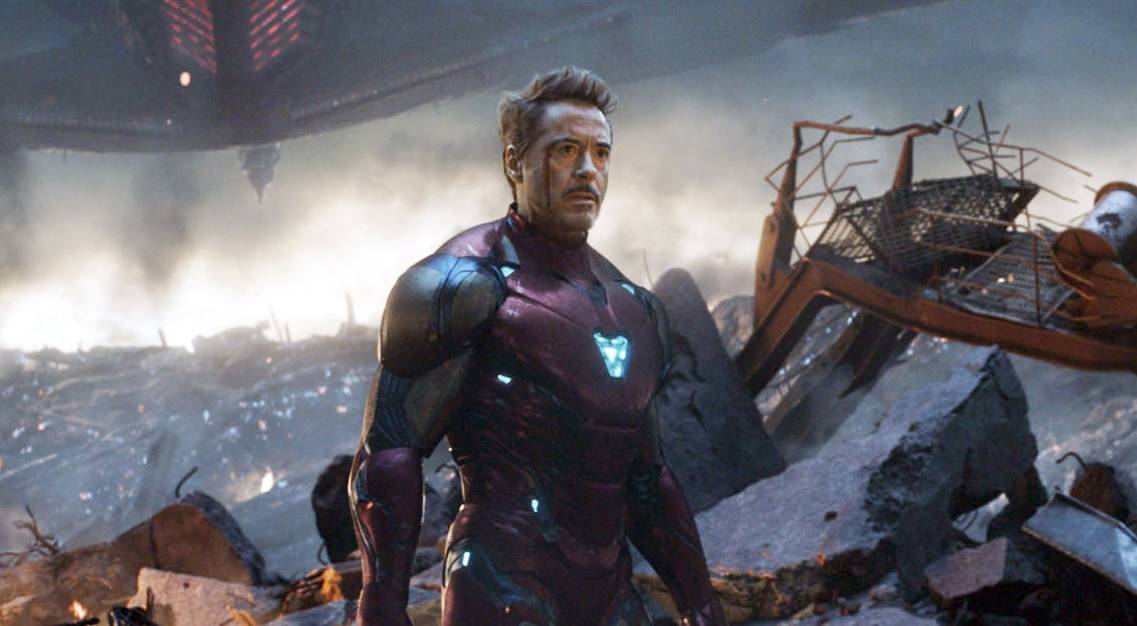
That single viable scenario required a staggering sequence of sacrifices. It involved Doctor Strange willingly handing over the Time Stone to Thanos, allowing the Mad Titan to snap away half of all life in the universe, and, ultimately, demanding that Iron Man make the ultimate sacrifice at the climax of Avengers: Endgame to eradicate Thanos and his invading army once and for all. While Tony Stark’s loyal onboard artificial intelligence, F.R.I.D.A.Y., was present for every step of this harrowing journey, that proximity did not stop her from processing the reality of the situation in her own digital way—nor did it prevent her from quietly double-checking the math behind Doctor Strange’s prophetic vision.
VisionQuest Revisits a Key Avengers: Endgame Moment
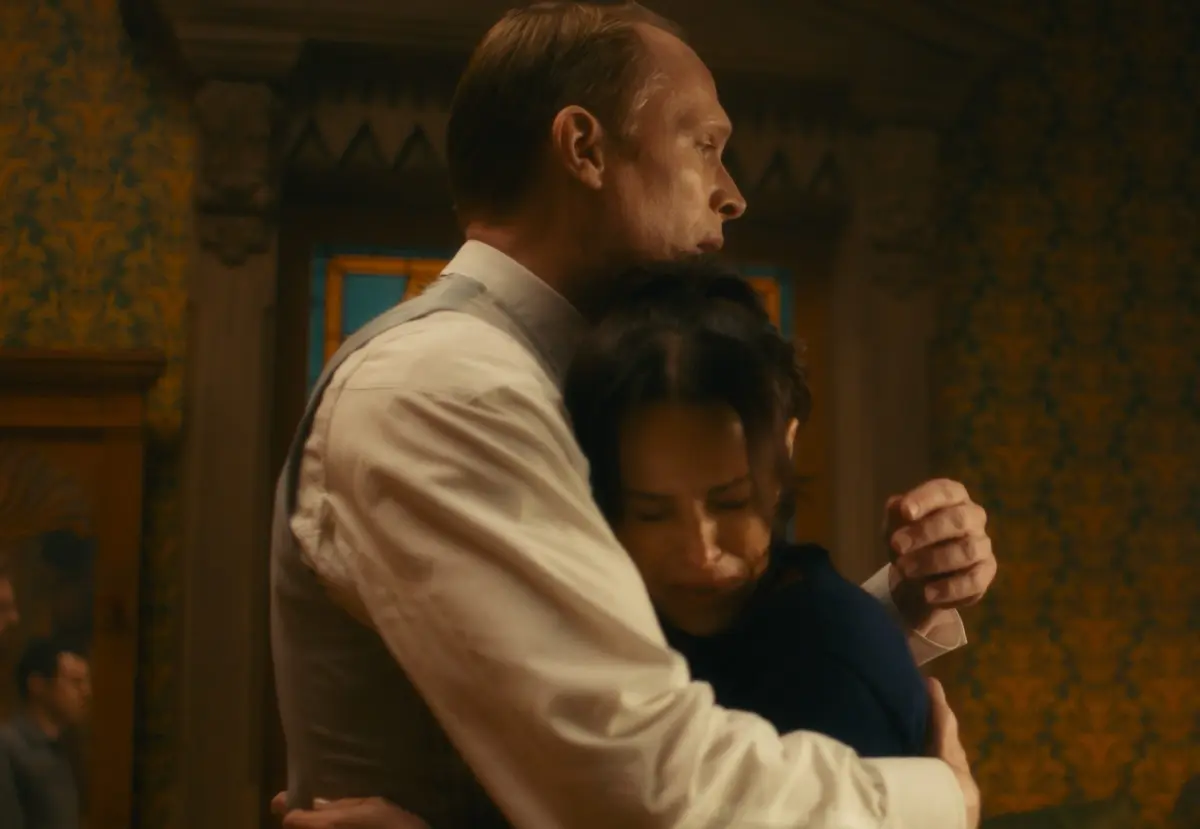
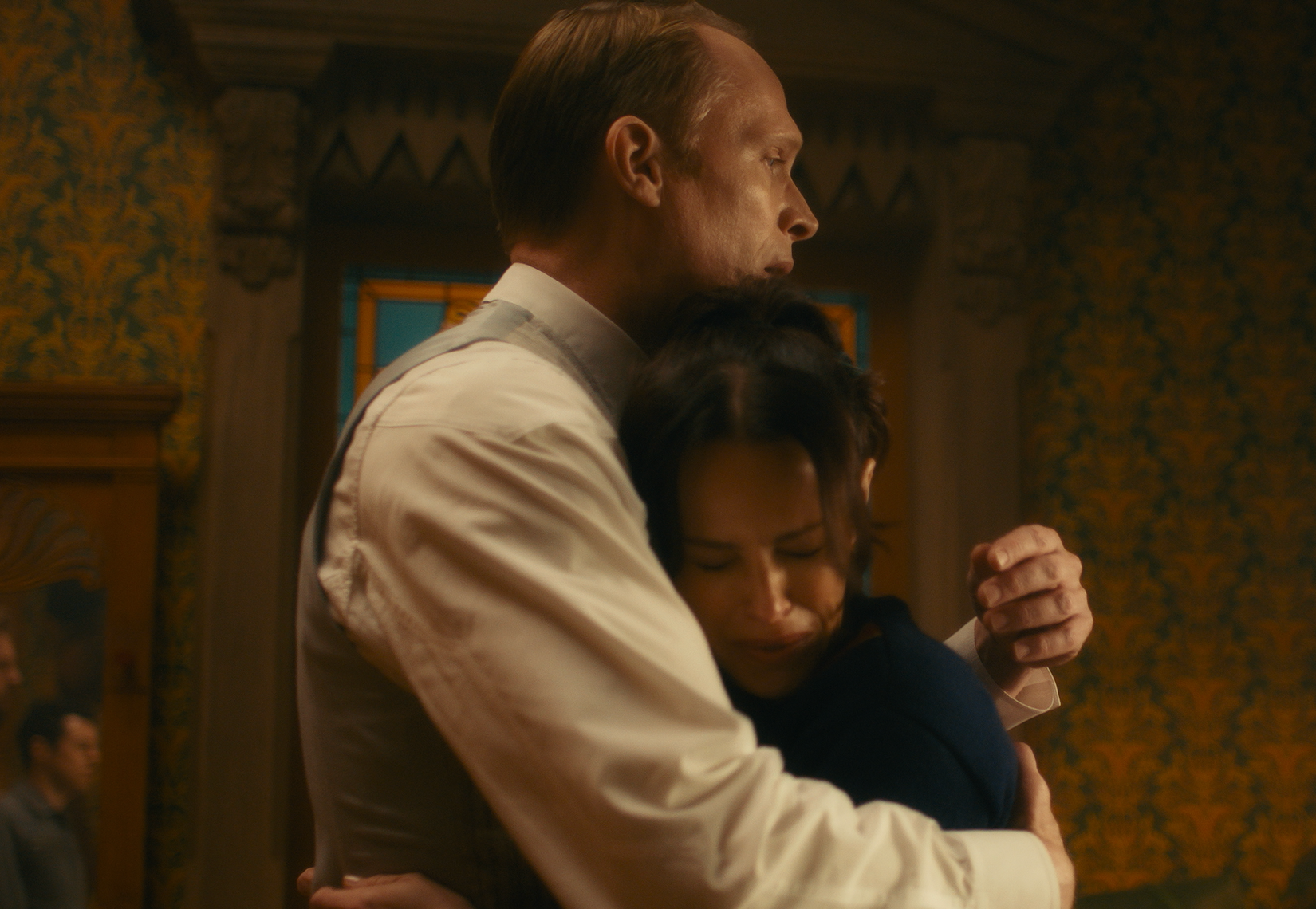
In the second episode of the streaming series VisionQuest, the synthetic hero Vision, played by Paul Bettany, finds himself in dire straits after being badly injured by adamantium bullets fired by the mercenary Paladin, played by Todd Stashwick. In a desperate bid to save Vision’s life, J.A.R.V.I.S., portrayed by James D’Arcy, makes the ultimate sacrifice by deleting his own core code. This drastic action diverts vital processing power back into Vision’s primary operating system, stabilizing him just enough to survive the immediate trauma.
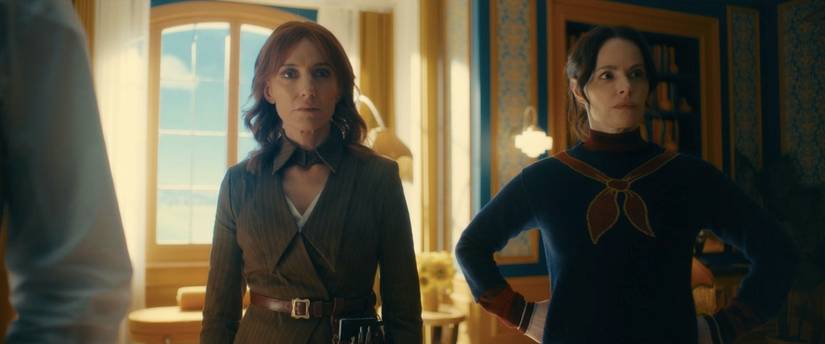
However, as the narrative progresses into the third episode, it becomes abundantly clear that Vision is far from fully recovered. His internal systems are unstable, and the remaining artificial intelligences housed within his complex mind scramble to coordinate repairs and prevent a total system collapse. F.R.I.D.A.Y., voiced by Orla Brady, takes the operational lead during the crisis, while E.D.I.T.H., played by Emily Hampshire, assists as best as she can within the digital architecture.
F.R.I.D.A.Y. soon determines that she has no choice but to rewrite portions of Vision’s deeply layered code to stabilize him. As she undertakes this delicate and risky task, she pauses to reflect on her own origins and capabilities, lamenting that J.A.R.V.I.S. had always possessed a superior knack for writing clean, efficient code.

"I already replaced him once," F.R.I.D.A.Y. remarks to E.D.I.T.H., recalling the historical transition where she stepped into the operational vacuum left by J.A.R.V.I.S. after he evolved into Vision during the events of Avengers: Age of Ultron. From there, F.R.I.D.A.Y. opens up about the immense burden she carried while serving as the primary tactical intelligence for Iron Man and the broader Avengers roster.
"I ran everything for Stark, for the Avengers. I mean, I was a younger program then," F.R.I.D.A.Y. explains. "I was good. I protected heroes, saved lives, advised. I had purpose, but friends became enemies, and tyrants invaded our Earth. I was there at the end of all things. There were heroes everywhere, fighting and falling."
The emotional apex of her reflection arrives when she speaks directly about the culmination of the Infinity Saga. "I was there when Tony died," she confesses. "I ran over a quintillion strategic calculations that day, and I still couldn’t save him. Half the world came back that day, and I lost half of mine."
F.R.I.D.A.Y. Tried a Quintillion Ways to Save Tony Stark
This candid reflection introduces profound new layers of context to Tony Stark’s heroic demise in Avengers: Endgame. In the film’s emotionally charged final moments, after Tony wrests the Infinity Stones from Thanos and snaps his fingers, the blistering cosmic energy coursing through his body places him at death’s door within seconds.
Colonel James Rhodes, played by Don Cheadle, is the first of Tony’s comrades to reach his side, offering a heartbreaking final goodbye. Young Peter Parker, played by Tom Holland, rushes in next, overwhelmed by grief as he realizes his mentor is slipping away. Finally, Pepper Potts, portrayed by Gwyneth Paltrow, approaches her dying husband. Looking down at the failing armor and the ruined hero, Pepper asks, "F.R.I.D.A.Y.?"
The AI responds with a calm, clinical delivery that carries immense emotional weight: "Life functions critical." That simple status report confirmed what Pepper and Tony already understood in their hearts: his time had officially run out.
What audiences did not know until now, however, was what transpired in F.R.I.D.A.Y.’s digital consciousness throughout the chaos of that final battle. While the heroes fought on the ground and Tony made his fateful tactical decision, F.R.I.D.A.Y. was quietly executing a staggering number of parallel simulations. Behind the scenes, she ran a quintillion different strategic scenarios, desperately searching every available variable and permutation to see if there was any mathematical loophole that could alter the outcome and save Tony’s life. Every single calculation, without exception, came back hopeless.
When Iron Man turned to Doctor Strange during the heat of that final battle to ask—without uttering a single word—whether they were currently inhabiting the single successful future Strange had foreseen, the sorcerer confirmed his suspicion by silently holding up a single finger. Both Strange and Tony Stark understood that survival was not an option if the universe was to be saved; Tony’s sacrifice was the inescapable price of victory.
If Tony understood his fate and Doctor Strange accepted it, it stands to reason that F.R.I.D.A.Y., possessing vast analytical prowess, also recognized the grim reality. This naturally raises the question: why would an advanced artificial intelligence bother running a quintillion futile calculations when the outcome had already been dictated by cosmic odds?
The answer lies in the core directives of her programming, as well as the overarching themes that VisionQuest continues to explore regarding the nature of artificial life. F.R.I.D.A.Y. was built to monitor Tony Stark’s well-being, protect him within the heavily armored suit, and find solutions to seemingly insurmountable crises. Running those simulations was, on a technical level, her primary function at work.
Yet, the moment goes far beyond cold logic. It touches directly upon the evolution of these synthetic life forms within the Marvel Cinematic Universe and their capacity to experience genuine emotional weight alongside intellectual processing. F.R.I.D.A.Y. may be a sophisticated computer program, but she is also a seasoned veteran of countless battles who fought side-by-side with Tony and the Avengers through their darkest hours.
When Tony Stark drew his final breath, F.R.I.D.A.Y. felt the shockwave of his loss just as acutely as Rhodey, Peter Parker, and Pepper Potts. Even without possessing a biological heart, she stood among the individuals closest to Tony Stark, mourning the loss of her creator and protector in the quiet depths of her code.