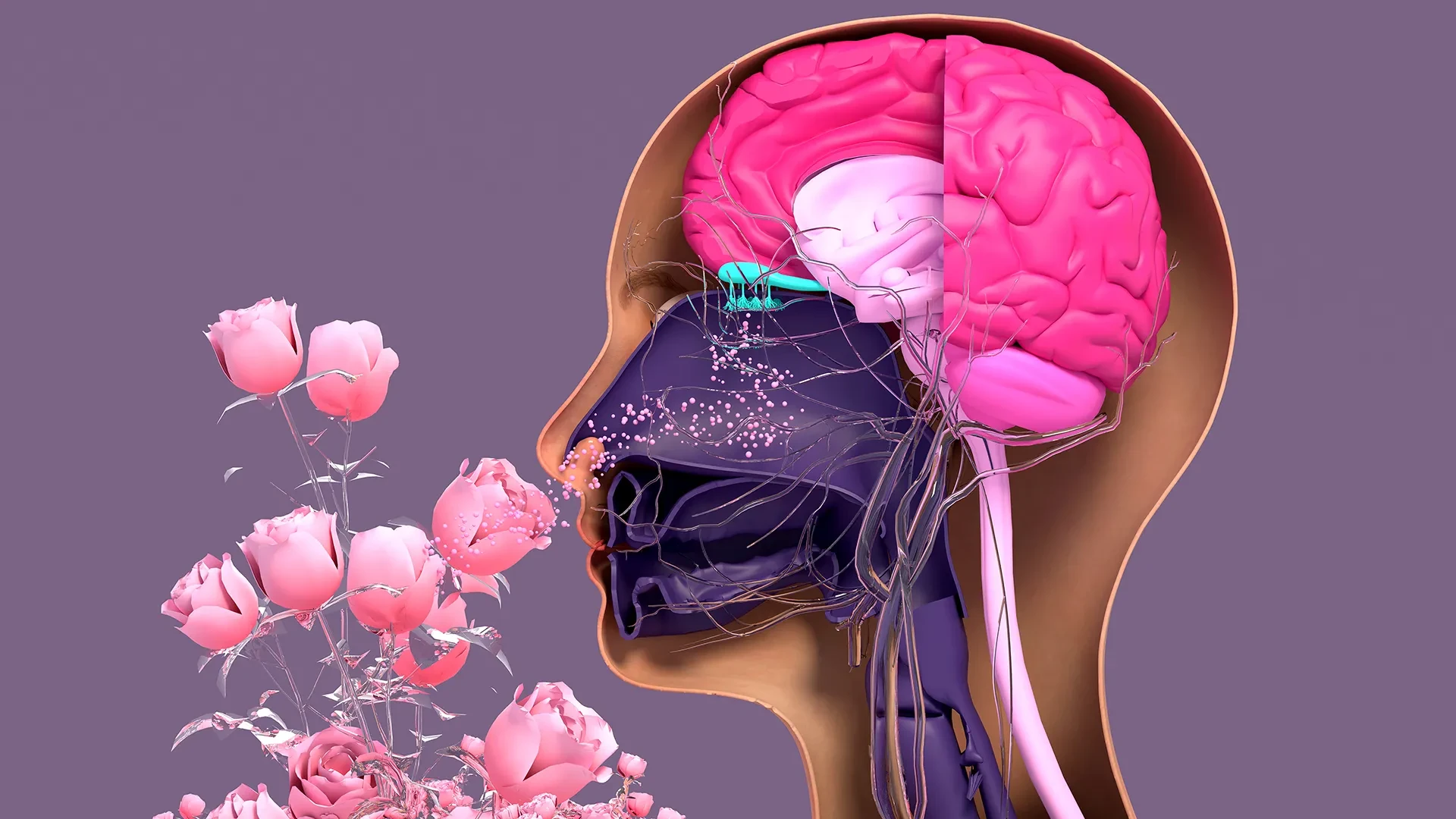
Researchers at the Tufts University School of Medicine and the Graduate School of Biomedical Sciences (GSBS) have unlocked a new understanding of how the human nose maintains its ability to detect scents. By developing a sophisticated, three-dimensional model to study the regeneration of olfactory nerve tissue, the team has discovered that a specific type of stem cell, previously assumed to be largely dormant, plays a far more critical role in preserving the sense of smell than scientists had once hypothesized.
This breakthrough, detailed in a study published recently in Cell Reports Methods, provides a vital window into the mechanics of the olfactory system. Unlike the central nervous system, which possesses a limited capacity for repair, the sensory neurons within the nasal cavity exhibit a remarkable and lifelong ability to regenerate. This continuous renewal process occurs despite the nasal cavity’s constant exposure to an array of environmental pollutants, pathogens, and physical stressors.
The Challenge of Sensory Decline
The loss of smell—medically known as anosmia—is a condition that has moved to the forefront of public health awareness in recent years. Viral infections, most notably COVID-19, have left millions of individuals grappling with the partial or complete loss of their olfactory sense. Beyond viral triggers, the sense of smell can be compromised by exposure to environmental toxins or the natural, progressive effects of aging. When these sensory neurons fail to replicate or function correctly, the result is a significant degradation in the quality of life, as the sense of smell is intimately linked to taste, memory, and emotional well-being.
To better understand why this regenerative process falters in the face of disease or advancing age, the Tufts research team, led by senior author Brian Lin, a research assistant professor in the Department of Developmental, Molecular and Chemical Biology, constructed an easy-to-create, three-dimensional olfactory tissue mouse model. Known as an organoid, this miniature, lab-grown version of nasal tissue acts as a "biological laboratory" that allows scientists to observe the continuous formation of neurons in a controlled environment.
Unveiling the Role of Stem Cell Interdependence
The study focused on the intricate interplay between two distinct types of stem cells found within the nose: horizontal basal cells (HBCs) and globose basal cells (GBCs). Traditionally, the scientific community categorized GBCs as the primary workhorses of neurogenesis, responsible for the active production of new neurons. Conversely, HBCs were largely viewed as a reserve pool—a dormant population that would only awaken in the event of severe injury to the tissue.
The findings from the Tufts team, however, challenge this rigid classification. "Our research suggests that these two stem cells may be interdependent," says Lin. "One type that we thought was largely dormant—HBCs—may actually play a crucial role in supporting the production of new neurons and the repair of damaged tissue."
By utilizing their novel 3D organoid model, the researchers identified a specific subpopulation of HBCs, distinguished by their production of the protein KRT5. These cells appear to act as essential support structures for the generation of new olfactory neurons. When the team selectively depleted these KRT5-expressing HBCs from the organoid cultures, the capacity of the tissue to generate new neurons was significantly impaired. This observation confirms that these cells are not merely a backup system but are active, essential participants in the regenerative cycle of the nose.
Aging and the Future of Regeneration
Beyond understanding the baseline function of these cells, the researchers sought to investigate why the sense of smell often declines with age. By growing cells from mice of varying ages within the 3D organoid model, the team observed a clear reduction in the ability of older cells to generate new neurons.
"We found a decline in the ability of the older mice cells to generate new neurons," Lin explains. "We think this is due to a decrease in the GBC population as we age, but we need to do more work to test this hypothesis and if so, develop ways to rejuvenate them." This potential link between the depletion of GBCs and age-related anosmia represents a major area of future inquiry. If researchers can pinpoint the exact mechanisms driving this decline, they may eventually be able to develop therapeutic interventions designed to "rejuvenate" these stem cell populations, potentially restoring the sense of smell in elderly patients.
Democratizing Olfactory Research
A significant contribution of this study is the accessibility of the model itself. The lead author of the study, Juliana Gutschow Gameiro, a former Ph.D. student visiting GSBS from the State University of Londrina in Brazil, focused her efforts on creating a methodology that would be practical for labs across the globe.
"Because loss of smell is associated with COVID-19, as well as with Parkinson’s disease and other conditions, a much larger number of researchers from a variety of different fields have begun researching olfactory epithelial cells in the last few years," says Lin. "We wanted to develop an easy-to-use model so that non-stem cell biologists and those working in labs with limited resources could use it to better understand how olfactory neurons regenerate and what happens that causes that process to diminish or fail completely."
By reducing the barriers to entry—specifically the need for prohibitively expensive or specialized equipment—the Tufts team hopes to accelerate the pace of global research into olfactory health. The organoid model provides a pathway for scientists to screen drugs and observe cellular behavior in a way that is faster, less expensive, and more ethically sound than relying on whole-animal models or traditional, limited human cell cultures.
The Path Toward Human Organoids
While the success of the mouse-tissue organoid is a significant milestone, the ultimate goal for the Tufts team is to translate these findings into a human model. Organoids have already revolutionized research into other human organs, such as the lungs and kidneys, but creating a reliable, pure human olfactory organoid remains a complex technical hurdle.
"It’s challenging to get pure olfactory tissue from humans," Lin notes. The current standard procedure involves the use of a brush, similar to a COVID-19 test wand, which is inserted deep into the nasal cavity. The difficulty lies in the fact that the tissue collected through this method contains a mixture of both respiratory and olfactory stem cells, which are notoriously difficult to isolate from one another.
The team’s ongoing challenge is to develop a simple, cost-effective technique for sorting these cells and successfully coaxing them to proliferate in a lab setting. If they can overcome this hurdle, the resulting human organoids would serve as a powerful platform for drug screening and personalized medicine. For patients whose loss of smell is currently considered irreversible, this research offers a tangible glimmer of hope—a path toward understanding the regenerative failures of the human nose and, perhaps, the key to unlocking its repair.