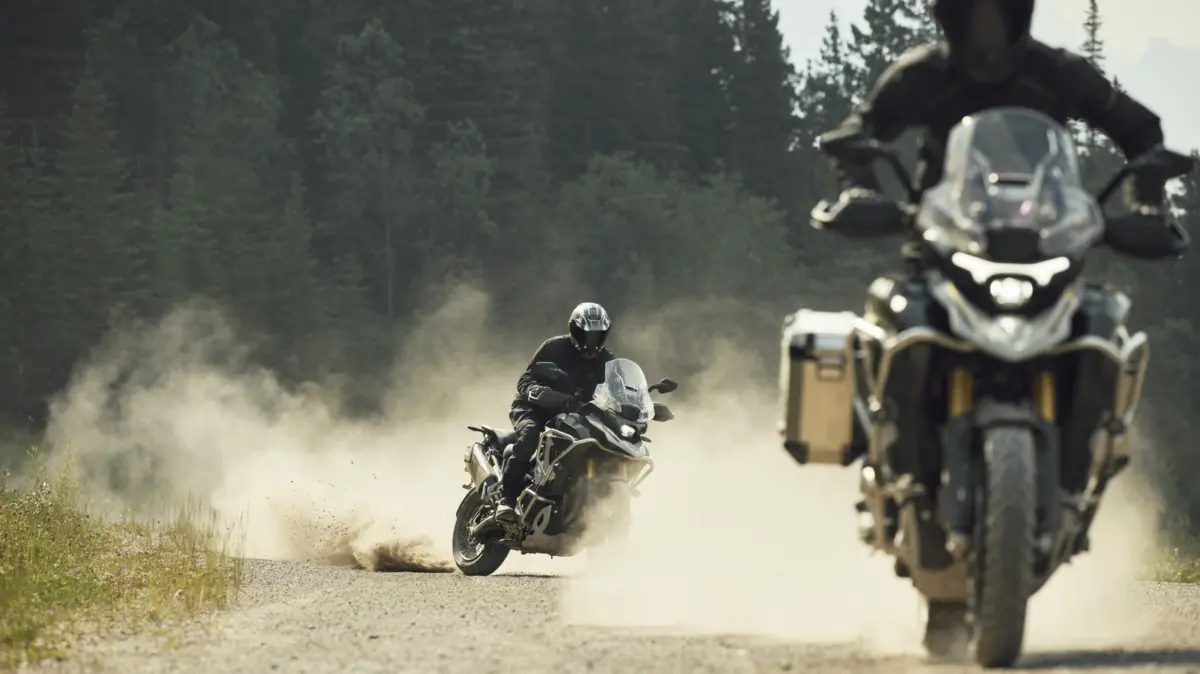
For decades, the formula for purchasing an all-encompassing, go-anywhere adventure motorcycle has been remarkably straightforward. When riders seek a machine capable of handling cross-country touring, daily commuting, and rugged off-road excursions with equal aplomb, the default choice has almost invariably been the BMW GS. It is a decision so deeply ingrained in the motorcycling consciousness that even BMW itself has recognized the shift, recently moving to specialize parts of its adventure lineup away from such monolithic, omnicapable models to carve out more nuanced niches.
Yet, the lucrative crown of the ultimate do-everything adventure bike remains the ultimate prize in the heavyweight motorcycle segment, and challengers continuously line up to seize it. Now, Triumph has unveiled its heavily revised and updated Tiger 1200 lineup, aiming directly at the heart of Munich’s dominance. With a comprehensive suite of mechanical upgrades, advanced technological integrations, and clever ergonomic adjustments, the British manufacturer has crafted a formidable package that has a very realistic chance of shaking up the heavyweight adventure touring landscape.
The foundation of the Tiger 1200 family remains familiarly structured, continuing to split its offerings into four distinct variants: the GT Pro, the Rally Pro, the GT Explorer, and the Rally Explorer. However, Triumph has undertaken a significant streamlining effort across the range to ensure that the functional and mechanical differences between these models are far clearer to prospective buyers. Underneath the revised bodywork, every single model in the 2027 lineup now shares a uniform wheel configuration, adopting a 19-inch front wheel paired with a 17-inch rear wheel. This standardization ensures a consistent handling dynamic across the entire family while simplifying tire selection for riders who encounter diverse terrain.
Perhaps the most mechanically striking update applied to all four variants is the inclusion of advanced, self-lowering Showa semi-active suspension. This sophisticated system provides an impressive 7.9 inches of suspension travel both front and rear, ensuring that the Tiger 1200 can easily soak up rough terrain and highway undulations alike. The standout feature of this setup, however, is its intelligent deployment at low speeds and stops. As the motorcycle comes to a halt, the electronic suspension system automatically drops the bike by nearly 1.2 inches.
Triumph highlights that when this self-lowering function is active and paired with an accessory low seat, the overall seat height can plummet to an astonishingly accessible 31.1 inches at a standstill. For a heavyweight adventure motorcycle displacing well over a liter, this is a remarkable feat of engineering. It addresses the long-standing intimidation factor of tall saddle heights that frequently deters shorter riders from entering the heavyweight adventure segment, undercutting competing machines like the rival BMW R 1300 GS by more than an inch when fully lowered.
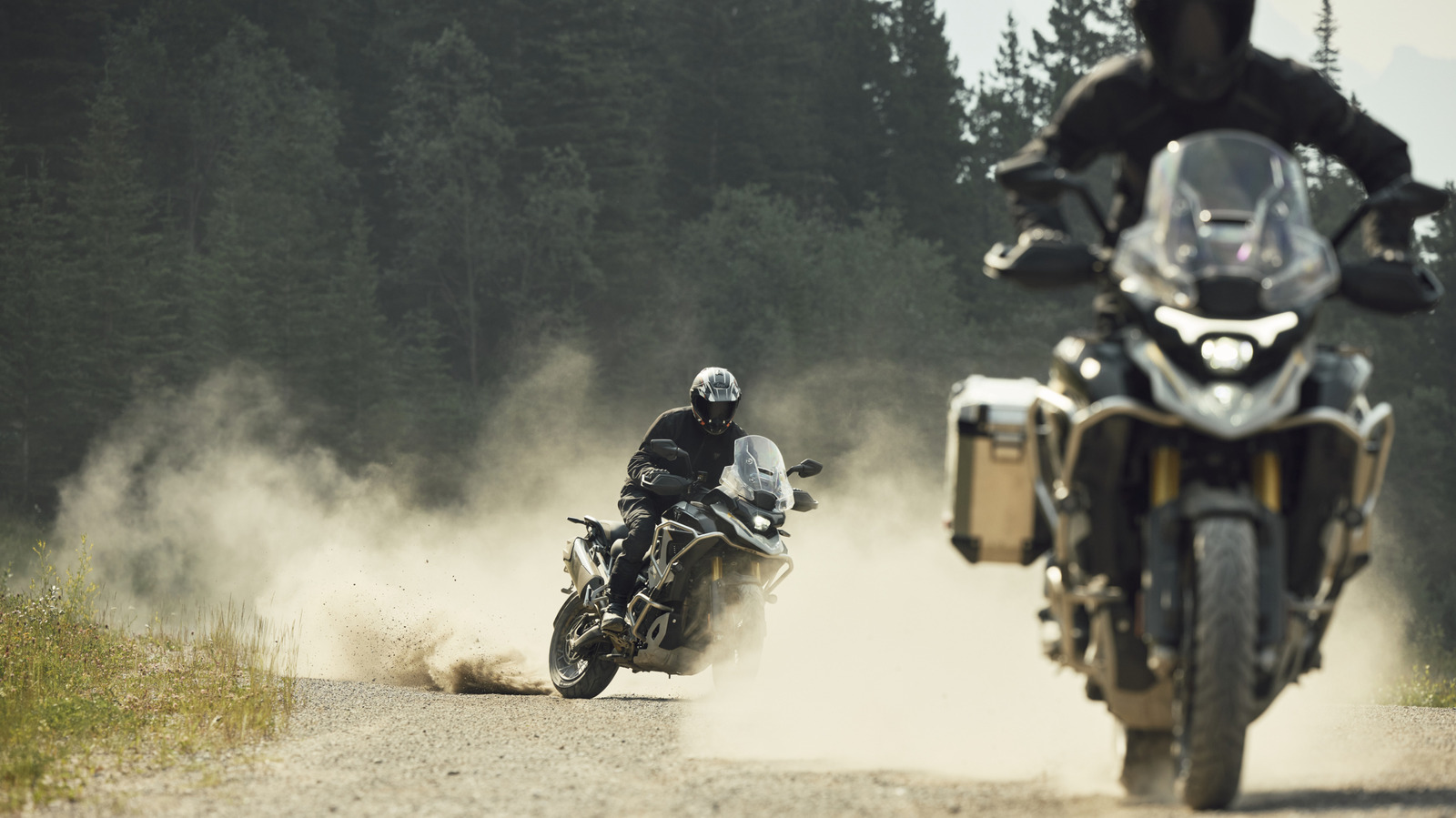
Beyond the chassis and suspension modifications, Triumph has thoroughly revamped the Tiger’s powertrain. At the heart of the updated lineup is a heavily revised 1,160cc three-cylinder engine. British engineers went to work on the triple, outfitting it with a redesigned cylinder head, new pistons, and lighter intake and exhaust valves. Additionally, the internal gear ratios for the first, second, and third gears have been revised to optimize power delivery.
The net result of these internal revisions is a substantial increase in peak output. The updated triple now churns out an impressive 155.8 horsepower, a notable bump from the previous generation’s 147 horsepower. More importantly for real-world adventure riding, Triumph claims that the engine now delivers significantly more torque lower down in the rev range. This enhancement is specifically designed to improve slow-speed maneuverability, making technical off-road riding, tight U-turns, and congested urban commuting far more manageable.
Technology and connectivity have also received a major modernizing push. Riders are now greeted by an updated 7-inch TFT instrument display that comes equipped with standard Apple CarPlay and Android Auto integration. Furthermore, all four variants of the Tiger 1200 come standard with Bosch radar systems mounted at both the front and the rear. This hardware enables advanced rider assistance features, including adaptive cruise control for effortless highway cruising and rear close-follow warnings to enhance situational awareness in heavy traffic.
New bikes, new appeal
Navigating the various model designations within the Tiger 1200 family is now more intuitive, thanks to Triumph’s clearer differentiation strategy. For riders deciding between the available trims, the naming conventions follow a logical pattern. Models bearing the "GT" moniker are tailored primarily for pavement and light touring, distinguished by their cast aluminum wheels. Conversely, the "Rally" models are built for more serious off-road exploration, utilizing rugged wire-spoked wheels, an additional dedicated off-road ride mode, and enhanced factory engine protection components.
Stepping up to the "Explorer" designation introduces long-distance touring amenities. Both the GT Explorer and Rally Explorer models feature significantly larger fuel tanks holding 7.9 gallons of fuel, a substantial step up from the 5.3-gallon capacity found on the standard Pro models. Additionally, the Explorer variants are equipped with wider and taller handlebars to improve rider comfort over marathon cross-country stints. Despite the differences in fuel capacity and wheel construction, all four variants share the same core chassis, high-output triple engine, and advanced suspension architecture, ensuring that even the standard Pro models remain exceptionally capable long-distance tourers.
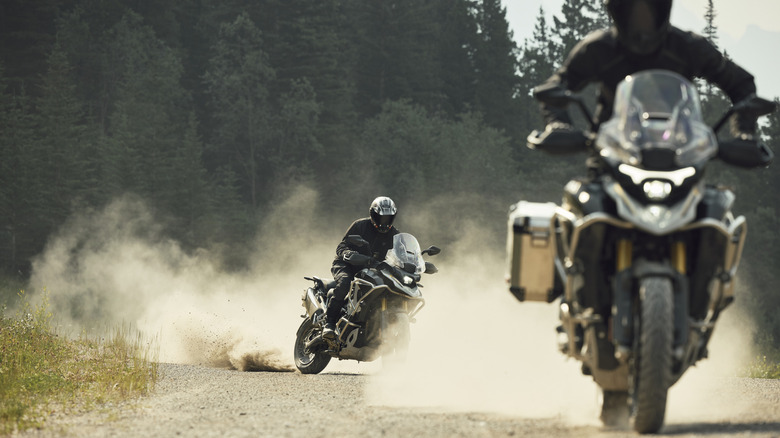
Aesthetically, the 2027 update introduces what many observers consider the most successful visual evolution of the Tiger 1200 platform yet. Previous iterations of the motorcycle often occupied an awkward stylistic middle ground as Triumph transitioned away from its traditional, long-standing twin-headlight signature without fully committing to a minimalist, compact layout. With the latest refresh, the brand has fully embraced a sleek, modern LED lighting array.
The new front fascia features a single central LED headlight positioned neatly below a prominent daytime running light bar, giving the motorcycle a cleaner, more purposeful appearance. This redesign is not merely cosmetic; it incorporates functional cornering lights built directly into the central LED assembly. These auxiliary lights illuminate automatically as the rider leans the motorcycle into a turn, dramatically improving nighttime visibility through winding roads and dark trails.
By combining significantly improved low-speed accessibility, a more powerful and tractable three-cylinder engine, standardized high-end suspension, and comprehensive modern electronics, Triumph has positioned the updated Tiger 1200 as a formidable alternative in the heavyweight adventure category. Whether these extensive revisions will be enough to finally dethrone the industry-standard BMW GS remains to be seen on showroom floors and dusty trails alike, but the British manufacturer has undoubtedly mounted one of its most serious and well-rounded challenges to date.