France is facing a massive wave of industrial action and public unrest as five major labour unions, supported by student organizations and grassroots movements, launched a nationwide day of strikes on Thursday. The mobilization represents a significant escalation in the ongoing social tensions across the country, with hundreds of thousands of citizens taking to the streets to demand urgent government intervention regarding stagnant wages, rising inflation, and the deteriorating state of public services.
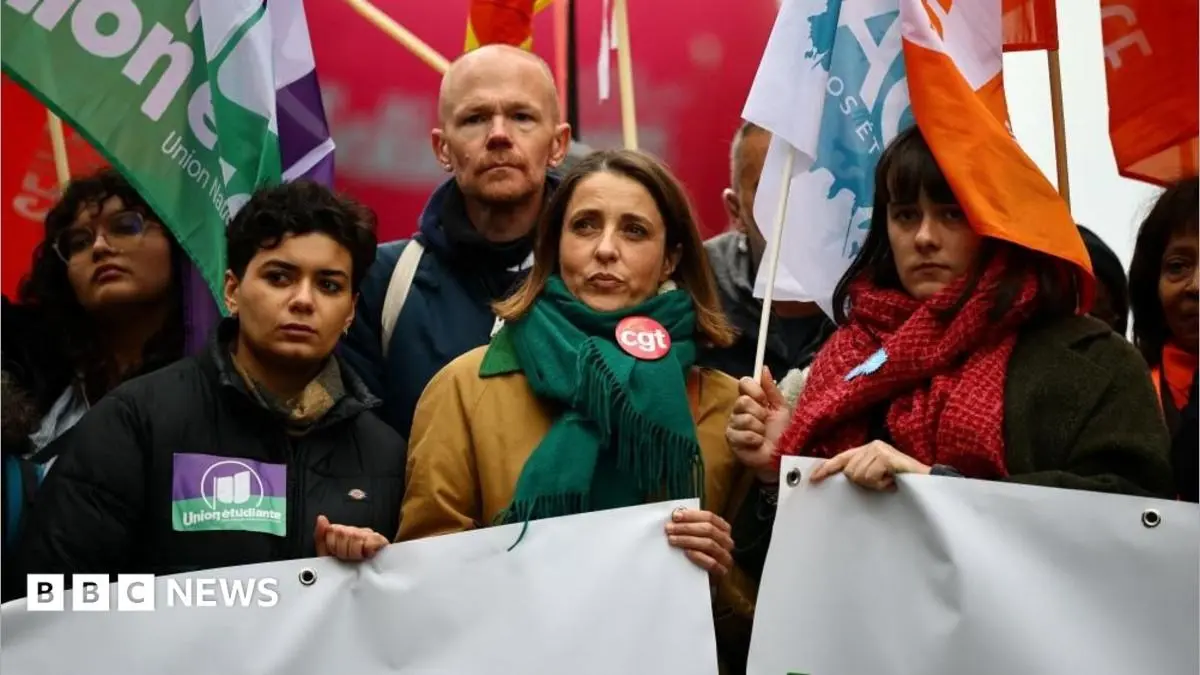
By 13:00 local time, authorities reported that more than 250,000 protesters had gathered across nearly 70 towns and cities. Sophie Binet, a prominent leader of the CGT labour union, characterized the turnout as a pivotal moment, warning the government that this massive show of force was "just the start" of a broader campaign. The demonstrations signal a transition from localized grievances to a synchronized, national front of opposition that bridges the gap between traditional union members, high school and university students, and the "yellow-vest" movement, which has long campaigned against the soaring cost of living.
A Coordinated Front Amidst Economic Pressure
The decision to combine forces across both public and private sectors has resulted in more than 250 separate protest actions. The primary catalyst for this unified stance is the eroding purchasing power of the average French household. With the minimum wage—the Smic—currently standing at €12.31 per hour, workers and pensioners alike are struggling to keep pace with the rising cost of basic necessities.
Marylise Léon, head of the CFDT union, articulated the frustration shared by many when she stated that incremental adjustments are insufficient. "We are asking for a net increase of €100 a month," Léon noted, emphasizing that the current economic climate demands a more robust response from the state.

The impact of the strike was felt immediately across the nation’s infrastructure. Public transport networks faced significant disruption, while key cultural institutions, including the Eiffel Tower and several exhibition rooms at the Louvre museum in Paris, were forced to close their doors to visitors. The energy sector was also heavily impacted, with workers in several oil refineries halting production. Furthermore, because of widespread disruption at the country’s nuclear power plants, France was forced to rely on electricity imports to cover its national demand throughout the day.
Education and Student Participation
The current unrest has deep roots in the education sector, with protests that began in September regarding poor resources and learning conditions at lycées (high schools). Students have joined the ranks of the strikers, frustrated by what they perceive as a systemic failure to support the next generation.
The education ministry reported that approximately 16% of teachers had joined the strike, while union representatives estimated that the disruption affected more than one in four high schools and the vast majority of university campuses across the country. A major point of contention for students is the Parcoursup university admissions platform, which many describe as unfair and opaque. While the government has pledged to reform the system and eventually replace it by 2028, these promises have done little to quell the immediate anger of students, who are demanding more tangible improvements to their daily learning environments.
Security Concerns and Civil Unrest
In anticipation of potential volatility, Interior Minister Laurent Nuñez ordered the deployment of 70,000 police officers across France. The government has taken a hardline stance, with the Minister vowing an "extremely firm response" to any outbreaks of violence.

The security fears were not unfounded. As the day progressed, reports of unrest emerged from several major cities. In the central city of Lyon, the situation turned chaotic near the Gallieni bridge over the Rhône river. Hundreds of individuals, identified by authorities as members of the radical left-wing "black bloc," clashed with riot police. The scene, which included the sight of a burning car amidst the protest, underscored the volatile atmosphere that has accompanied recent demonstrations.
Similar scenes were reported in the northwestern city of Rennes. The local prefect confirmed that a "hostile group of masked individuals" had infiltrated the main union march, leading to direct confrontations with law enforcement. These incidents have fueled the government’s caution regarding the scale and nature of the demonstrations, with officials expressing concerns over potential looting and unauthorized "wildcat" marches.
The Geography of Protest: A Delicate Balancing Act
The planning of Thursday’s demonstrations highlighted a persistent tension between protest organizers and the French state. Union leaders have frequently complained that recent marches have been intentionally pushed to the outskirts of major cities, far from the centers of political power, as a tactic to dilute their impact. This frustration stems from the government’s desire to prevent a repeat of the widespread damage seen on October 17, when earlier protests resulted in the looting of over 2,000 stores and the burning of historic buildings.
In Paris, the authorities granted permission for a central route, but it was not the path originally requested by the unions. The unions had hoped to march from the Place de la Bastille to the Place de la Concorde—a route that would have taken demonstrators past the National Assembly, the Élysée Palace, and the prime minister’s official residence at the Hôtel Matignon. Instead, the march was redirected to a route from the Place de la République to the Place de la Nation.

The CFDT union criticized the government for the timing of this decision, noting that they only received court approval for the adjusted route on Wednesday evening, which significantly hindered their ability to organize the logistics effectively. Despite these challenges, the turnout in Paris was substantial, with union leaders aiming for an attendance of 800,000 people across the country.
Government Response and Future Outlook
The government has been attempting to navigate the crisis by offering various concessions. In an effort to mitigate public anger over rising energy prices, authorities have released 10 million barrels of diesel from the nation’s strategic reserves. While these measures aim to provide immediate relief, they have been criticized by union leaders as "band-aid" solutions that fail to address the structural economic issues facing the working class.
The situation remains fluid. Beyond the events of Thursday, the pressure on the government is set to continue. The gilets jaunes (yellow-vest) movement, which gained international attention several years ago for its persistent revolts against high costs of living, has been revitalized by the current climate. The movement has already called for further blockades and protests to take place on Friday and Saturday, suggesting that the wave of mobilization is unlikely to recede in the immediate future.
As the police remain on high alert and union leaders contemplate the next phase of their movement, the government faces a difficult path forward. The challenge lies in balancing the maintenance of public order with the need to address the deep-seated grievances of a citizenry that feels increasingly left behind by the current economic trajectory. With schools, transport, and energy sectors already feeling the strain, the days ahead appear set for continued confrontation between the state and those demanding a fundamental change in the country’s social and economic policies.