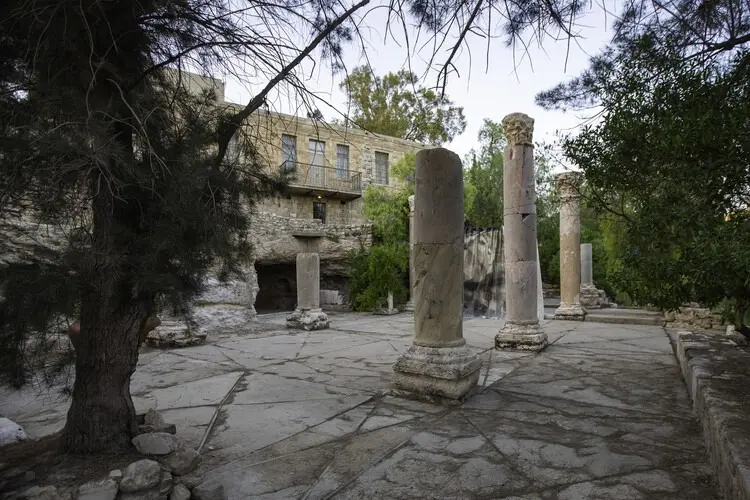
At a time when public funding and institutional support for the arts face mounting pressures across the globe, Darat al Funun—translating literally to the "House of the Arts"—remains firmly rooted in its long-standing mission to champion and protect the creative community. Founded by Suha Shoman, the cultural institution has spent decades acting as a vital anchor for contemporary artists, offering them a physical and conceptual space where history, architecture, and creative expression continuously intersect.
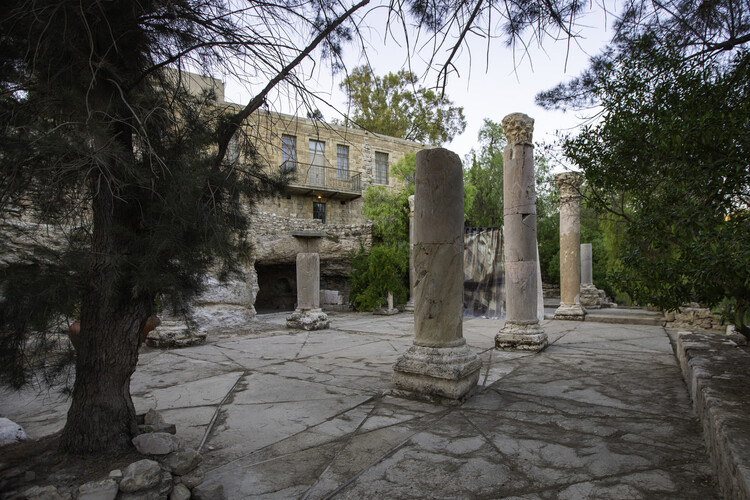
Reflecting on the enduring role of cultural creators in society, Shoman highlights the foundational philosophy that has guided the institution through years of shifting landscapes. "Artists are witnesses of their time," Shoman affirms. "Maybe Art does not operate change, but it does record it… it points fingers. At the same time, it speaks of, even if it’s so difficult and at times so violent, it speaks of beauty as well."
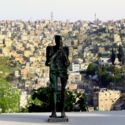
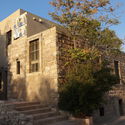
Nestled into the historic, hillside neighborhood of Jabal al Luweibdeh, Darat al Funun is a place where the past remains palpably present. The compound spreads naturally across a rugged, sloping terrain that overlooks the dynamic heart and bustling downtown of Amman, Jordan. Its topography is thoughtfully integrated into the urban fabric, featuring a lower entrance to the south and an upper entrance to the north, allowing visitors to flow easily through the grounds. Across its cascading terraces, the site is visually and physically permeable, embodying the foundation’s core conviction that art is not merely an isolated luxury, but a fundamental civic necessity and a vessel for collective memory.
This architectural permeability mirrors the institution’s multidisciplinary approach, blending contemporary artistic practice with the deep historical strata of the site itself. Visitors walking through the grounds encounter a remarkable layering of eras, where contemporary sculptures and galleries exist side by side with ancient ruins. Among these historical landmarks are the evocative remains of a 6th-century Byzantine church, whose ancient stones anchor the landscape and provide a dramatic backdrop to the south elevation of the institution’s main building.
The integration of sculpture into the landscape further enhances the dialogue between past and present. Prominent works, such as Iraqi artist Ismail Fattah’s 1980 bronze sculpture "Man and Mask," occupy prominent viewpoints across the terraces. Overlooking the old downtown of Amman, the sculpture serves as a sentinel of modern Arab art integrated within a historic urban topography, bridging the gap between generations of creators and the changing city below.
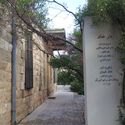
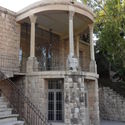
Darat al Funun’s physical makeup comprises multiple historic structures—including the Main Building, the library exterior, and Dar Khalid—each carefully restored to serve contemporary cultural functions while retaining their architectural integrity. These buildings offer spaces for exhibitions, residencies, and research, positioning the artist not just as a producer of objects, but as a historiographer engaging directly with the built environment, local heritage, and the social realities of the region.

By maintaining its open, porous campus on the hills of Jabal al Luweibdeh, Darat al Funun continues to challenge conventional notions of what a gallery or museum should be. Instead of an isolated white cube detached from its surroundings, it offers a living, breathing sanctuary where architecture, archaeology, and contemporary art converge. In doing so, the institution provides a vital refuge for artists seeking to record, question, and reflect the complexities of their time, ensuring that the voice of the artist remains an enduring part of the civic and cultural fabric of Amman.