Welcome to another edition of the daily literary digest, where we explore the vibrant intersections of history, culture, and the digital literary landscape. As readers and writers navigate the ever-expanding universe of online discourse, essays, criticism, and historical retrospectives, each day brings a fresh wave of digital content celebrating the written word. Today’s digital literary sphere pauses to reflect on a monumental figure in the history of global letters, highlighting the enduring legacy of a pioneer who shaped modern drama and narrative art.
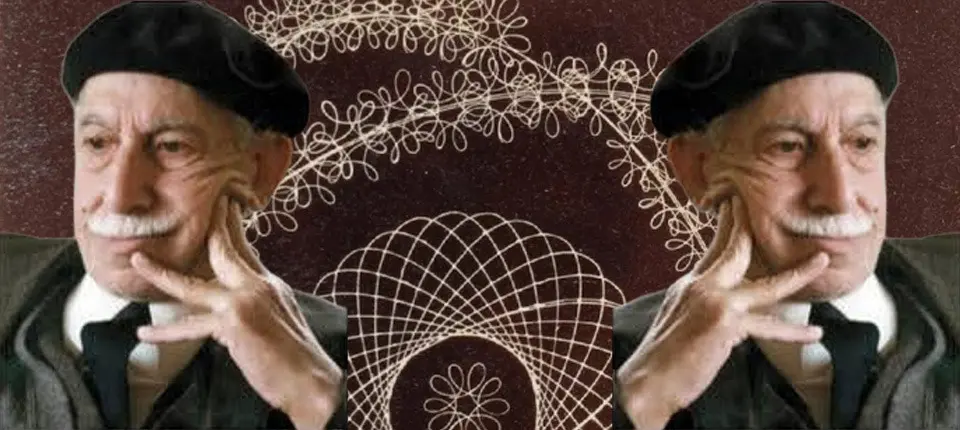
Today in literary history marks the birth anniversary of one of the twentieth century’s most influential literary voices. In 1898, Tawfiq al-Hakim was born, ushering in a life and career that would fundamentally transform Arabic literature, theatrical writing, and cultural criticism. As cultural historians, critics, and avid readers take to the literary internet today to commemorate his birth, the digital sphere is once again reminded of the profound impact al-Hakim left on modern storytelling, philosophy, and the dramatic arts.
Born in Alexandria, Egypt, al-Hakim grew up during a period of intense political, social, and cultural transition. His early life exposed him to a fascinating cross-section of traditional Egyptian society and Western intellectual thought, a duality that would come to define his artistic output. Initially pursuing studies in law to satisfy his family’s expectations, al-Hakim’s true passion always lay in the arts, particularly literature and theater. This tension between societal duty and artistic inclination became a recurring motif not only in his personal biography but also in the rich tapestry of plays, novels, and essays he would produce over the course of several decades.
Throughout the early twentieth century, al-Hakim emerged as a central figure in the development of the modern Arabic novel and drama. Before his groundbreaking contributions, theatrical writing in the region was often viewed primarily as popular entertainment rather than high literature. Al-Hakim revolutionized this perception by introducing the concept of the “intellectual play” or *masrahiyat al-fikr*. Rather than focusing solely on fast-paced action or melodramatic plots, his works used the stage as a philosophical laboratory, exploring complex themes concerning justice, freedom, tradition, modernity, and the eternal conflict between reason and emotion.
Among his most celebrated contributions to world literature is his masterpiece, *The Return of the Spirit* (*Awdat al-Ruh*), published in 1933. Widely regarded as a landmark in the evolution of the modern Arabic novel, the book brilliantly captures the sociopolitical mood of Egypt leading up to the 1919 revolution. Through characters that symbolized various segments of society, al-Hakim articulated a burgeoning national consciousness and a collective yearning for independence and cultural renewal. His ability to weave profound philosophical inquiries into accessible, deeply human narratives cemented his reputation as a visionary writer whose appeal transcended linguistic and geographic boundaries.
Another monumental work in his vast bibliography is *Fate of a Cockroach* (*Masir Sarsar*), written later in his career. In this brilliant piece of absurdist theater, al-Hakim utilized animal characters to satirize human behavior, political structures, and existential dilemmas. Long before postmodern absurdism became a dominant global trend, al-Hakim was already employing allegorical comedy and dark humor to critique institutional power dynamics and the human condition. His unique blending of European theatrical techniques, such as those inspired by Luigi Pirandello and the theater of the absurd, with distinctively Egyptian settings and cultural motifs created a hybrid literary style that remains studied and admired by scholars worldwide.
In addition to his drama and fiction, al-Hakim was a prolific essayist and memoirist. His autobiographical work *The Maze of Justice* (*Yawmiyat Na’ib fi al-Ariyaf*), drawing on his early professional experiences as a public prosecutor in rural Egypt, offered a searing, darkly humorous critique of the bureaucratic machinery of the legal system and the stark disconnect between urban officialdom and the realities of rural peasant life. Through such works, al-Hakim proved himself to be a fearless social critic who used his pen to interrogate institutions that held power over ordinary citizens.
As today’s literary internet commemorates his birth in 1898, digital platforms are filled with reflections on how al-Hakim’s work continues to resonate in contemporary times. Online literary journals, academic blogs, and social media channels dedicated to world literature are sharing retrospectives, analyzing his structural innovations in drama, and encouraging new generations of readers to discover his extensive catalog. In an era where global literature is increasingly accessible across digital borders, revisiting the foundational texts of writers like al-Hakim provides essential context for understanding the rich diversity of modern narrative traditions.
The digital conversation surrounding his legacy also highlights the ongoing translation efforts that bring his works to English-speaking and international audiences. While classic translations have long allowed scholars access to his plays and novels, contemporary discussions often emphasize the need for fresh critical perspectives and new translations that capture the subtle wit, philosophical depth, and linguistic nuance of his original Arabic texts. By keeping his name and ideas active in digital discourse, the literary internet ensures that al-Hakim’s intellectual footprint remains vibrant and influential.
As this daily overview of the literary internet demonstrates, the past is never truly distant when engaged with through the lens of ongoing critical appreciation. Whether through the rediscovery of forgotten masterpieces, the celebration of historical milestones such as the 1898 birth of Tawfiq al-Hakim, or the lively debates happening across digital platforms, the global reading community continues to find meaning, inspiration, and shared connection in the enduring power of words. Readers interested in exploring further are encouraged to dive into the rich array of essays, reviews, and historical archives currently circulating online, keeping the spirit of inquiry and literary exploration alive.