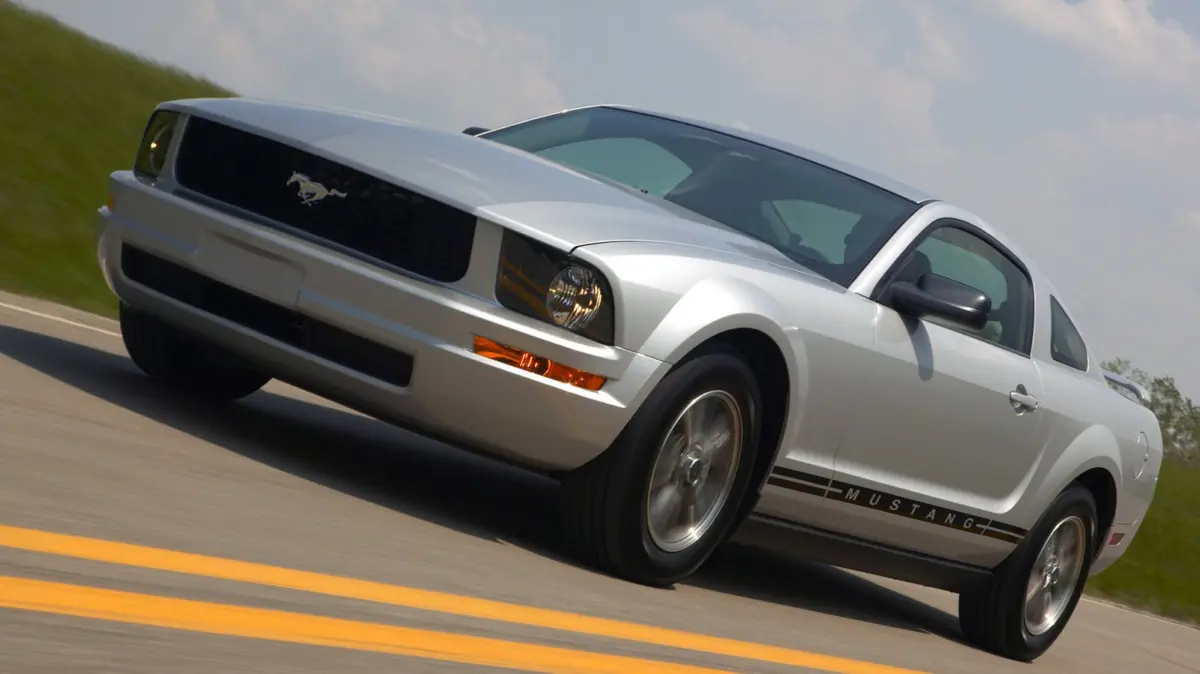
Sometimes, automotive introspection yields data points that are as baffling as they are fascinating. Consider the modern internal combustion engine, a marvel of computerized engineering, metallurgy, and fluid dynamics that has spent the better part of the last two decades being refined, optimized, and pushed to its absolute limits under increasingly stringent global efficiency and emissions standards. Yet, a quick trip to the federal government’s official fuel economy database reveals a striking anomaly: a brand-new, manual-transmission Ford Mustang GT achieves the exact same fuel economy ratings today as its counterpart did all the way back in 2009.
This is not a matter of rounding errors or minor statistical discrepancies where two dissimilar numbers are loosely grouped together. A review of official EPA data shows that a 2026 Ford Mustang GT equipped with a manual transmission is officially rated at 15 miles per gallon in the city, 23 miles per gallon on the highway, and 18 miles per gallon combined. Remarkably, the 2009 Ford Mustang GT equipped with a manual transmission carried the exact same official ratings: 15 mpg city, 23 mpg highway, and 18 mpg combined. Across a span of 17 years filled with continuous technological evolution, the baseline efficiency of the manual V8 Mustang has remained entirely static on paper.
The story shifts slightly when looking at automatic transmissions. The introduction of modern, multi-speed automatic gearboxes has managed to eke out marginal efficiency gains for two-pedal drivers. After nearly two decades of development, a modern automatic Mustang GT equipped with a contemporary 10-speed transmission achieves an EPA rating of 16 mpg city, 24 mpg highway, and 19 mpg combined—a modest step up from the 15/22/18 mpg ratings posted by the automatic variants back in 2009.
This plateau in fuel economy is not unique to the Blue Oval. A broader examination of the last four generations of automatic Chevrolet Corvettes—the sports car having recently transitioned exclusively to automatic and automated-manual configurations—reveals a similar long-term trend. The combined EPA fuel economy ratings for base-model Corvettes spanning the 2004, 2013, 2019, and 2026 model years sit consistently at 19, 18, 18, and 19 mpg, respectively. Over the course of more than two decades, overall fuel efficiency for America’s quintessential sports cars has hovered within a remarkably tight band.
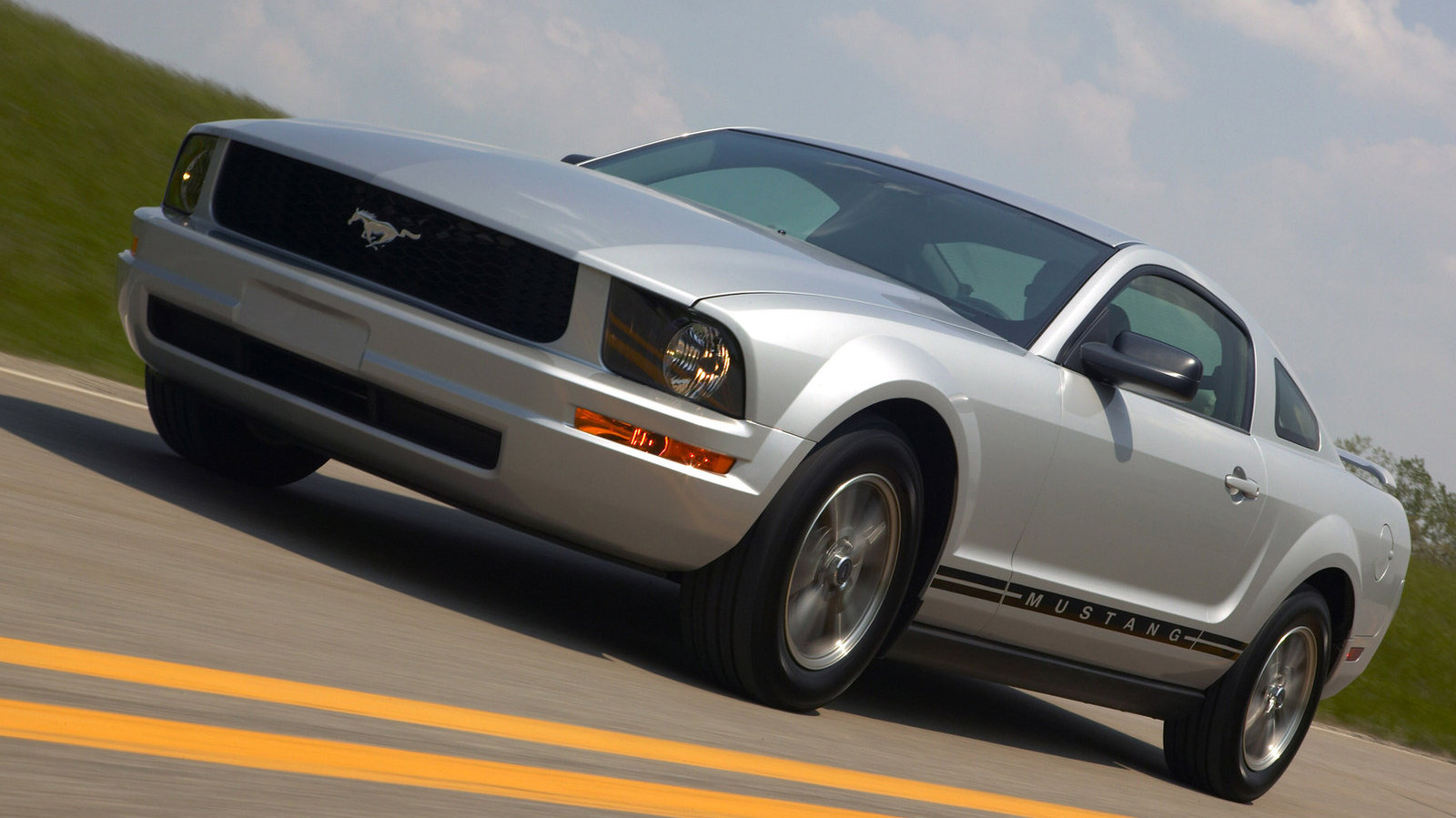
Without deeper context, observers might casually attribute these flatlining figures to a lack of ambition or a resistance to change within Detroit. Critics could easily point to these numbers as evidence that traditional American automakers simply chose to rest on their laurels, coasting on the enduring popularity of rear-wheel-drive sports cars while regulatory frameworks shifted around them.
However, that perspective overlooks a fundamental reality of modern engine development: neither Ford nor Chevrolet has been phoning it in when it comes to powertrain engineering. Instead of using incremental technological gains solely to squeeze out higher miles-per-gallon figures, engineers have focused their efforts almost entirely on the other side of the performance equation. The true achievement lies not in changing the fuel economy numbers, but in delivering staggering leaps in horsepower and acceleration while maintaining the exact same fuel consumption.
More Power, Same Gas
To understand how contemporary V8 performance cars manage to consume the same amount of fuel as their predecessors while delivering vastly superior performance, one must look at how the underlying powerplants have evolved. The engineering focus has been squarely directed toward maximizing thermal efficiency, increasing displacement, optimizing airflow, and rewriting the limits of acceleration—all while keeping fuel burn in check under standard driving conditions.
Take the Ford Mustang GT as a prime example. Back in 2009, the Mustang GT relied on a 4.6-liter V8 engine belonging to Ford’s Modular engine family. First introduced to the market in 1991—where it initially produced a modest 190 horsepower and 260 pound-feet of torque in applications like the Lincoln Town Car—the 4.6-liter mill had been massaged by 2009 to produce 300 horsepower and 320 pound-feet of torque. When tested by automotive publications like Car and Driver in period, a manual-equipped 2009 Mustang GT could accelerate from zero to 60 mph in 5.2 seconds and complete the quarter-mile in 13.8 seconds at a trap speed of 102 mph.
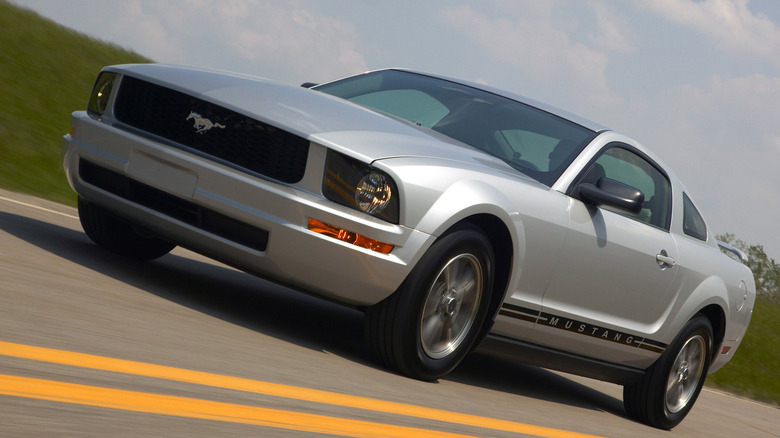
Fast forward to the modern era, and the Mustang GT features a significantly larger 5.0-liter "Coyote" V8 that churns out an impressive 480 horsepower and 415 pound-feet of torque. Despite pushing those significantly higher output figures, independent testing shows the modern manual GT needs only 4.2 seconds to sprint to 60 mph on its way to a 12.5-second quarter-mile at 114 mph.
A parallel trajectory can be observed across generations of the Chevrolet Corvette. In 2004, the C5-generation Corvette relied on a 5.7-liter LS1 V8 engine generating 350 horsepower and 360 pound-feet of torque. Hampered by the four-speed automatic transmissions common to that era, testing demonstrated a zero-to-60 time of roughly 4.9 seconds and a quarter-mile run of 13.4 seconds at 108 mph. Today, a modern base-model Corvette utilizes a 6.2-liter LT2 V8 that pumps out 490 horsepower and 470 pound-feet of torque. Benefiting from a sophisticated dual-clutch transmission and a mid-engine layout that optimizes weight transfer, contemporary road tests record a blistering zero-to-60 time of just 2.8 seconds and an 11.2-second quarter-mile at 122 mph.
When synthesizing these metrics, the scope of engineering progress becomes clear. A stock, base-model Ford Mustang GT now generates roughly 60 percent more power, accelerates to 60 mph about 20 percent quicker, and covers the quarter-mile roughly 10 percent faster than its 2009 ancestor—all while burning the exact same volume of gasoline per mile. Meanwhile, the base-model Chevrolet Corvette delivers roughly 40 percent more power, cuts its zero-to-60 time by approximately 50 percent, and improves its quarter-mile performance by about 15 percent over its early-2000s forebear, again without sliding backward in overall fuel efficiency.
While drivers and environmental advocates might occasionally wish for a high-performance V8 sports car that could simultaneously return hybrid-level fuel economy, the reality of internal combustion development tells a different story. The fact that automakers have managed to unlock massive gains in output, responsiveness, and track capability over the decades without sacrificing the baseline efficiency of yesterday’s muscle cars remains a notable engineering feat, even if the EPA window sticker continues to display some very familiar numbers.