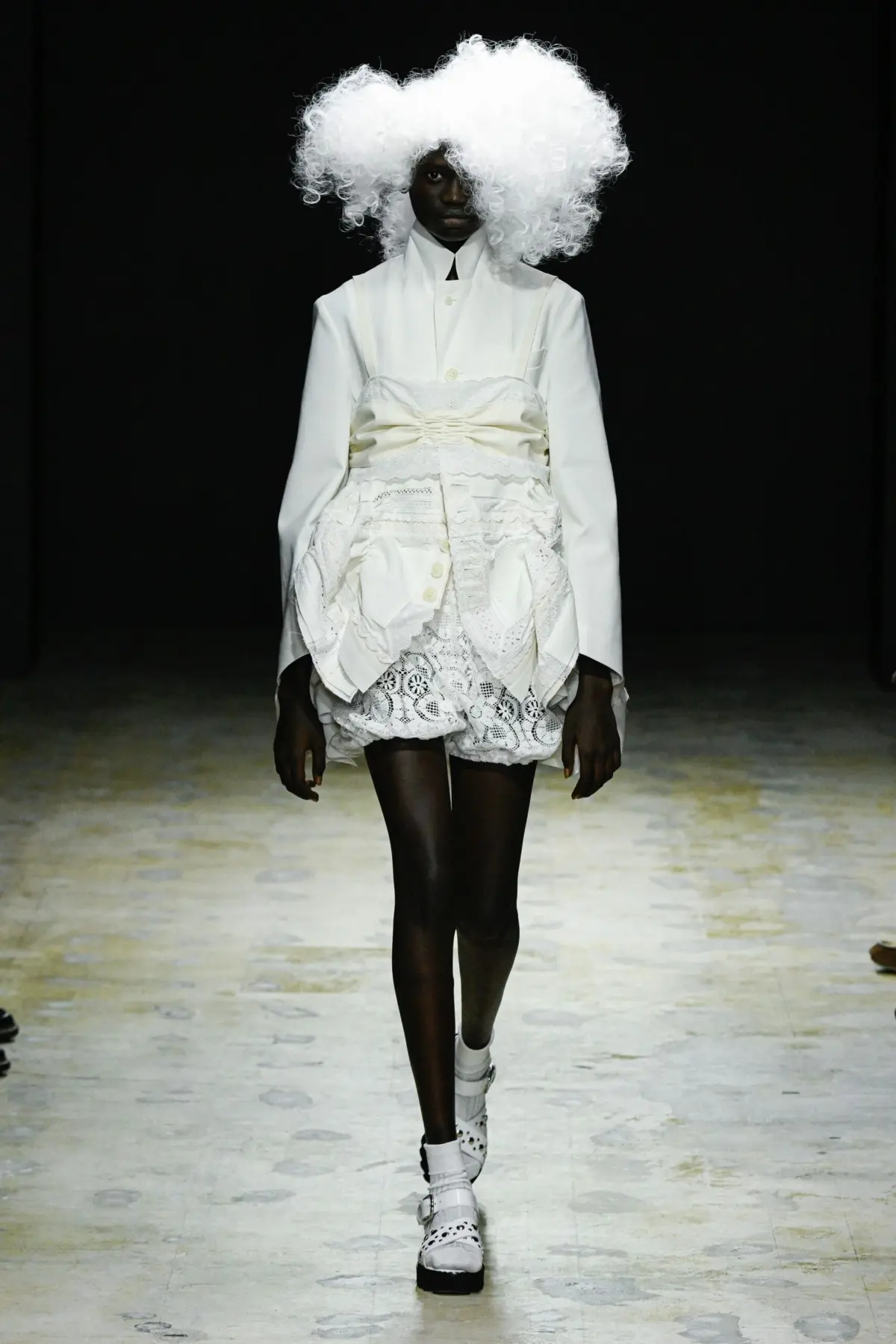
For fashion insiders fortunate enough to secure an invitation, Tao Kurihara’s early-morning presentations held deep within the subterranean levels of the Comme des Garçons headquarters in Aoyama have evolved into an indispensable, late-season ritual. These intimate gatherings offer a distinct contrast to the chaotic frenzy typically associated with global fashion weeks, providing a serene, contemplative space to absorb the designer’s nuanced vision. This season, Kurihara welcomed guests with a collection titled "My True Self," a deeply personal body of work conceived as an unadulterated exploration of purity and freedom, articulated almost entirely through a brilliant spectrum of white.
The narrative of the collection unfolded with deliberate pacing, beginning in a realm of pristine domesticity and textile nostalgia. The opening looks featured complex, layered arrangements of broderie anglaise alongside intricate complications of vintage doilies. Lace-laden coats and dresses walked the runway with a surreal, dreamlike quality, giving viewers the uncanny sense that the garments were actively transforming into delicate window curtains and antique tablecloths right before their eyes. This textile-heavy opening transitioned smoothly into a focused chapter of sharp, impeccably cut gray tailoring, grounding the ethereal lightness of the previous looks with architectural structure. Following the interlude of gray, the palette returned to white before finally culminating in a vibrant, sensory crescendo: a joyful cacophony of floral details and Liberty-esque prints splashed across cotton capri pants and flouncy, ruffled skirts.
The presentation’s atmospheric storytelling extended far beyond the clothing itself, creating a cohesive, immersive environment. The models walked the runway wearing cloud-like hair arrangements gracefully topped with wisps of straw and fresh foliage, establishing an immediate connection to the natural world. Enhancing this botanical theme, the garments themselves were decorated with intricate botanical embroidery, the result of a creative collaboration with artist Hitomi Mori, whose delicate needlework can be explored in detail on her Instagram account under the handle @nuimori1. Meanwhile, the auditory landscape of the show—composed, as is customary, by Kurihara’s husband—wove together a soothing tapestry of harps, gentle birdsong, and the crystalline plink of a piano. This subtle sonic backdrop added an unmistakable layer of storybook whimsy, a magical quality that has long remained a signature hallmark of Tao’s design ethos.
In the bustling Comme des Garçons press room afterward, which is set to host its seasonal exhibition showcasing all the house’s constituent brands over the coming days, Kurihara was found in a characteristically bright and reflective mood. Discussing the origins and creative direction of the collection, the designer offered insight into her mental state during the design process. She explained that she had consciously chosen to divest herself of outside pressures, commercial expectations, and anxieties to focus purely on creation.
"I decided to just set aside all of my concerns and just create something I truly, purely wanted to make. How should I put it? It’s like when a child draws a picture, they aren’t thinking about wanting to be praised. It’s that kind of mindset, a state of total, genuine focus," Kurihara shared with members of the press. "Saying this might make it sound like my previous work wasn’t like that, but this time I really felt I distilled everything down to just what I purely, from the bottom of my heart, wanted to create."
To Kurihara’s immense credit, the resulting collection managed to sidestep the common pitfalls of sentimentality or heavy-handed nostalgia. It did not rely on tired historical references or emotional pandering; rather, it simply existed on its own terms as a pure exercise in design integrity. Even so, within the legendary ecosystem nurtured by Rei Kawakubo, creativity and commerciality have never been viewed as mutually exclusive concepts. Kawakubo has long instilled this pragmatic yet avant-garde philosophy in her protégés, teaching them how to bridge the gap between uncompromising artistic vision and wearable reality. True to this house teaching, Mori’s delicate, labor-intensive artwork—which would otherwise be exceptionally difficult and cost-prohibitive to produce at scale—was expertly magnified and translated into accessible prints for dresses and T-shirts, ensuring that the artist’s intricate vision could be shared widely with the world.