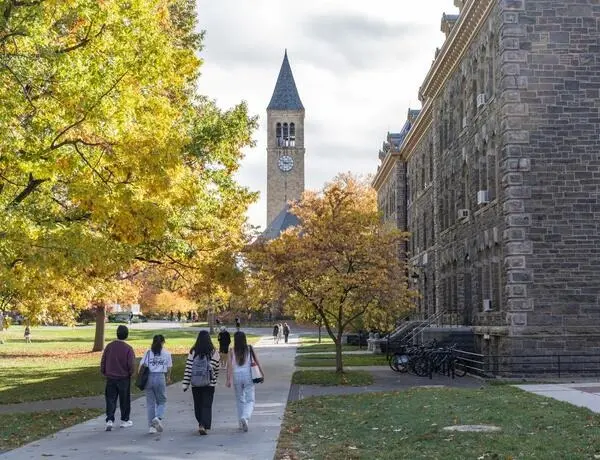
A second Ivy League university has published a major report calling on higher education to reflect on its deep-seated shortcomings and seriously consider sweeping institutional reform. The report, issued by Cornell University’s Committee on the Future of the American University, arrives at a critical juncture. It aims to push past the cyclical debates over whether higher education should simply resist external criticism or actively engage with it. Instead, the document shifts the conversation toward a much more fundamental question: where today’s universities have gone astray and how they can effectively correct course.
The answer to that question ultimately depends on how one defines the core purpose of the American university. Both the new Cornell report and an earlier report released by Yale University’s Committee on Trust in Higher Education grapple directly with this foundational identity. Yet, despite sharing a common concern for the future of higher learning, the two institutions articulate the university’s ultimate mission in distinctly different ways.
Earlier this spring, Yale streamlined its official mission statement, defining its core work narrowly as "to create, disseminate, and preserve knowledge." The Cornell report takes a different path, arguing that the university exists primarily to cultivate what it terms "sound judgment." While fostering judgment may initially seem less straightforward and more abstract than producing research data or scholarly publications, other universities seeking to restore public trust would be wise to follow Cornell’s lead.
Why Judgment Matters Most in Modern Life
There are several compelling reasons for this approach. First, good judgment is precisely what contemporary society most urgently needs from university graduates. Across politics, business, technology, and virtually every other major sector of American life, society suffers profoundly when leaders fail to exercise sound judgment.
This deficit is glaringly apparent when political leaders from across the ideological spectrum make poor strategic decisions regarding international conflict and peace, when financial executives drive the national economy into speculative bubbles, or when artificial intelligence entrepreneurs work feverishly to accelerate the development of technologies they privately admit could prove disastrous.
Individuals who perpetrate or oversee these systemic failures rarely lack cleverness, professional drive, or technical skill. Rather, they lack sound judgment. Someone who possesses formidable mental power but lacks good judgment resembles what Aristotle described as a "big man walking blind"—someone whose very physical or intellectual strength makes him a special menace to those around him. A university that makes the cultivation of sound judgment its central aim can directly address this serious societal deficit at a historical moment when human power and technological capability frequently outdistance human wisdom.
A Human-Centered Mission in the Age of AI
Second, judgment is inherently "human-centered." Only living human beings are capable of exercising true judgment. Books, libraries, museums, physical archives, and digital websites can effectively preserve and disseminate accumulated knowledge. Meanwhile, artificial intelligence systems increasingly demonstrate the capacity to discover and generate entirely new knowledge across scientific and literary fields.
A university that focuses primarily on cultivating sound judgment makes the holistic development of human capacities—rather than the material products of those capacities—its highest institutional priority. The Cornell report explicitly recognizes this reality when it recommends reclaiming "technology use and non-use as an institutional decision."
Cultivating Faculty Judgment and Academic Civics
Third, a renewed institutional focus on cultivating judgment can help faculty members perform their multifaceted roles much more effectively. Professors do not simply teach courses and conduct academic research; they also play a foundational role in the shared governance of their institutions, weighing in on crucial matters ranging from curricular overhauls to high-stakes tenure decisions.
Their professional judgments regarding whom to hire—and consequently which academic fields, theoretical topics, and pressing questions will be researched and taught for the next several decades—do much to determine the long-term trajectory of the university. The kinds of knowledge future faculty members will be funded to pursue and teach depend entirely on the collective judgment of the current professoriate.
To help cultivate faculty judgment regarding these complex institutional questions, the Cornell report offers the innovative recommendation to develop what it calls "academic civics." The report recognizes that within institutions as large, complex, highly specialized, and professionalized as the modern research university, faculty members and administrators frequently exercise institutional governance roles without deep historical knowledge of, or emotional attachment to, the specific institutions they serve.
Cornell therefore recommends fostering the kind of institutional understanding that would allow faculty members and staff to "situate their own responsibilities within a broader institutional context and engage institutional questions with broader perspective." Academic civics would actively cultivate the specific form of sound judgment required to steward a university responsibly over time.
One practical way to develop such an academic civics is to offer structured opportunities for faculty, staff, administrators, and graduate students to study the history, philosophy, and governance structure of the university together. Over the past year, researchers at the American Enterprise Institute have worked closely with the Cornell committee to develop this type of curriculum. Together, they have convened a working group of faculty members from Johns Hopkins University, Harvard University, Vanderbilt University, Yale University, the University of Florida, and the University of North Carolina to draft a model syllabus.
Navigating Relations With the Outside World
Cultivating rigorous judgment within the campus community could also help universities navigate their rapidly changing relationship with the broader public. The political environment surrounding higher education is extraordinarily complex, shaped by widespread public resentment over soaring tuition costs, opaque admissions standards, and the persistent perception of ideological one-sidedness on campus. Successfully navigating these strained relations requires much more than simply intoning abstract phrases about the "autonomy" of the university and warning against the dangers of declining public respect for academic expertise.
Acknowledging the university’s deep material and intellectual entanglements with the country and the culture that supports it, while simultaneously maintaining its identity as a distinctive and independent institution, requires genuine political self-awareness and intellectual responsiveness. Those vital qualities arise from the active exercise of judgment rather than the rigid minding of categorical administrative rules.
Although the Cornell committee occasionally slips into traditional language concerning the "autonomy of the university," committee members implicitly acknowledged these deep societal entanglements by engaging extensively with individuals off campus. This included conducting hundreds of conversations with federal, state, and local leaders whose feedback directly informed the final report.
For all these reasons, Cornell’s core recommendation to place the cultivation of human judgment at the center of the university’s mission is a wise step that other university leaders would be wise to heed. If universities serve merely as efficient "knowledge factories," as Cornell’s provost, Kavita Bala, has described them, then there is ultimately no compelling reason to resist their corporate or technological takeover by machines capable of producing research faster and more accurately than frail, mortal human scholars. But if the true aim of the university is the cultivation of human judgment, society may need the institution of the American university more than ever.