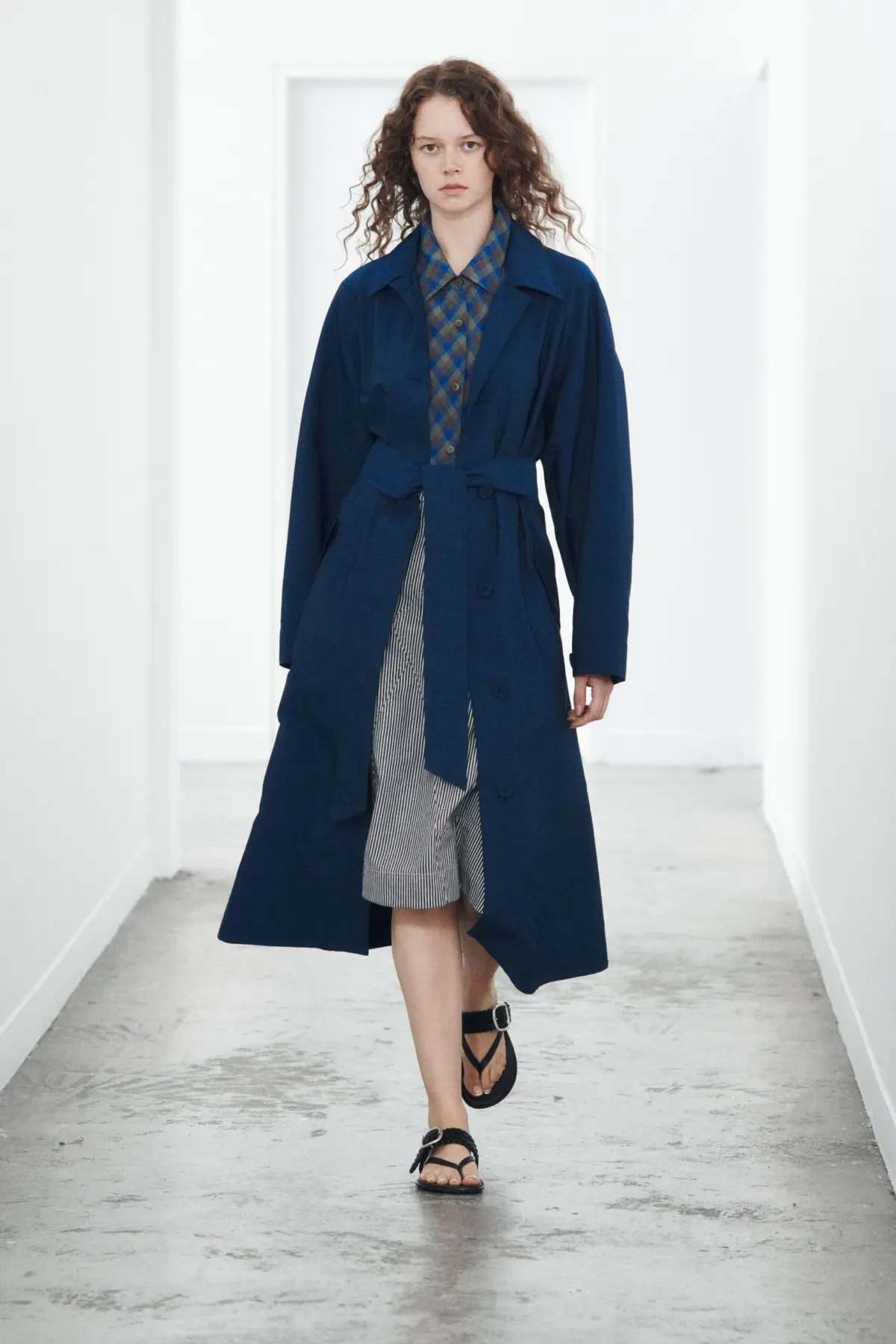
For nearly three decades, Australian designer Lee Mathews has navigated the ever-shifting tides of the fashion industry with a rare clarity of vision. Yet, like countless designers before her, she has long wrestled with a fundamental dichotomy in how clothing is perceived: the vast gulf between how a garment looks statically draped over a wire hanger or framed inside a pristine studio photograph, and how it actually lives, breathes, and moves when worn on a human body.
It was this enduring creative frustration that sparked the conceptual framework for her latest seasonal presentation. Eschewing the conventional, static lookbook format that has long dominated the industry, Mathews opted instead for a dynamic approach. She staged her collection inside a cavernous warehouse space situated conveniently near her inner-Sydney studio, transforming the industrial environment into an intimate runway. Rather than posing motionless for photographs, models walked continuously through the space, clad in the breezy, effortless summer dresses that form the backbone of the collection. For Mathews, seeing the garments in motion was essential, providing a real-world preview of the pieces that are scheduled to arrive in boutiques this coming January.
"We’ve talked about this idea forever," Mathews remarked on an unseasonably warm day in Sydney. That warmth carried a deeper resonance, as Australia faces what is shaping up to be an intensely hot summer, following a globally concerning pattern of rising temperatures. Against this backdrop of climate anxiety and changing weather realities, it is expected that there will be a robust, high demand for the kind of airy, investment-grade summer dresses that Mathews has skillfully honed and perfected over her 27 years in business. Her mastery of lightweight, breathable fabrics has become a signature of her brand, offering relief and elegance in equal measure.
Over the past several collections, however, Mathews has found herself on a distinctly nostalgic streak, looking backward just as much as she looks forward. This reflective period recently gained a sharp sense of perspective through an unexpected collaboration. The brand partnered with SWOP, a popular Australian recycled fashion chain, for a resale initiative that brought older Lee Mathews pieces back into the public eye in a modern retail context.
Recalling the experience, Mathews described visiting the activation in Brisbane and encountering a surreal sight. The entire front window and display area of the store were filled exclusively with older garments from her label, some of them dating back two decades. For a designer accustomed to the relentless forward march of seasonal collections, the encounter was profoundly disorienting.
"It was such a shock, because SWOP is such a contemporary environment, a cool store, and all that stuff looked like it could be in any collection we did now," she said, expressing a palpable sense of surprise at how enduring her design language has proven to be. The encounter underscored the timelessness of her aesthetic, bridging the gap between past archives and contemporary wardrobes, and winning over a hip cohort of younger fashion enthusiasts who covet her vintage dresses and blouses.
This bridging of eras caught the designer equally off-guard, prompting a deep introspection about the cyclical nature of fashion and the environmental and creative waste inherent in constantly manufacturing the completely new. The encounter triggered a moment of philosophical clarity regarding her own creative output.
"It was the weirdest thing, I had one of those moments where you just think, ‘why erase to make something brand-new, when there’s still so many lovely things that only ever had one outing?’" Mathews reflected.
Inspired by this throwback realization, she decided to lean directly into that feeling of historical continuity. As the models walked down the makeshift runway in Sydney, the collection featured thoughtfully updated iterations of her classic cotton dresses. The color palette for the season was kept relatively understated, relying on grounding neutral tones punctuated by subtle splashes of yellow and soft blues. Also making a prominent return were lace dresses, a frequent and passionate request from loyal customers who visit her boutiques searching for past favorites.
"People say to me in the store, ‘I love that lace slip that you used to do, you need to do them again!’ And I’m like, ‘which one?’ There were so many," Mathews noted, illustrating the rich archive of designs she has built over the decades.
While Mathews’s work has always maintained a high level of consistency, this particular collection traded some of the more vibrant hues seen in her recent seasons for a grounded, utility-driven approach where practicality and versatility trumped fleeting trends. The clothes were intentionally designed to be mixed and matched without friction, ensuring longevity in the wearer’s wardrobe.
"You’ll be able to wear the pieces with anything, from any other collection, because they all come from the same source," she explained, highlighting the cohesive DNA that runs through nearly three decades of her work.
Naturally, bringing the past into the present involved a degree of evolution. Believing that hindsight is always twenty-twenty, Mathews acknowledged that she is not immune to the perfectionist urge to refine and improve past designs when given a second chance. Rather than merely reproducing archival pieces stitch-for-stitch, she viewed the exercise as an opportunity for thoughtful editing and enhancement.
"You’re taking something from the past, sticking it in there and going, ‘you know what, if we just change that sleeve and update that collar, that’s a great thing,’" she said, summarizing her pragmatic yet creative philosophy. With those minor, precise alterations locked in place, the designer looks forward, ready to release a collection that honors her brand’s rich history while remaining entirely relevant to the demands of modern life.