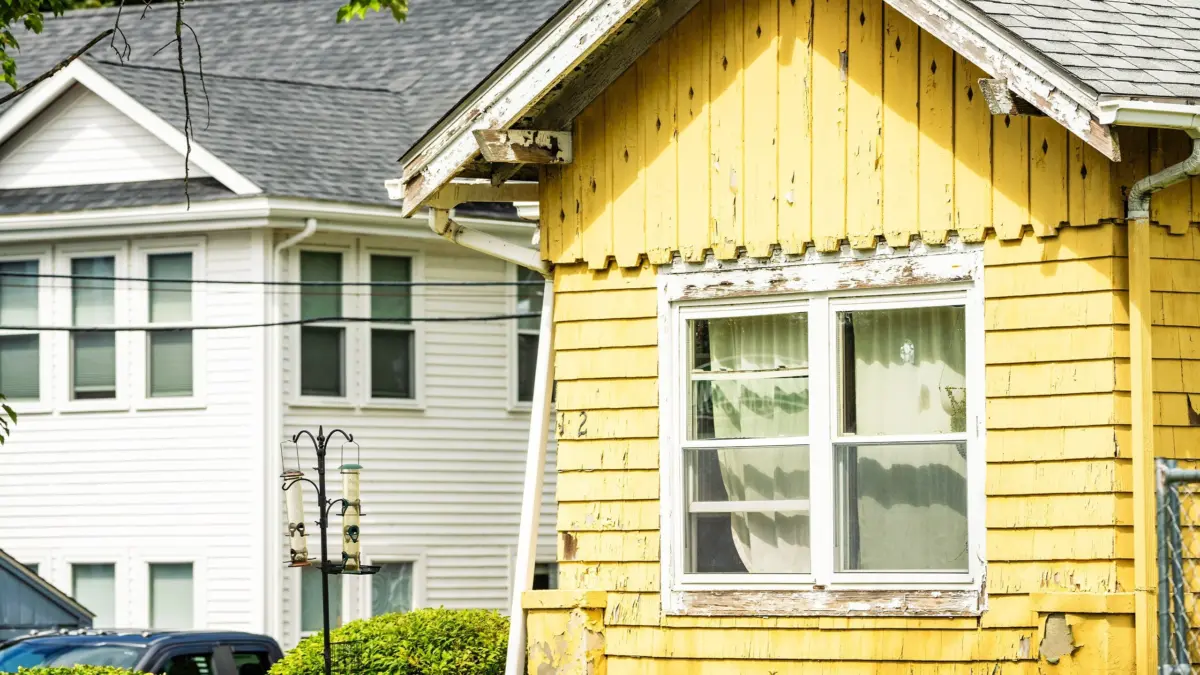
A bipartisan group of federal lawmakers is sounding the alarm over a largely hidden driver of the American housing shortage, warning that badly needed home repairs are preventing vital housing stock from reaching the families who need it most.
In a joint push urging the Department of Housing and Urban Development to implement a new federal home-repair program, U.S. Senators John Fetterman, a Democrat from Pennsylvania, and Cynthia Lummis, a Republican from Wyoming, alongside Representative Nikema Williams, a Democrat from Georgia, drew attention to a vulnerable segment of the population. Specifically, they highlighted aging homeowners who might otherwise downsize but find themselves trapped because they cannot afford to update their deteriorating properties before putting them on the market.
In a Sept. 30 letter to HUD officials, the lawmakers emphasized that this challenge disproportionately impacts older Americans. Many seniors want to transition into smaller, more manageable homes, but they are reluctant or unable to sell their current residences at steep discounts due to accumulated deferred maintenance and necessary structural updates.
However, this localized dilemma points to a much larger, systemic supply problem unfolding across the United States.
The country is currently losing an estimated 350,000 to 400,000 housing units every year to deterioration, demolition, and severe weather events, according to data from the Center for Community Progress. If housing losses continue at roughly that pace over the course of a decade, between 3.5 million and 4 million residential units will completely disappear from the market. That staggering loss nearly matches the total housing deficit the country is currently estimated to be short.
This reality creates a challenging second front in America’s ongoing housing crunch. At the exact same time federal, state, and local leaders are pushing to construct millions of new homes to bridge the affordability gap, the nation is quietly bleeding existing housing stock at an alarming rate, meaning policymakers must simultaneously build new inventory and aggressively preserve what is already standing.
The stakes of this preservation challenge are poised to rise significantly due to an impending generational handoff in American real estate. An estimated 13.9 million homes currently occupied by baby boomers and members of the Silent Generation are projected to transition out of older owner-occupancy through 2036, according to the Generational Housing Succession report published by Realtor.com. Whether this massive generational shift ultimately helps alleviate the severe national housing shortage will depend in large part on the physical condition of those homes when the next wave of households attempts to move in.
Homes Survive Because Someone Keeps Investing in Them
Residential properties rarely become uninhabitable all at once. Instead, vital components like roofs, plumbing networks, electrical wiring, and foundational elements gradually deteriorate over many years until the cost of keeping a property safe and habitable outstrips what an owner can—or is willing to—spend. Eventually, properties that reach this critical tipping point face abandonment, condemnation, demolition, or complete removal from the national housing inventory.
Researchers at the Urban Institute estimate that roughly 0.21% of one- to four-family homes become obsolete each year, with that rate ticking up to approximately 0.25% among homes constructed prior to the year 2000.
These annual obsolescence rates remain relatively low largely because millions of property owners continually pour capital back into their real estate assets. Homeowners nationwide spent an estimated $825 billion on home improvements and repairs from 2021 through 2023, according to Urban Institute figures, accounting for roughly 1% of the total aggregate value of owner-occupied residential real estate annually.
Yet, as housing stock ages, a progressively larger share of that vital investment must go strictly toward basic maintenance and component replacement rather than elective remodeling. In 2023, maintenance and essential replacement projects accounted for 61% of all remodeling and repair spending on homes built before 1960, according to an analysis by Harvard University’s Joint Center for Housing Studies.
Existing housing, in other words, is not a permanent, self-sustaining reservoir of inventory. Keeping those homes viable requires a continuous stream of financial reinvestment. Unfortunately, the economic capacity to make those necessary investments is far from equally shared among the American public.
‘We Are Fixing the Wrong House’
The disparity in home maintenance spending is stark when broken down by household income. Among owners of homes built before 1960, households in the highest income quintile spent an average of $12,700 on property improvements and repairs in 2023, according to Harvard researchers. By contrast, homeowners in the lowest income quintile spent an average of just $3,400 during the same period.
This spending gap is particularly troubling because lower-income households rely far more heavily on older, more affordable housing stock.
Approximately one in four American homeowners lived in a home constructed before 1960 as of 2023. Among homeowners falling into the lowest income quintile, however, that reliance climbs to 29%.
Because older homes generally feature lower market values, they constitute a disproportionate share of the housing options accessible to lower-income families, notes Sophia Wedeen, a research associate at Harvard. Consequently, the physical condition of these properties directly reflects the widening investment gap between high- and low-income owners.
More than 22% of owner-occupied homes built before 1960 suffered from at least one major structural deficiency in 2023, a rate more than twice as high as homes built since the year 2000. Across the entire occupied U.S. housing stock, the Federal Reserve Bank of Philadelphia estimates that eliminating all outstanding structural repair deficiencies would cost an estimated $198.4 billion, with lower-income homeowners and communities bearing a disproportionate share of that immense financial burden.
These compounding structural deficiencies are accumulating at the worst possible time for market affordability, matching a period when genuinely cheaper homes have become exceedingly scarce. The number of homes actively listed for sale that were considered affordable to households earning $75,000 or less plummeted by 60% in March 2026 compared with March 2019 levels, according to Harvard’s housing data.
Researchers warn that the market’s current approach is misaligned with actual societal needs. As Harvard researchers summarized in a recent study, the country is essentially fixing the wrong houses, noting that the mounting costs of inaction, spread quietly across millions of households, represent an enormous and largely invisible drain on family finances, community wealth, and national public health trajectories.
Losing a Cheaper Home Can Be Harder to Undo
Recognizing the gravity of these trends, federal lawmakers have begun incorporating home repair and preservation into broader legislative strategies. The 21st Century Road to Housing Act, which was signed into law in July, authorized a federal pilot program running through 2031 aimed at funding critical repairs for eligible homeowners and residential landlords. In their recent congressional letter backing the initiative, Fetterman, Lummis, and Williams underscored that nearly 7 million Americans currently live in homes requiring significant, urgent repairs.
The consequences of failing to address these repairs are most acute at the lower-cost end of the real estate market.
Data from the Department of Housing and Urban Development tracking specific rental units between 2015 and 2017 revealed that rental units priced below $500 a month were roughly four times as likely to be permanently lost from the active housing stock compared with units renting for $1,500 or more per month. While these specific figures apply to rental housing rather than owner-occupied properties, they illustrate a broader pattern: when low-cost housing deteriorates beyond repair, it disproportionately strips away options from households with the fewest financial alternatives.
Furthermore, when a lower-cost home evaporates from the market, constructing a brand-new residential unit does not automatically replace what was lost.
The share of active home listings priced below $200,000 dropped sharply from 39% in 2016 to just 13% by 2025, according to Urban Institute data. Real estate researchers point out that soaring land acquisition, labor, material, and financing costs have made it economically difficult for private builders to construct smaller, less expensive homes at a profit.
According to the National Association of Home Builders, homes priced below $300,000 accounted for just 23% of new-home sales in June 2026, a price point that generally requires unusually low development and construction expenses to achieve.
This dynamic highlights a fundamental limitation of measuring the national housing shortage through a single aggregate number. If the housing units disappearing from the market are predominantly lower-priced homes, simply building enough new homes overall may still leave prospective buyers and lower-income families desperately short of affordable choices.