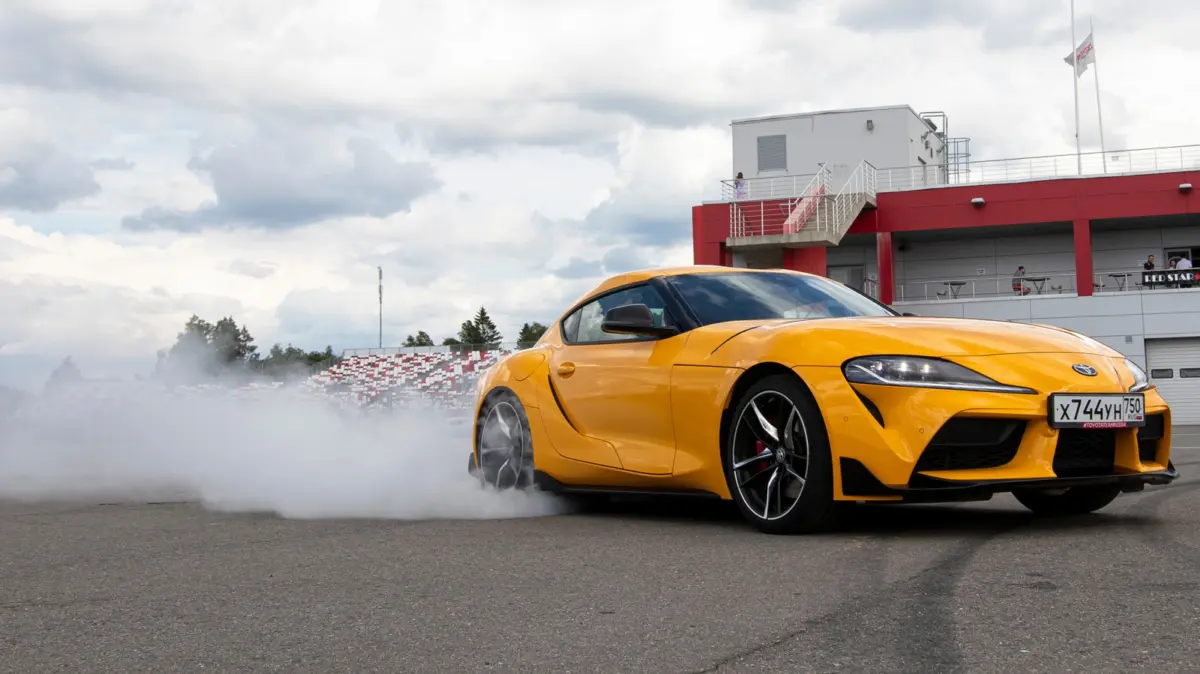
With a sharp chirp of its tires, a Toyota Supra can blast down the street in a menacing, curvaceous blur, hitting 60 mph in roughly the same amount of time it takes to read a single sentence. Through five distinct generations spanning nearly five decades, this legendary Japanese sports car has transformed dramatically from its humble beginnings as an upscale, luxurious variant of the Toyota Celica in the late 1970s into a modern high-performance machine developed in collaboration with BMW. Nowhere is this technological and engineering evolution more obvious than in its official 0-to-60 mph acceleration times.
A tremendous amount has changed in the global automotive industry since the Supra first debuted on the world stage. Beyond the sheer power outputs of their engines, significant philosophical and mechanical differences mark each generation of the car. Unsurprisingly, the newest iteration stands as the absolute fastest of all Supra generations, but tracking how each of the five generations ranks in the all-important 0-to-60 sprint tells a compelling story of progress. The newer generations are consistently quicker than those that came before them, sparking a fascinating look at just how far Toyota managed to advance its signature sports coupe over nearly fifty years of continuous development.
Looking ahead, the iconic nameplate is poised to celebrate its landmark 50th anniversary in 2028. Given Toyota’s heavily renewed corporate focus on high-performance road cars—highlighted by incoming machines like the Toyota GR GT supercar—automotive enthusiasts are left wondering if a future revival of the Supra nameplate is on the horizon. Should such a vehicle ever materialize, it would almost certainly eclipse all previous Supras in the crucial 0-to-60 acceleration metric, setting a new benchmark for the legendary badge.
The origin of the species was a Toyota Celica: 10.2 seconds
In April 1978, Toyota officially pulled the covers off the Celica XX in its home market of Japan. This new two-door coupe began life as a glorified Celica, engineered specifically to serve as a proper grand tourer featuring a more luxurious interior cabin, the optional addition of plush leather upholstery, and extensive sound deadening materials to quiet the ride. It arrived on shores in the United States the following year carrying the official badge of the Celica Supra, known internally within company engineering circles as the A40.
Offered initially with a choice of 2.0-liter and 2.6-liter engine options in Japan, the Celica Supra’s availability with a smooth inline-six engine immediately set it apart from the standard four-cylinder Celica. Only the larger displacement engine made its way across the Pacific to America. While Toyota retained the fundamental extravagant design language of the Celica, the Supra variant was noticeably wider and longer, particularly at the front end, ostensibly to accommodate the significantly larger powerplant under the hood. Among its notable technical specifications were four-wheel disc brakes on the vast majority of grades, along with the consumer choice between a five-speed manual transmission or a four-speed automatic.
Initially launched with a 2.6-liter engine producing 110 horsepower and 136 pound-feet of torque, the early Celica Supra put in a respectable 11.2-second time for the 0-to-60 mph sprint when tested in the hands of automotive journalists. It marked a milestone as Toyota’s very first engine equipped with electronic fuel injection. Only a year later, Toyota instituted a comprehensive upgrade program for the big coupe, replacing the somewhat crude solid rear axle with a sophisticated independent suspension design utilizing semi-trailing arms and coil springs. Simultaneously, a brand-new 2.8-liter inline-six engine was launched, increasing peak output figures to 116 horsepower and 145 pound-feet of torque. This revised car was unofficially designated the A50.
These comprehensive upgrades paid dividends, and Toyota claimed the car could cover the 0-to-60 sprint in 10.2 seconds. The first Supra’s primary market rival was the Datsun Fairlady Z, which proved to be slightly quicker in a straight line, though otherwise remarkably similar in mechanical layout, utilizing a six-cylinder engine, a two-door coupe body style, and rear-wheel-drive dynamics.
A hint at a more sporting future, with help from Lotus: 8.4 seconds
The second-generation Supra, designated internally as the A60, was still officially marketed as a Celica Supra upon its launch in 1982, and it continued to share a substantial amount of its foundational architecture with the lesser Celica. However, the Supra distinguished itself visually with a unique front fascia featuring popular pop-up headlights and an optional aerodynamic sunshade mounted over the rear window. Further differentiating the two models was a dedicated Performance option package for the Supra, which brought wider wheels and tires that necessitated the addition of muscular flared fenders to cover the broader track. Inside the cabin, the car featured highly adjustable sports seats equipped with innovative inflatable lumbar support bladders.
Buyers still retained the choice between a five-speed manual or a four-speed automatic transmission, while a significantly higher level of equipment was fitted as standard equipment to bolster its grand touring image. Included in the base purchase price were high-end luxuries such as automatic climate control, power windows, and cruise control. Furthermore, the top-tier Luxury version received advanced electronic instrumentation, including a pioneering system called Navicom, which served as an early technological precursor to modern-day GPS-based satellite navigation.
Underneath the low-slung hood rested a heavily developed 2.8-liter inline-six engine featuring double overhead camshafts. It initially launched making 145 horsepower, but by the end of its production lifecycle, continuous engineering refinement pushed output up to 161 horsepower and 169 pound-feet of torque. Toyota’s official and tested 0-to-60 mph time for this iteration dropped to 8.4 seconds, representing a notable and welcome performance improvement over its predecessor. The car was enthusiastically received in North America, where it earned Motor Trend’s coveted Import Car of the Year award and secured a spot among the elite vehicles in Car and Driver’s annual 10 Best list. Notably, Lotus Engineering in the United Kingdom was actively involved in the Celica Supra’s chassis development, a partnership facilitated by the fact that Toyota owned a strategic financial stake in Lotus at the time.
Turbocharged performance and tech to the fore for the third iteration: 6.4 seconds
The Supra finally shed its Celica roots and nomenclature entirely when the third-generation A70 was introduced to the market in 1986. It represented a vastly more sophisticated engineering exercise than any of its predecessors. The car launched with a brand-new naturally aspirated 3.0-liter inline-six engine capable of producing up to 200 horsepower and 196 pound-feet of torque, alongside the availability of optional anti-lock brakes for the very first time on a Supra. This generation also marked the debut of a double-wishbone suspension layout at both the front and rear axles—the first time Toyota had ever deployed this motorsport-derived architecture in a high-volume mass-production vehicle. On the styling front, the characteristic pop-up headlights remained, and while the new Supra sat a fraction lower and wider than the model it replaced, it was also more than an inch-and-a-half shorter in overall length. Buyers could also specify a Sport Roof configuration featuring a removable center targa panel in place of the standard hard coupe top, bearing a visual similarity to the iconic Porsche 911 Targa design.
In terms of pure performance, the most significant mechanical news arrived in 1987 with the factory introduction of turbocharging. In select international markets, Toyota fitted a twin-turbocharged setup to a smaller 2.0-liter engine. For the North American market, however, the larger inline-six engine received a single turbocharger, boosting output to 230 horsepower and 254 pound-feet of torque. This substantial power increase yielded a rapid 6.4-second 0-to-60 mph time, putting the Japanese coupe squarely on competitive par with contemporaries like the Porsche 944 Turbo and the Nissan 300ZX. The turbocharged Supra came comprehensively equipped with a Sport Package as standard equipment, bundling anti-lock brakes, a limited-slip differential, and advanced electronically controlled damping via Toyota’s Electronically Modulated Suspension system. TEMS allowed the driver to manually select between Normal or Sport damper settings on the fly.
The Fast and the Furious generation lived up to its billing: 4.6 seconds
The undisputed cultural and iconographic status of the fourth-generation Toyota Supra, known as the A80, was permanently cemented by its starring role in the original installment of the blockbuster Fast & Furious movie franchise in 2001. The car had originally launched eight years earlier in 1993, and while both available engine options were six-cylinder units, only the flagship powerplant featured turbocharging. Due to increasingly stringent regional emissions legislation, only the naturally aspirated engine variant was available during the car’s final model year in strict emissions states like California.
Striking, eye-catching styling defined the A80 generation, most notably highlighted by the massive, hoop-like rear wing spoiler mounted on the trunklid of the Supra Turbo variant. This dramatic exterior aesthetic was heavily backed up by a rigorous corporate focus on weight reduction and uncompromised mechanical performance. Engineers utilized hollow-fiber interior carpets, an aluminum hood, a plastic fuel tank, and a rear spoiler constructed from an innovative lightweight resin composite. Consequently, the high-performance turbocharged version managed to be roughly 125 pounds lighter than its predecessor, despite utilizing a robust cast-iron engine block for the legendary 2JZ powerplant rather than a lighter aluminum alternative. This heavy-duty block choice was deliberately made for durability and reliability, allowing for massive subsequent increases in aftermarket power—a prescient design decision given that Toyota essentially built the car to become a darling of the global tuning community.
The non-turbo model produced 220 horsepower and 209 pound-feet of torque, while the Turbo variant escalated those figures to a formidable 320 horsepower and 315 pound-feet of torque. This potent output allowed for an official factory 0-to-60 mph acceleration time of just 4.6 seconds. The A80 was offered with the choice of automatic or manual transmissions, including the introduction of Toyota’s first-ever six-speed manual gearbox. The automatic transmission also featured a manual override gating system for enthusiast drivers. Later in the vehicle’s production run, the naturally aspirated engine was updated with variable valve timing technology, raising peak power output to 225 horsepower. However, by that stage, overall sales of the Supra were heavily restricted due to tightening environmental emissions regulations, leading to its eventual phasing out before it could match the cumulative sales volume of its predecessors.
BMW helped satisfy Supra fans’ desires: 3.9 seconds
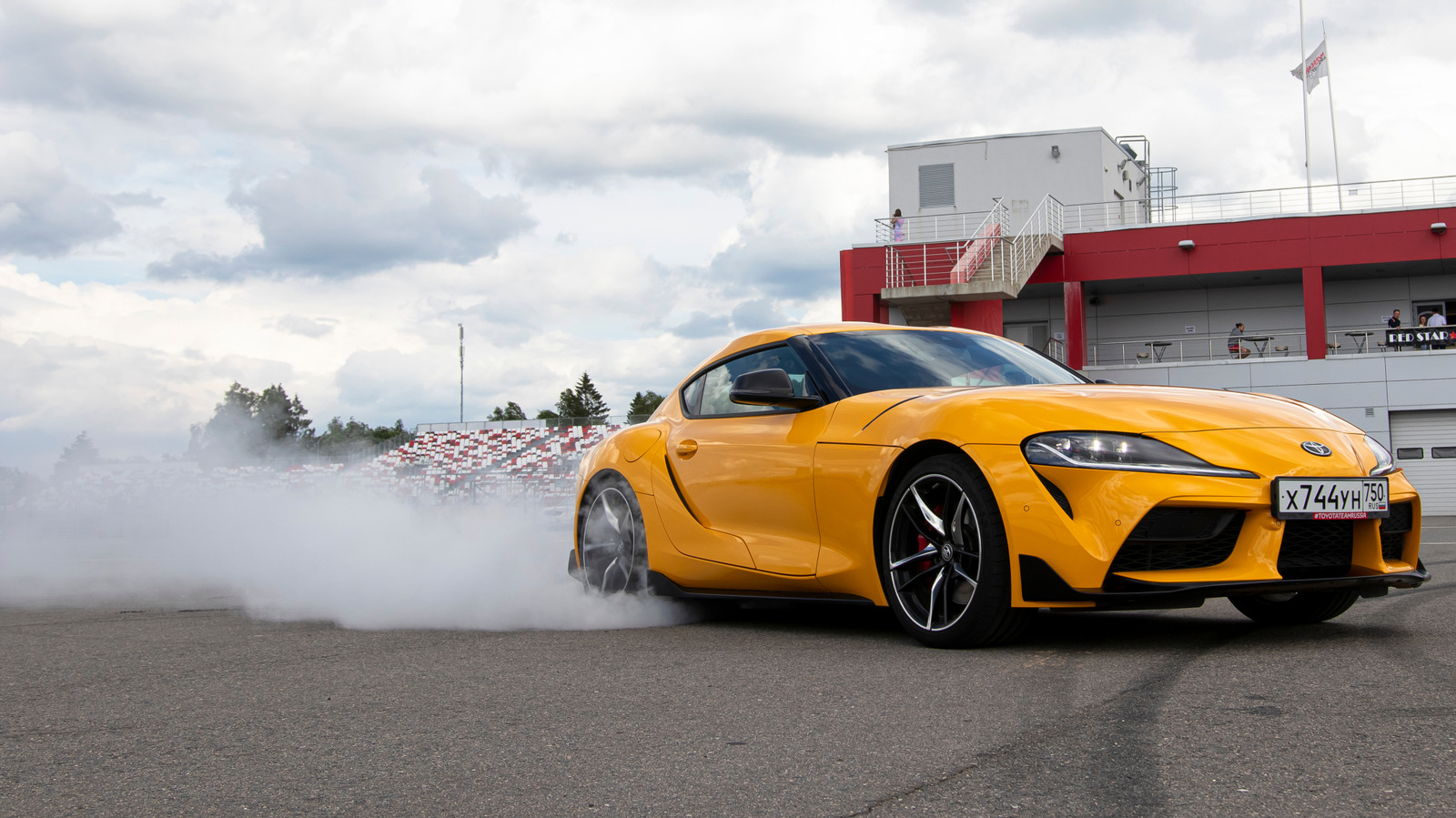
It took a agonizingly long generation gap before Toyota finally brought the dormant Supra name back to life for the modern era. The stunning FT-1 concept car displayed in 2014 offered a tantalizing visual glimpse of what was to come, and in 2019, the wraps finally came off the fifth-generation Supra, designated the A90. The core heritage of the storied nameplate appeared fully intact on paper: This was a dedicated rear-wheel-drive sports coupe powered by a potent turbocharged six-cylinder engine mounted longitudinally beneath its long hood. However, it marked a historic departure as the very first Supra not manufactured in Japan. Instead, the vehicle was developed in a collaborative engineering partnership with BMW, with a sister project yielding the sporty BMW Z4 roadster in its final roadster configurations.
The new GR Supra was chosen to spearhead the burgeoning Gazoo Racing global performance brand lineup. Toyota publicly maintained that the vehicle’s underlying chassis architecture—featuring its latest adjustable damping system known as Adaptive Variable Suspension—was rigorously signed off on by its own elite corporate "master drivers." Beneath the skin, however, the Supra utilizes core BMW engines, while the interior cabin layout prominently features switchgear, electronics, and infotainment architecture directly shared with other mainstream BMW models.
While sports car purists occasionally voiced skepticism regarding this heavy German mechanical influence, the reality of the powertrain was undeniable. The 3.0-liter BMW-sourced inline-six engine initially pushed out 335 horsepower and 365 pound-feet of torque to the rear wheels. For the 2021 model year, Toyota and BMW bumped those outputs further to 382 horsepower and 367 pound-feet of torque. This healthy power increase had the direct effect of dropping the car’s factory-tested 0-to-60 mph time from 4.1 seconds down to an impressive 3.9 seconds, marking the historic first time that a factory-stock Supra officially ducked beneath the elusive four-second barrier.
From a North American market perspective, the concluding chapter of the current lineup arrived in the form of the high-specification GR Supra Final Edition, unveiled to incorporate targeted braking, chassis, and suspension refinements without altering core engine performance. In select international markets outside the U.S., the A90 Final Edition was offered with a substantial factory power upgrade up to 429 horsepower and 420 pound-feet of torque. That global variant was paired exclusively with a manual transmission, though stricter calibration differences meant it could not quite surpass the blistering official 0-to-60 acceleration benchmark set by the American-spec car.